
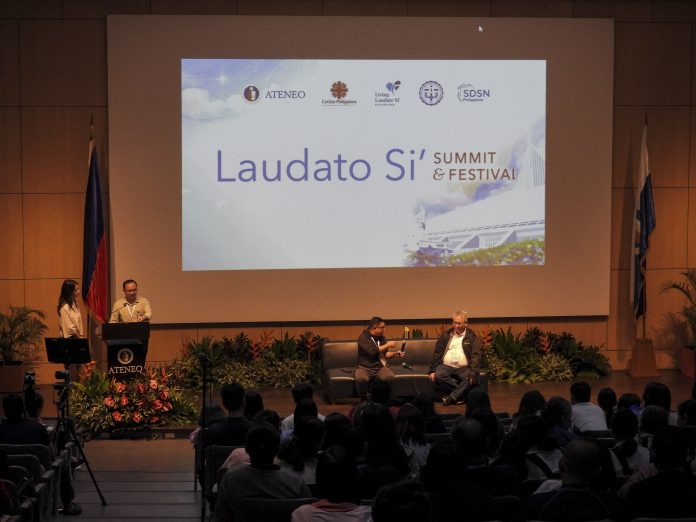
Attending the Laudato Si Summit in Ateneo de Manila University proved to be a formative encounter, one that spoke not only to the intellect but also to the heart.
From the outset, the atmosphere distinguished itself from the stiffness of formal gatherings. Instead, it felt almost like a recollection: open, introspective, and grounded in dialogue.
Conversations flowed naturally, participants were approachable, and the plenary sessions were thought-provoking. As a whole, the experience demonstrated how settings of shared reflection can inspire commitment and drive meaningful action in climate advocacy.
Among the many insights shared, Rodne Galicha’s discussion of the Laudato Si Schools Framework stood out. Galicha is the executive director of Living Laudato Si Philippines.
Centered on seven eco-actions—promoting clean and renewable energy, ensuring responsible water use, implementing ecological solid waste management, greening campuses and institutional systems, embedding environmental stewardship in curricula and research, cultivating ecological spirituality, and actively engaging in advocacy and campaigns—the framework moves beyond superficial gestures such as one-off campaigns or clean-up drives. Instead, it challenges schools to integrate integral ecology into their structures and daily practices.
The discussion prompted me to contemplate what it means for schools to function as ‘laboratories of ecological living’. Education is often framed as the transmission of knowledge or the cultivation of skills.
Yet in this context, schools are reimagined as spaces where pedagogy, spirituality, and practices converge. Students are not simply recipients of lessons on sustainability—they participate in a culture where ecological values are embodied and reinforced in everyday routine.
This perspective struck me as transformative because it recognizes that change cannot be achieved through the mere passing down of information.
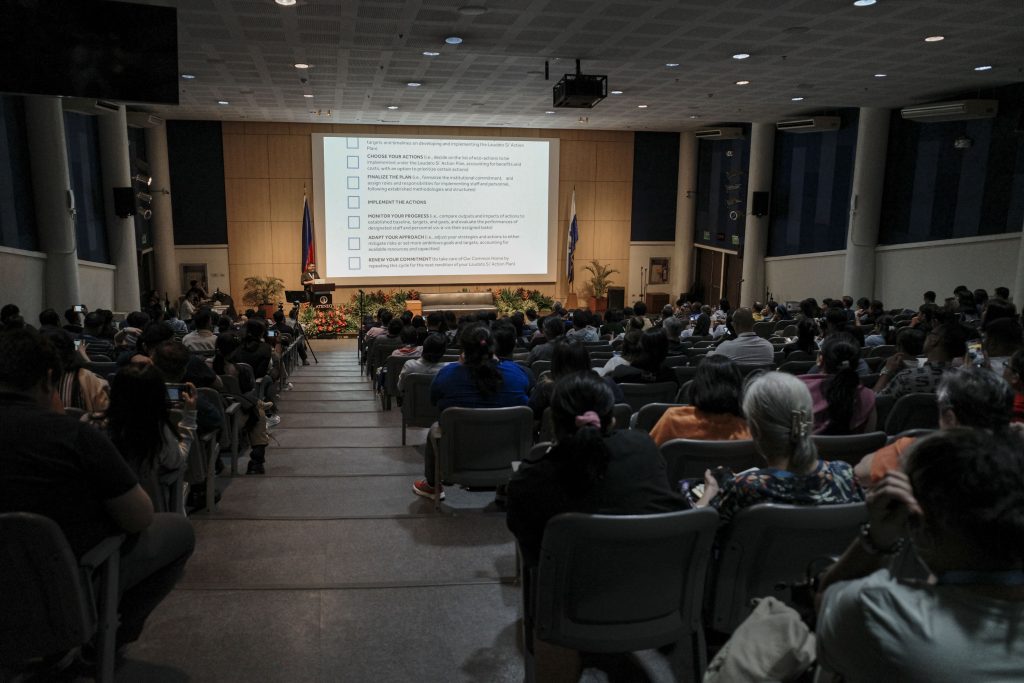
This point was brought home most vividly during a personal encounter with a group of students from Xavier School of San Juan. Their presence on a rainy Saturday at the Summit’s concluding sessions made it strikingly clear how education can mobilize future leaders, institutions, and communities toward just and ethical climate action.
Engaging students early plants the seeds of long-term conversion. In the not-so-distant future, these young individuals will become leaders, professionals, parents, and decision-makers. By mainstreaming ecological education during formative years, schools ensure that environmental awareness is not treated as a peripheral subject or a top-down mandate, but as an integral aspect of citizenship and nation-building.
Although the Department of Education has already incorporated climate change and disaster risk reduction and management across various learning areas in the K–12 curriculum, limiting education to these measures risks fostering only a superficial awareness of the country’s climate realities.
Climate education must extend beyond environmental science or disaster preparedness. It must engage students with deeper systemic questions of justice, accountability, and transition. Such an approach equips learners not merely to recognize climate change as a scientific or environmental phenomenon, but to confront it as a matter of rights, equity, and intergenerational responsibility. When these values are instilled in the early stages of life, students grow into adults who carry these convictions into their families, communities, and professions.
Beyond education, another powerful theme that resonated with me was ecological conversion. This concept broadens the discussion of change beyond technical solutions, emphasizing a fundamental reorientation of how we live. Ecological conversion challenges us to see that environmental degradation is not only measured in deforestation, carbon emissions, or plastic waste—it also reflects the ways in which we value and relate to the natural world. It calls for a transformation from within, a reshaping of both our hearts and priorities.
I found this deeply compelling because it explains why even the most well-crafted policies and advocacy efforts can fall short. Without inner transformation, external interventions remain hollow. Ecological conversion reminds us that meaningful and lasting environmental change depends as much on personal and collective renewal as it does on legislation, technology, or policy.
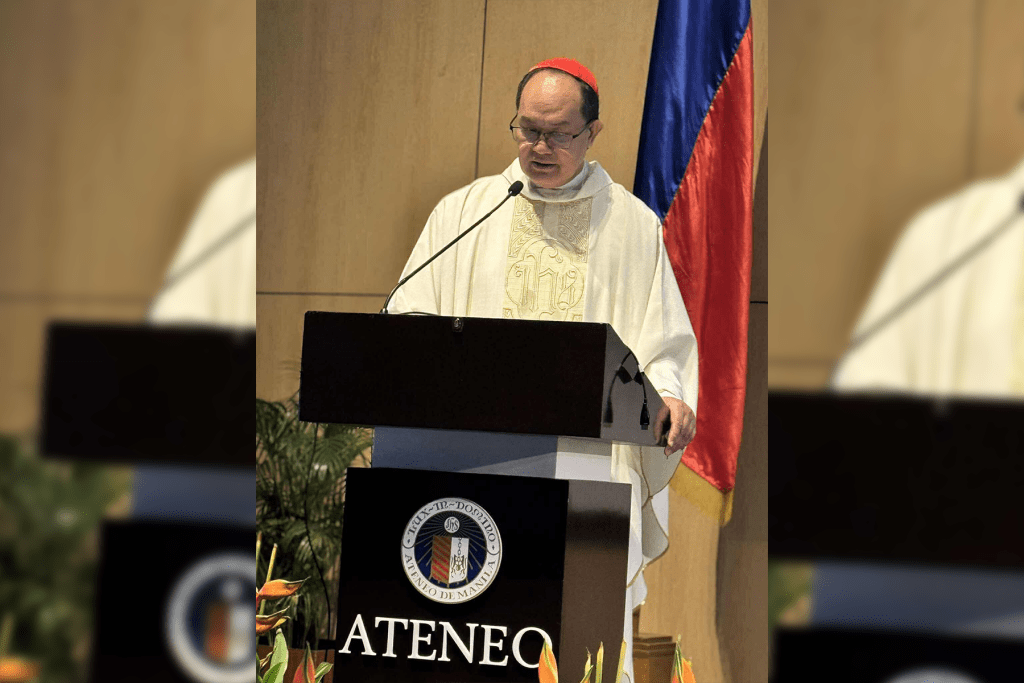
This point was powerfully underscored during Cardinal Pablo Virgilio David’s homily in the opening Mass. His reminder to “seek first the kingdom of God” resonated deeply with me. To ‘seek first’ is to ground every other pursuit—ambition, reform, advocacy—in what is ultimate and enduring. In the context of climate action, this means placing justice, care for creation, and the well-being of the most vulnerable at the heart of every initiative. It is a call to ensure that our public engagements, activism, and daily practices are guided by reflection and spiritual discernment.
Looking ahead, I hope for future Summits to convene an even broader and more diverse range of participants. While the presence of youth and educators was inspiring, the pursuit of climate justice demands the inclusion of voices from all sectors—Indigenous communities, schools across all levels, and NGOs whose contributions may often go unrecognized. Climate action is inherently interdisciplinary, and without such diversity, solutions risk remaining confined to narrow and insular perspectives.
It is also my aspiration that those who have not yet engaged with the teachings of Laudato Si’ be invited to participate in future gatherings. Perhaps such encounters could be the space where they begin to see the relevance of ecological spirituality and integral ecology in their own lives and institutions.
Furthermore, I wish to extend a word of gratitude. Thank you to the organizers and attendees for creating a platform that combined reflection with action, and community with rigor. May we continue to keep the fire alive—that no matter the challenges ahead, the work towards climate justice and ecological spirituality does not cease.
Ultimately, beyond learning about frameworks and gaining insights, the Laudato Si’ Summit offered profound moments of clarity and renewal that prompted me to view climate action as a vocation toward the broader web of life. True transformation, I realized, must begin within ourselves before it can be reflected outwardly. As Pope Francis reminds us in Laudato Si’, “Many things have to change course, but it is we human beings above all who need to change.”
May we continue to change for the better, together.
Dina Theresa Depidep, a fourth-year BA Global Affairs and Diplomacy student at Miriam College, is interning with Living Laudato Si’ Philippines. She divides her time between writing reports, joining climate action events, and working on her thesis on how integrating Indigenous knowledge into the Philippine education system affects Indigenous students in Benguet. Outside academics, she proudly calls herself a cheeseburger enthusiast.