Decades of corruption and anti-poor governance have fueled a new wave of outrage in Nepal, with young protesters taking to the streets in some of the largest demonstrations the country has seen in recent years.
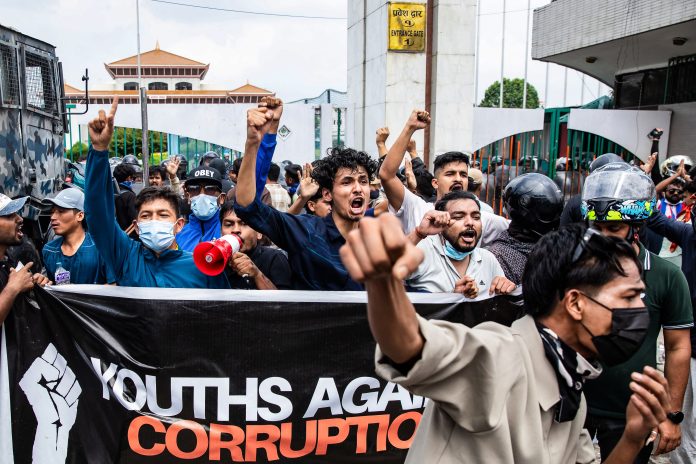
On Monday, thousands marched in Kathmandu to denounce decades of corruption that eroded public trust. The government’s decision to shut down 26 social media platforms acted as the immediate trigger.
Although the ban was lifted a day later, the protests continued, fueled by anger over graft, censorship, and lack of economic opportunity.
At least 22 people have been killed and more than 200 injured since Monday, when security forces fired rubber bullets, tear gas, and water cannons as protesters stormed parliament. Amnesty International said police also used live ammunition.
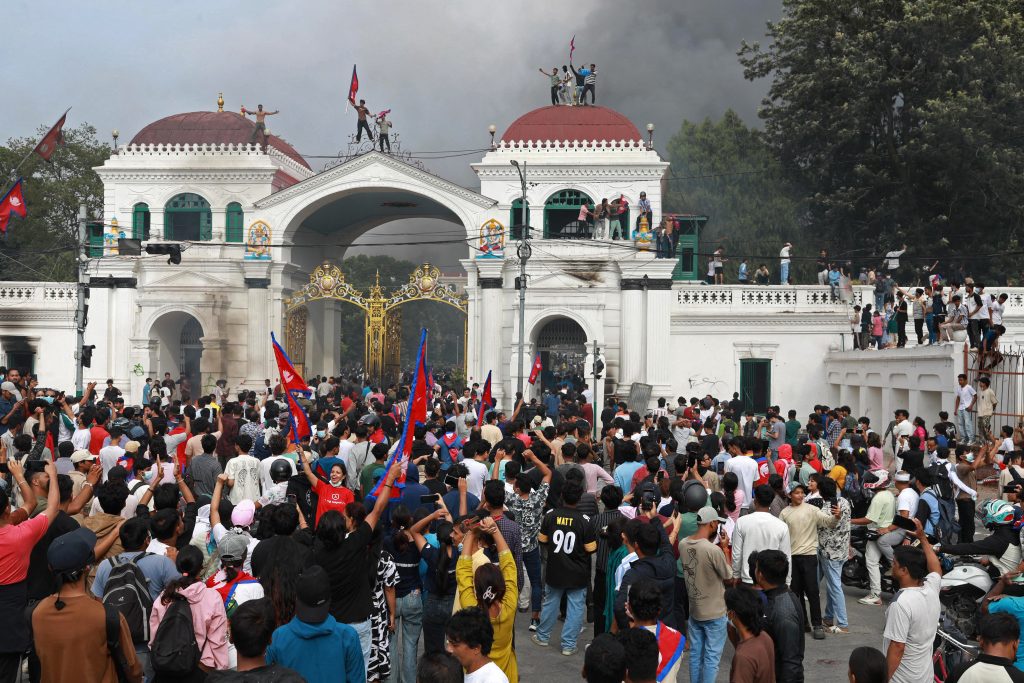
Parliament’s main building was “torched,” confirmed Ekram Giri, spokesman for the Parliament Secretariat.
By Tuesday, Prime Minister Khadga Prasad Sharma Oli announced his resignation. “In view of the adverse situation in the country, I have resigned effective today to facilitate the solution to the problem and to help resolve it politically in accordance with the constitution,” he wrote in a letter to President Ramchandra Paudel.
Interior Minister Ramesh Lekhah, who had only been in office since July 2024, also stepped down for “moral” reasons following the casualties, according to the Kathmandu Post.
The protests were led largely by Generation Z, young people born between 1995 and 2010, many of whom waved national flags and chanted slogans such as “Stop corruption, not social media” and “Youth against corruption.”
In the weeks leading up to the ban, a viral campaign called “nepo kid” exposed the lavish lifestyles of politicians’ children, intensifying public anger.
Sudan Gurung, a key protest figure, declared on Instagram that the Nepal government “has fallen, the youth have won the protest. The future is ours.”
Kathmandu’s mayor, Balendra Shah, who rose to power in 2022 as an engineer-turned-rapper, called the movement “purely a Gen Z movement.”
He urged restraint and called on the young people to “take the lead in running the country. Be ready!”
The unrest quickly spread beyond the capital. Protesters set fire to the provincial assembly building in Pokhara, the Siraha District Court in the southeast, several government offices across Rupandehi province, and Gautam Buddha International Airport.
The home of former prime minister Jhala Nath Khanal was attacked, and his wife, Ravi Laxmi Chitrakar, suffered severe burns.
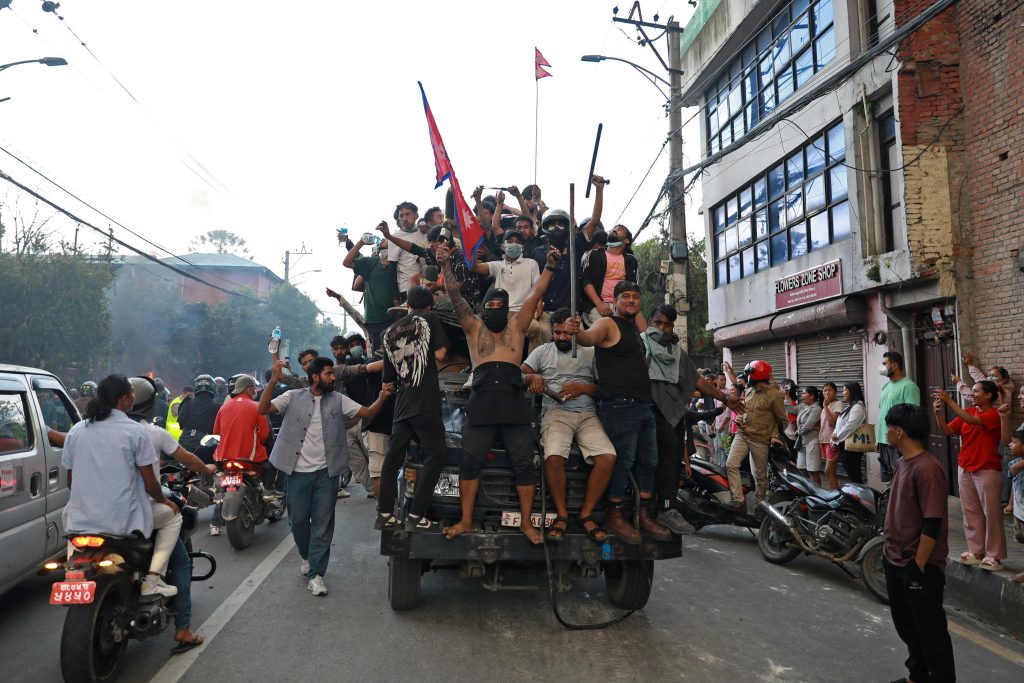
Media outlets were also targeted. Reporters Without Borders said the headquarters of Kantipur Media Group was burning, urging “protesters not to target journalists.”
President Paudel appealed for “all parties to exercise restraint, to not allow further damage.” Neighboring India expressed concern, with Prime Minister Narendra Modi stressing that the “stability, peace and prosperity of Nepal are of utmost importance to us.”
The United Nations voiced alarm after receiving “numerous and concerning reports of unnecessary or disproportionate use of force by the police during the protests.”
“We call on the authorities to respect and guarantee the right to freedom of peaceful assembly and expression,” said Ravina Shamdasani, spokesperson for the UN human rights office.
UN rights chief Volker Türk said he was “appalled” and called for dialogue.
Transparency International reports that 84 percent of Nepal’s population believes corruption is a “big problem.”