
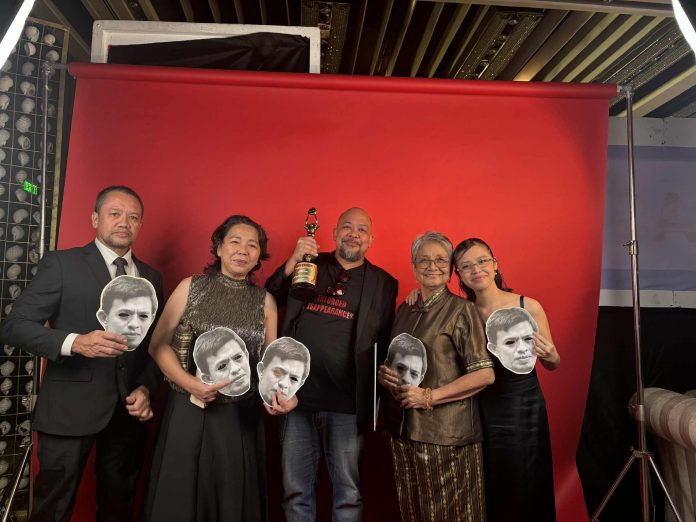
Families of victims of enforced disappearances in the Philippines welcomed the recognition of the documentary Alipato at Muog (Flying Embers and a Fortress) at the Filipino Academy of Movie Arts and Sciences (FAMAS) Awards, saying it strengthens their call for justice and accountability.
Desaparecidos (Families of the Disappeared United for Justice) congratulated director JL Burgos, the Burgos family, and the entire crew after the film won Best Picture and Best Director at the 73rd FAMAS Awards Night on Aug. 22, 2025.
Established in 1952, FAMAS is one of the country’s oldest and most prestigious award-giving bodies in Philippine cinema.
Released in 2024 at the Cinemalaya 20 Independent Film Festival, Alipato at Muog was nominated in six FAMAS categories, including Best Screenplay, Best Editing, Best Sound, and Best Visual Effects.
It earlier won the Cinemalaya Special Jury Award for its “effective use of the resources of documentary cinema to shed light on an actual case of enforced disappearance and reveal dark truths about human rights in the Philippines.”
The film follows the Burgos family’s long search for activist Jonas Burgos, abducted by state agents on April 28, 2007, in Quezon City.
Jonas, son of press freedom icon Jose Burgos Jr. and Karapatan Vice Chairperson Edita Burgos, has been missing for 18 years.
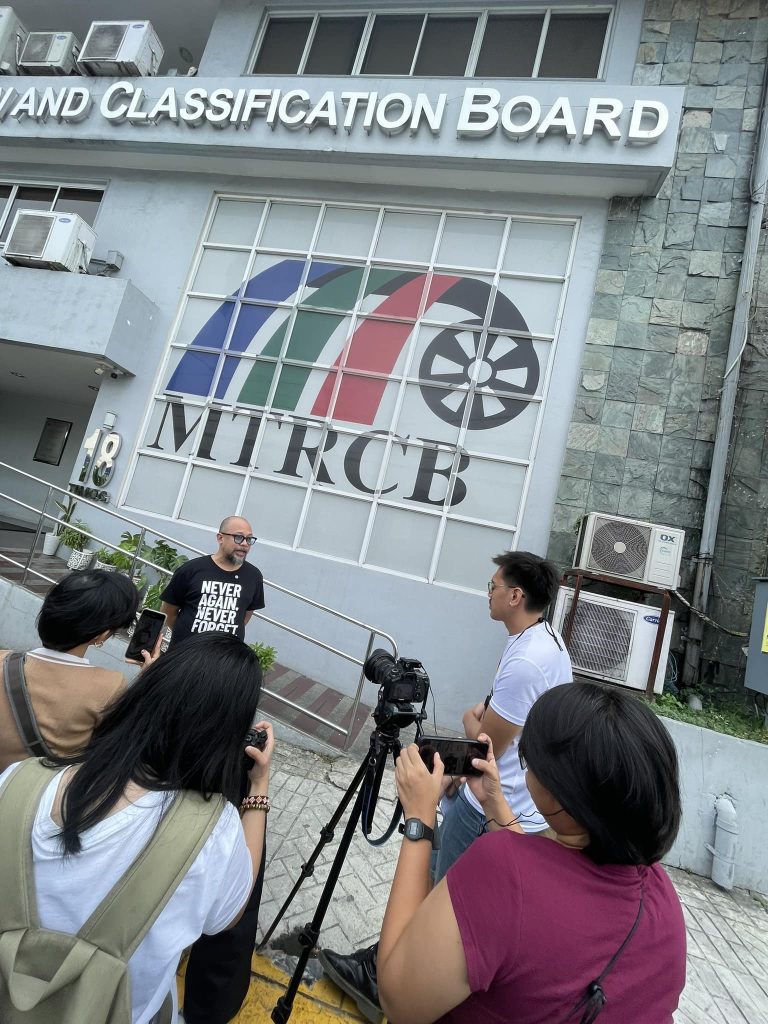
The Movie and Television Review and Classification Board (MTRCB) initially gave the film an X-rating for “undermining faith and confidence in the government,” blocking its nationwide release.
Following protests from artists and human rights groups, the decision was changed to an R-16 rating.
“The back to back successes of ‘Alipato at Muog’ strengthen our resolve to continue searching for our disappeared loved ones and attain justice and accountability,” said Desaparecidos chairperson Erlinda Cadapan, whose daughter Sherlyn was abducted with fellow activist Karen Empeño in 2006.
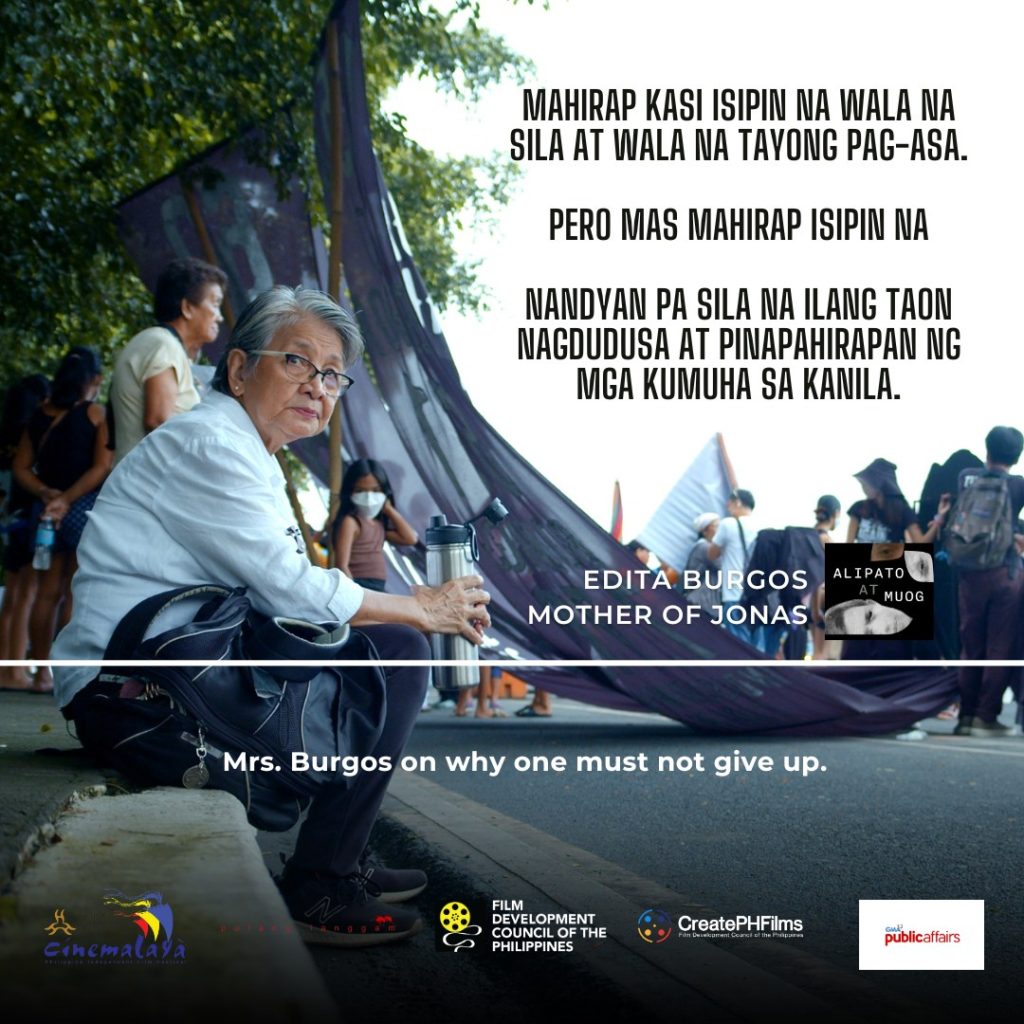
For Edith Burgos, mother of Jonas, the struggle has been both personal and spiritual. Speaking at the Philippine Conference on New Evangelization in Manila in July, she admitted that in the past she equated justice with revenge.
“Before, when I said I sought justice, what I had in mind was revenge. The one who took my son should pay and be imprisoned. Before. But now, it’s a different perspective,” she said.
The one who took my son should pay and be imprisoned. Before. But now, it’s a different perspective.”

“Justice is not about revenge. It’s about making sure that nobody else suffers,” she said. “And if that’s what you’re thinking about justice—to ensure that nobody else suffers—then you’re motivated by love while seeking justice.”
Her words drew support from Cardinal Luis Antonio Tagle, who told the gathering that “justice and love meet,” and “justice and mercy meet.”
In a homily last week, Tagle again pointed to the plight of mothers like Burgos as he called on the faithful to bring the Church into society’s “thorny” places.
“We must help the mothers who until now are still searching for their children, not knowing where they are. Were they abducted? Were they killed?” he said during the elevation of the National Shrine of Our Lady of Aranzazu in the Diocese of Antipolo.
Rights groups, however, stress that the struggle is compounded by state non-cooperation. Ma. Cristina Guevarra, Desaparecidos secretary-general, said it is the very people searching for the disappeared “who become most vulnerable to threats, harassment, and intimidation.”
“This underscores how such acts are state-perpetrated and highlights the prevailing culture of impunity,” she added.
Desaparecidos noted that 15 people have been victims of enforced disappearance during the first three years of President Ferdinand Marcos Jr.’s administration.
Historical records list some 1,000 disappearances under the Marcos Sr. dictatorship, 821 under Corazon Aquino, 39 under Fidel Ramos, 26 under Joseph Estrada, 206 under Gloria Arroyo, nine under Benigno Aquino III, and 21 under Rodrigo Duterte.