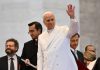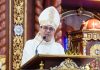
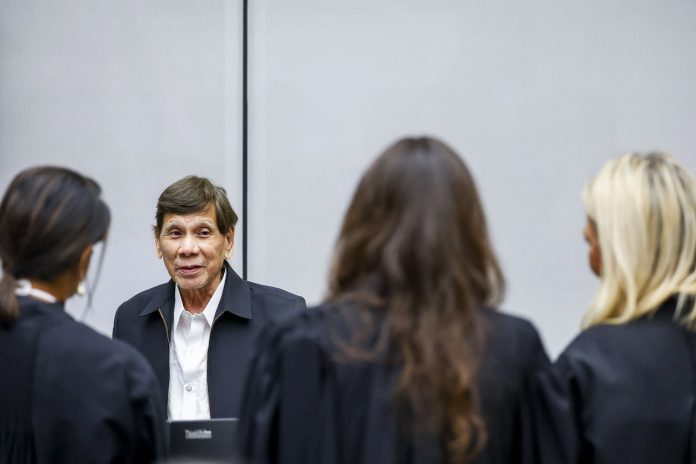
A Church-backed truth commission in the Philippines has challenged claims by former President Rodrigo Duterte’s lawyers that the country has functioning mechanisms to hold perpetrators of drug war killings accountable, days before his trial at the International Criminal Court (ICC).
The Truth Commission said on Nov. 27 that Church and civil society leaders established the body because state mechanisms had left thousands of families of victims of drug war killings without answers.
According to the commission, Duterte’s lawyers cited its establishment in May 2026 in paragraph 195 of their pretrial brief, made public on Nov. 25, before concluding that “functioning domestic mechanisms for accountability – including criminal accountability – exist.”
“Civil society built this Commission to address a gap in accountability. To cite it as evidence that the gap has closed turns its purpose upside down,” the commission said.
The independent, civil society-led body documents killings, gathers testimonies from survivors and bereaved families, preserves evidence and recommends measures for accountability, institutional reform and healing. It has no authority to compel testimony, issue warrants or prosecute suspects.
On Nov. 23, the commission presented its first six-month report, documenting 8,320 victims of drug-related killings between 2016 and 2022, including those killed by unidentified assailants.
The Philippine government reported 6,252 deaths in police anti-drug operations through May 2022. United Nations agencies, the Commission on Human Rights and domestic human rights groups have estimated the death toll at between 20,000 and 30,000, according to the commission.
The commission cited a Nov. 24 report by Human Rights Watch that found only five cases of Duterte-era drug war killings had resulted in convictions involving nine police officers. The rights group also found that the Department of Justice’s current task force had moved only four cases forward.
“Every conviction matters. But five cases set against thousands of documented deaths is not a functioning system of accountability. A full public accounting of convictions, acquittals, dismissals, and pending cases is long overdue,” the commission said.
Citing Article 17 of the Rome Statute, the commission said the relevant legal test is whether the state is genuinely investigating or prosecuting the same person for substantially the same conduct.
It said it was unaware of any Philippine government prosecution against Duterte for the crimes charged before the ICC.
Families who participated in the commission’s public hearings recounted difficulties in obtaining official records, the stigma they endured and persistent obstacles to seeking justice.
“A safe space where victims can finally speak is not a substitute for genuine legal remedies. The victims’ courage must not be used to shield the guilty against accountability,” the commission said.
Duterte’s trial is scheduled to open on Nov. 30 in The Hague, Netherlands. He faces three counts of crimes against humanity of murder and attempted murder allegedly committed between November 2011 and March 2019, when he served as mayor of Davao City and later as president.
The prosecution’s case will focus on a non-exhaustive list of 56 incidents involving murder and attempted murder to establish Duterte’s alleged role as an indirect co-perpetrator of a common plan to kill alleged criminals.
Philippine authorities arrested Duterte and surrendered him to the ICC in March 2025. Pretrial judges unanimously confirmed all charges against him on April 23. On Sept. 28, judges affirmed an earlier ruling that he was fit to stand trial.
“The opening of the Duterte trial before the ICC is a testament to the courage of victims’ families who have relentlessly sought justice despite great personal risks,” said Lian Buan, Southeast Asia researcher at Human Rights Watch.
The trial is set to begin amid mounting pressure from the United States, which imposed sanctions on the ICC on Oct. 9, adding to existing sanctions against court officials.
Human Rights Watch said drug war killings continue under President Ferdinand Marcos Jr. while victims’ families struggle to obtain justice.
The Truth Commission affirmed its respect for the independence of the ICC, the integrity of Philippine courts, the rights of the accused and the presumption of innocence.
“The Truth Commission is a pathway toward justice, not an alternative to it. Our existence does not absolve the State of its obligations, and it does not show that those responsible have been held to account,” it said.