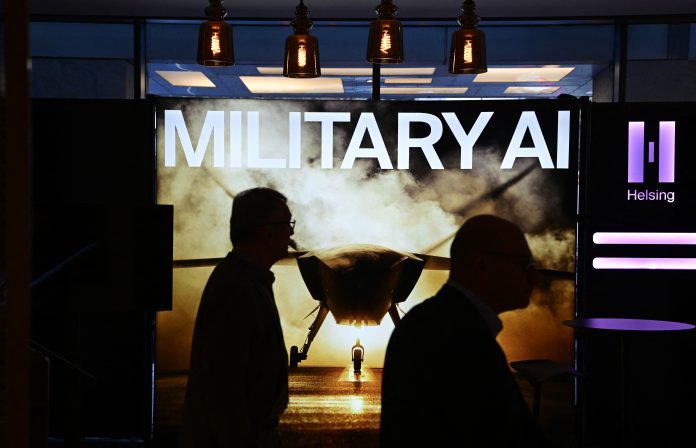
Catholic peace advocates have urged governments to maintain human control over artificial intelligence-powered weapons, warning that the growing use of AI in warfare could weaken human judgment, obscure accountability and lower the threshold for violence.
The call came during the 11th Korean Peninsula Peace-Sharing Forum in Seoul on Nov. 13, where researchers and Church representatives pressed for international safeguards against autonomous weapons.
About 200 people attended the forum at Myeongdong Cathedral, organized by the Korea Reconciliation Committee of the Archdiocese of Seoul and its Institute for Peace-Sharing.
The gathering focused on the theme “Towards an ‘Unarmed and Disarming’ Peace,” drawn from Pope Leo XIV’s message for the 2026 World Day of Peace.
Alessio Pecorario, founder and CEO of the Domus Communis Foundation, warned that AI is accelerating military operations, from surveillance and targeting to strategic decision-making, in ways that could undermine human judgment and accountability.
Pecorario proposed five safeguards, including meaningful human control over lethal and nuclear decisions, and called for a “Seoul Commitment” to put them into practice.
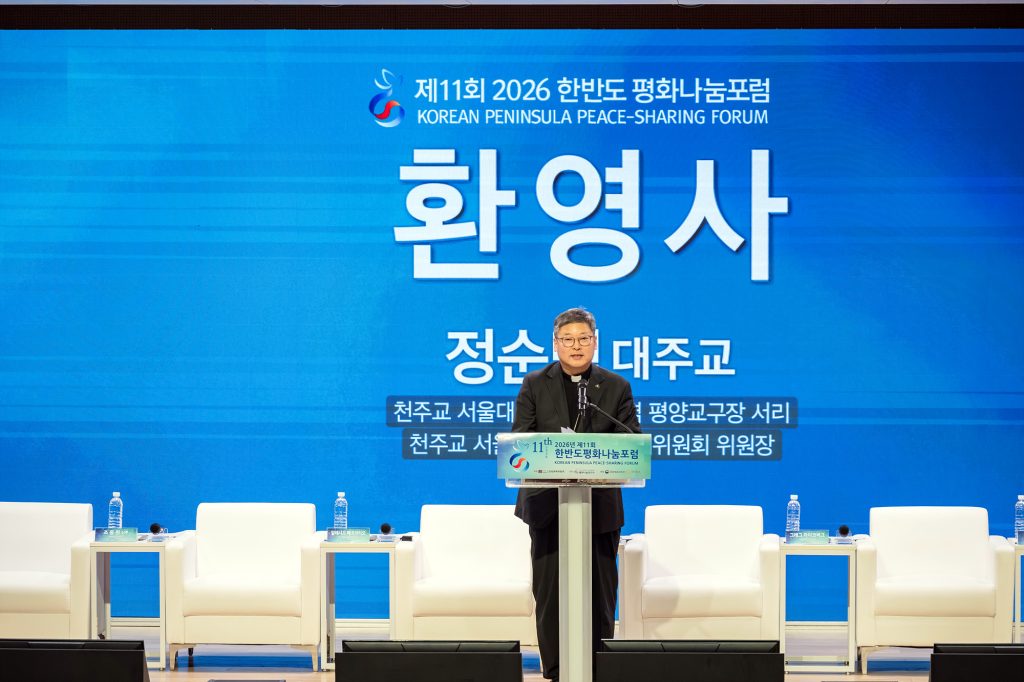
Photo credit: Korea Reconciliation Committee of the Archdiocese of Seoul
“Peace cannot be automated,” he said.
Jong Jin Lee of Seoul National University’s Institute for Peace and Unification Studies urged the Korean Church, government and civil society to support negotiations toward a legally binding international agreement governing autonomous weapons.
Father Antonio Dong-Won Cho of the Catholic University of Korea said machines operate within predetermined parameters, while human beings remain responsible for decisions involving life and death.
Citing Antiqua et Nova, the Vatican’s 2025 document on artificial intelligence, Cho warned against transferring moral responsibility to machines.
“Laying down our weapons begins with refusing to hand our judgment and responsibility over to machines,” he said.
Professor Jaeun Choi of Kwangwoon University called on the Church to address the moral responsibilities of those developing military technology.
“Just as the Church has formed the conscience of soldiers, it must also form the conscience of the engineers who design AI,” Choi said.
Archbishop Peter Soon-taick Chung of Seoul, who also serves as apostolic administrator of Pyongyang, linked the concerns over AI warfare to mounting international tensions.
“Unprecedented and shocking events are unfolding around us all at once,” Chung said in his welcome address.
He cited the war in Ukraine, escalating conflict in the Middle East and North Korea’s rejection of dialogue with South Korea.
Chung said North Korea had characterized the two Koreas as “two hostile states” and conducted more than 16 ballistic missile tests in 2026 as of Oct. 15.
The archbishop said the Church “is raising its voice in reflection and warning to the leaders of nations” over the growing use of AI in weapons systems.
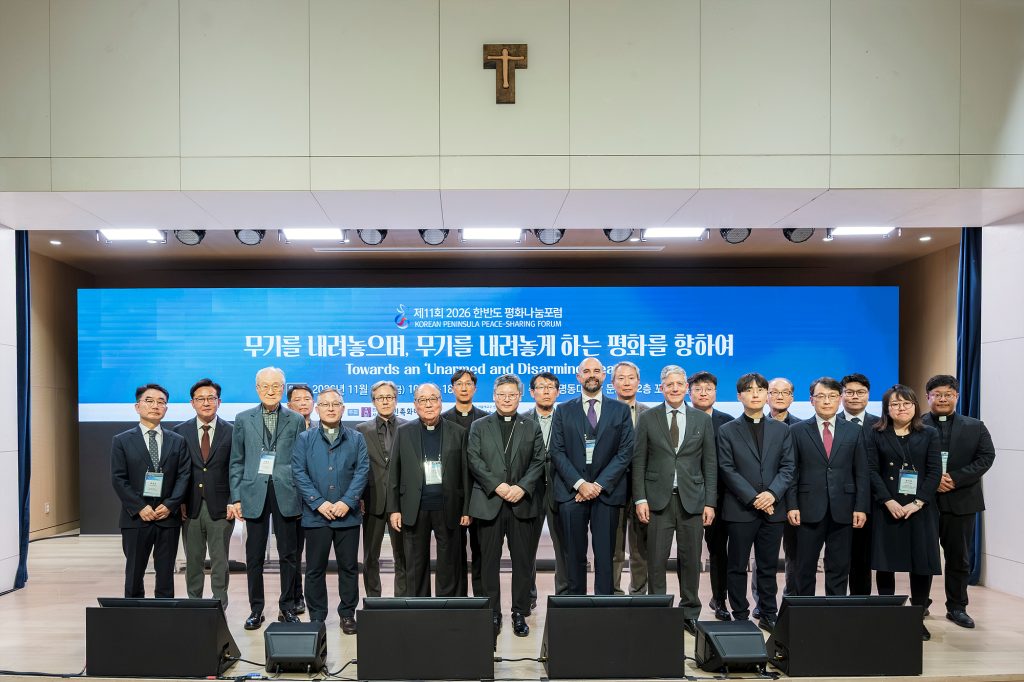
Photo credit: Korea Reconciliation Committee of the Archdiocese of Seoul
Greg M. Reichberg, a research professor at the Peace Research Institute Oslo, called for renewing the Church’s tradition of moral reasoning on the limits of military force to address the challenges posed by artificial intelligence.
He argued that the rejection of war as a pretext for self-defense does not eliminate the right to legitimate self-defense. He suggested that Catholic reflection on the use of force could be developed within a framework of “just peace.”
The forum also examined how the Vatican and local churches could help advance reconciliation on the Korean Peninsula, drawing lessons from peacebuilding efforts involving Vietnam, Cuba and Northern Ireland.
Kwang-young Ko, a researcher at the Institute for Peace-Sharing, proposed developing regular channels for practical exchanges with North Korea, including limited visits by clergy, rather than relying primarily on the possibility of a papal visit to Pyongyang.
Professor Tae-kyung Kim said the Vatican’s experience in facilitating improved relations between the United States and Cuba showed the importance of prior diplomatic contacts. He cautioned that a papal visit to North Korea should be viewed as a possible outcome of improved relations rather than the starting point for dialogue.
Other participants urged the Korean Church to address hostility toward North Korea within South Korean society and support people-to-people exchanges.
The forum also recognized young researchers whose work examined reconciliation and peacebuilding ahead of World Youth Day Seoul 2027.
Archbishop Chung encouraged young participants to help revive public interest in peaceful reunification and coexistence on the peninsula.
Organizers said the next peace forum would take place during World Youth Day Seoul 2027, bringing together young people from Korea and other countries to discuss peace and reconciliation.