
An Indigenous community in the northern Philippines fears losing its ancestral lands and livelihoods under the US-led Pax Silica initiative, raising concerns over possible displacement and inadequate consultation.
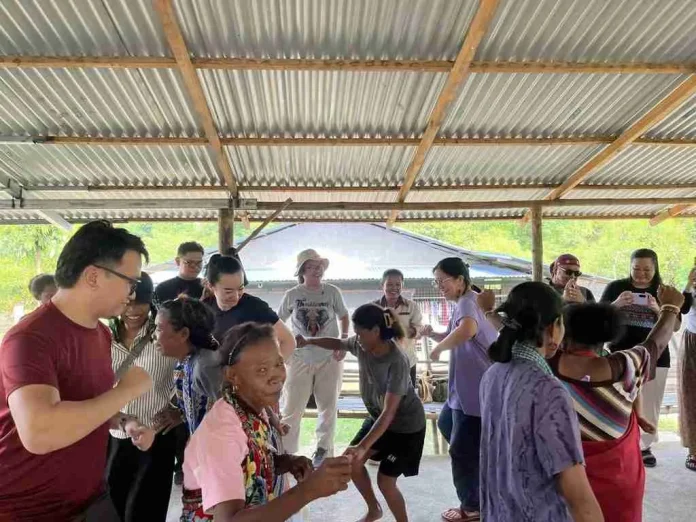
Ayta Mag-antsi residents of Sitio Kalangitan in Capas, Tarlac, voiced their concerns during an Oct. 27 visit by Southeast Asian civil society delegates participating in the ASEAN Civil Society Conference/ASEAN Peoples Forum – Philippines 2026.
The Council for Peoples Development and Governance (CPDG), which organized the solidarity caravan with IBON International and The Reality of Aid Asia Pacific, reported the residents’ concerns on Nov. 4.
“As a mother, I want to see my children climb up trees and swim in rivers. ‘Pax’ for them may mean peace, but for us, it means the death of our future generations,” said Nanay Tessy, an Ayta resident of Sitio Kalangitan.
Her remarks, translated from Filipino by CPDG, reflected fears that the initiative could uproot families from lands that sustain their livelihoods, culture and community life.
Pax Silica is a US-led initiative focused on artificial intelligence, semiconductors and critical mineral extraction.
According to CPDG, Ayta residents, environmental activists, academics and scientists have opposed the initiative over concerns about inadequate consultation, possible mass displacement of Indigenous Peoples and environmental damage.
Residents also questioned whether the initiative would create stable employment for Indigenous families.
Lolita De Guzman, who earns a living by growing crops and weaving grass fibers into Christmas decorations, expressed doubts that the initiative would provide lasting jobs for her family.
CPDG said De Guzman cited previous experiences in which community members received only temporary or contractual employment.
During the caravan, delegates visited Ayta households and spoke with residents about their economic conditions, cultural practices and concerns over losing their land.
The discussions examined the potential impact of Pax Silica on Indigenous communities and the environment, as well as broader struggles over land and climate justice.
CPDG said the residents’ accounts exposed differences between the Philippine government’s support for the initiative and the concerns of Indigenous communities that could be affected by related development projects.
The caravan received assistance from Tanggol Ayta and Residente para sa Lupa at Kabuhayan (TARLAK), with support from BAYAN Central Luzon.
The gathering concluded with Talipi, a traditional Ayta dance performed by community members and visiting delegates.