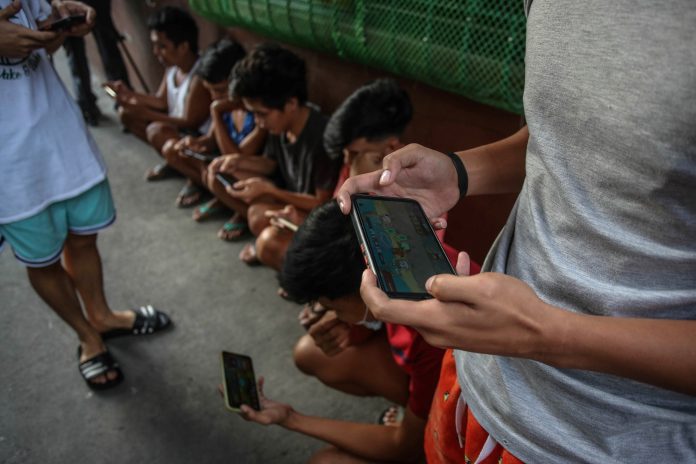
Legal and digital rights experts warned that proposed restrictions on young people’s social media use could require adults to verify their identities through government-issued IDs, raising privacy and surveillance concerns.
The warning comes as a bicameral conference committee prepares to reconcile House and Senate versions of the bill, which seek to bar young people from accessing social media platforms.
“Under Senate Bill No. 2424, even adults would have to prove their identity through government-issued IDs just to access social media. Pati adults, dehado,” said Jeffrey Ian Dy, a former undersecretary at the Department of Information and Communications Technology.
“The bill sets no clear limits on how the government can use the personal data collected for age verification, and offers no comparable safeguards against potential misuse of that data,” he added.
Experts said the proposal raises concerns similar to those aired during debate over SIM card registration. Malacañang, the Philippine presidential palace, vetoed the original version of that measure in 2022 over real-name social media provisions, warning that state intrusion and surveillance could threaten constitutional rights.
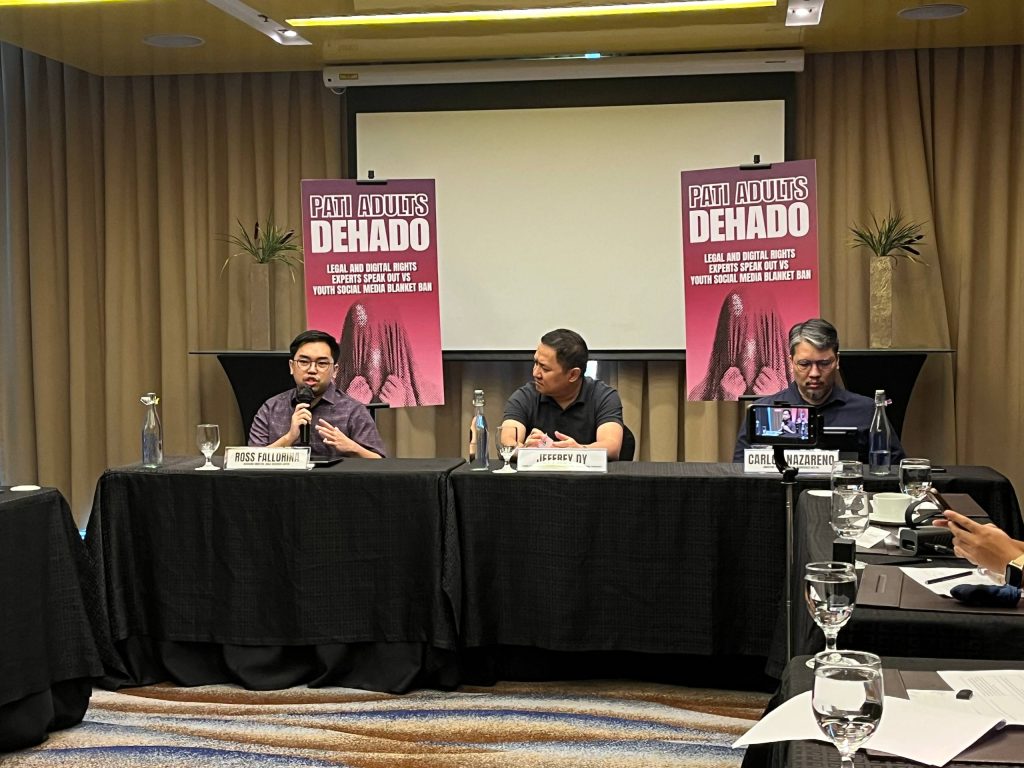
Photo supplied
Ronald Gustilo, national campaigner for Digital Pinoys, said identity and age verification should follow principles of data minimization and privacy by design.
“Mandatory ID submission should not be the default mechanism for age verification when privacy-preserving alternatives can establish age eligibility without disclosing a person’s identity,” he said.
Carlos Nazareno, director for technology of Democracy.net.ph, also warned against requiring users to surrender personal information to access social media.
“Filipinos should not have to surrender their privacy just to use social media. Anonymity, if not abused, is a right on the Internet,” Nazareno said.
Ross Fallorina, managing director of the Sigla Research Center, said people without government-issued IDs could be disproportionately affected.
“People without government-issued IDs will be the first to lose access under these restrictions, especially indigent Filipinos and those in rural communities, who rarely use social media for entertainment,” Fallorina said.
Experts also warned that blanket restrictions could affect access to academic resources, creative learning and civic engagement.