Student leaders at the University of Santo Tomas have appealed to Pope Leo XIV over disciplinary sanctions imposed on four students after a campus protest, warning of growing restrictions on dissent, student participation and academic freedom at the Catholic university.
In an open letter dated Oct. 9, the UST Central Student Council Executive Board asked the pope to take notice of concerns over student welfare, political expression and the treatment of dissent within the university.
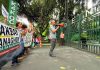
The council said four students faced disciplinary proceedings after protesting the presence of the Philippine Air Force on campus and were found to have violated the university’s Code of Conduct.
The sanctions included suspensions, the withholding of Good Moral Conduct certification and, in one case, the removal of an elected student representative from office.
“We do not claim that students should be exempt from accountability, nor do we ask that every act of protest be regarded as beyond criticism. We recognize that universities have legitimate responsibilities to maintain safety, order, and respect for members of their community and invited guests,” the council said.
“But there is a meaningful difference between addressing misconduct and suppressing dissent, between maintaining order and demanding obedience,” it added.
UST, founded in 1611, is the oldest existing university in the Philippines and identifies itself as the Pontifical, Royal and Catholic University of the Philippines.
Its “Pontifical” title reflects its formal ecclesiastical relationship with the Holy See, while its “Royal” designation dates to recognition by the Spanish monarchy. The university is administered by the Order of Preachers, or Dominicans.
The protest followed a Philippine Air Force military exhibit at UST on April 21 as part of the university’s 415th founding anniversary activities.
The council said students opposed the activity because they believed “that the presence of a state security institution in an academic space could not be separated from concerns over alleged aerial bombings, human-rights violations, and the treatment of civilians and communities in areas affected by military operations.”
The student leaders also raised concerns over a revised student handbook implemented in August 2026.
“The revised handbook has raised concerns among students about the increasing scope of administrative authority over student life and the conditions under which students may organize, express dissent, and participate in university affairs,” the council said.
It warned that the disciplinary cases and changes in university rules risked creating “an institutional culture in which student engagement is welcomed only so long as it remains agreeable to administrative authority.”
The council said its appeal “is not a rejection of our Catholic identity, but an affirmation of the obligations that come with it.”
“We therefore humbly ask Your Holiness to take notice of the concerns of students at the University of Santo Tomas and to lend your pastoral voice to the importance of protecting student dignity, freedom of conscience, and meaningful participation within Catholic educational institutions,” the council said.
The UST Faculty of Arts and Letters Board of Majors separately condemned what it called “the alarming cases of repression within the university” and defended students’ rights and welfare.
“Academic freedom is not a privilege to be granted or withdrawn; it is our fundamental right that must be upheld, protected, and defended at all times, by all means,” the board said.
The board also criticized the removal of the Central Student Council public relations officer without what it described as the student body’s mandate.
“Discipline should foster growth, not suppress free speech, and accountability must never come at the expense of student welfare and the right to education,” the board said.