Cambodia’s crackdown on online scam compounds failed to protect trafficking victims and left many abusive operations intact, Amnesty International said in a report released June 8.
The report found that more than 70% of the compounds identified by Amnesty appeared to have escaped the government campaign launched in July 2025.
The findings are based on interviews with 73 survivors from 16 countries who were held in scam compounds during the crackdown. Researchers also identified 33 additional compounds beyond those documented in an earlier investigation.
Amnesty said survivors continued to face human trafficking, forced labor, torture, and sexual violence, while many received little or no support after being freed.
“The Cambodian government has carefully managed the optics of its scamming crackdown, but behind every headline about a compound raid or arrest are survivors of slavery, torture, and rape left with almost no support,” said Montse Ferrer, Amnesty International’s co-regional director.
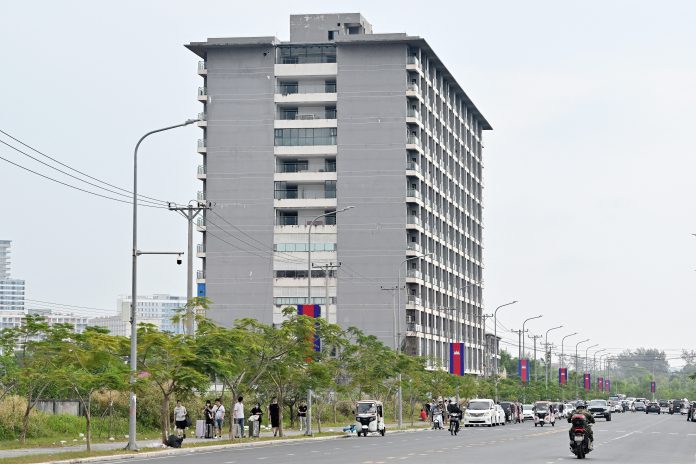
In June 2025, Amnesty reported that more than 50 scam compounds across Cambodia operated as prison-like facilities where organized criminal groups subjected workers to slavery, human trafficking, forced labor, and torture.
Following that report, Cambodian authorities launched what they described as their largest-ever operation against scam networks. Officials said more than 200 scam centers had been shut down and several gang leaders arrested.
The new report raises serious questions about the effectiveness of those efforts.
Of 86 compounds identified by Amnesty, evidence showed direct state intervention at only 24. Researchers found evidence of mass releases or escapes at seven additional sites.
“This much-vaunted crime offensive has not done enough to end the suffering of those trapped inside scamming compounds,” Ferrer said.
“More than 70 per cent of the compounds identified by Amnesty appear to have been bypassed by the crackdown, while ineffective police interventions at other compounds have missed victims and left them facing horrific abuses – all as the government applauds its own work.”
The report said none of the 73 survivors interviewed had been formally recognized as victims of human trafficking, despite meeting internationally accepted definitions.
Many were left sleeping on the streets, detained in overcrowded immigration centers, or subjected to threats and extortion by authorities, Amnesty said. Survivors also reported receiving inadequate assistance from their embassies.
One survivor, Winta, was trafficked from East Africa at age 16 after being promised a job on a cruise ship. She said compound managers moved victims between locations to evade police operations.
“They handcuffed me to a chair and made me stand for two days. Then they beat us and put us in the car,” she said.
After she was abandoned with other victims, police threatened to return her to the compound instead of offering assistance, according to her testimony.
Amnesty said survivor testimony suggests that alleged collusion between police and compound managers may have undermined the crackdown.
Several survivors told researchers that police regularly visited a compound in Prey Veng province, including to remove bodies, yet no arrests were made.
Elise, a survivor from Kenya, said she witnessed a woman die inside the compound.
“We tried to wake her, but she was dead already … The police came to get the body,” she said.
Other survivors said managers appeared to receive advance warning before police operations.
“They said the police are coming and put us on a bus and drove us into the mountains,” one survivor recalled.
Amnesty also documented allegations of sexual violence inside the compounds. Six women reported rape or other forms of abuse. Five said they were raped by managers or team leaders, and two became pregnant.
A survivor from Brazil identified as Cecilia said a manager offered her to successful scammers.
“It was like a prize for doing good work. He said I was like ‘a present’,” she said.
The report criticized what it described as a lack of transparency surrounding the crackdown. Authorities have not publicly disclosed detailed information about investigated sites or evidence supporting claims that compounds were closed.
“The Cambodian government’s total lack of transparency makes it impossible to verify their claims and undermines trust in the entire process,” Ferrer said.
“The unavoidable conclusion is that many of the people behind the most abusive compounds have not been brought to justice.”
Amnesty said Cambodian authorities did not respond to questions submitted during the investigation.
The rights group also noted that an earlier investigation found casinos linked to scam compounds continued receiving state approval during the crackdown. The new report identified four additional casinos connected to buildings used as scam centers.
“While the crackdown has led to mass releases of thousands of people from slavery, it is undermined by the government’s failure to treat victims with dignity,” Ferrer said.
Amnesty urged Cambodia to investigate all scam compounds and associated casinos, identify trafficking victims, and provide shelter, health care, and legal assistance in line with its obligations under international law.