A Catholic high school in Indonesia’s Papua region has launched an intercultural education initiative aimed at addressing division, mistrust, and social fragmentation among young people through dialogue, reflection, and shared cultural learning.
YPPK Adhi Luhur Le Cocq d’Armandville High School in Nabire held an Interculturality Workshop–Recollection this month for Grade 10 and 11 students, bringing together participants from diverse Papuan and Indonesian cultural backgrounds.
The weeklong program was introduced amid what organizers described as growing polarization and a “crisis of trust in modern society.”
Students from Mee, Moni, Javanese, Torajan, Ambonese, Kei, Batak, Serui, Biak, and other communities joined activities designed to strengthen self-awareness, communication skills, and mutual trust.
The workshop was facilitated by Brazilian researcher Dr. Roberto Vale, who previously conducted doctoral research in Nabire on “Interpersonal Capacity for Trustworthiness.”
Rather than relying mainly on classroom instruction, the program emphasized participatory learning through conversations, group activities, art, reflection, body movement, and communication exercises. Organizers said roughly 80 percent of the sessions were interactive.
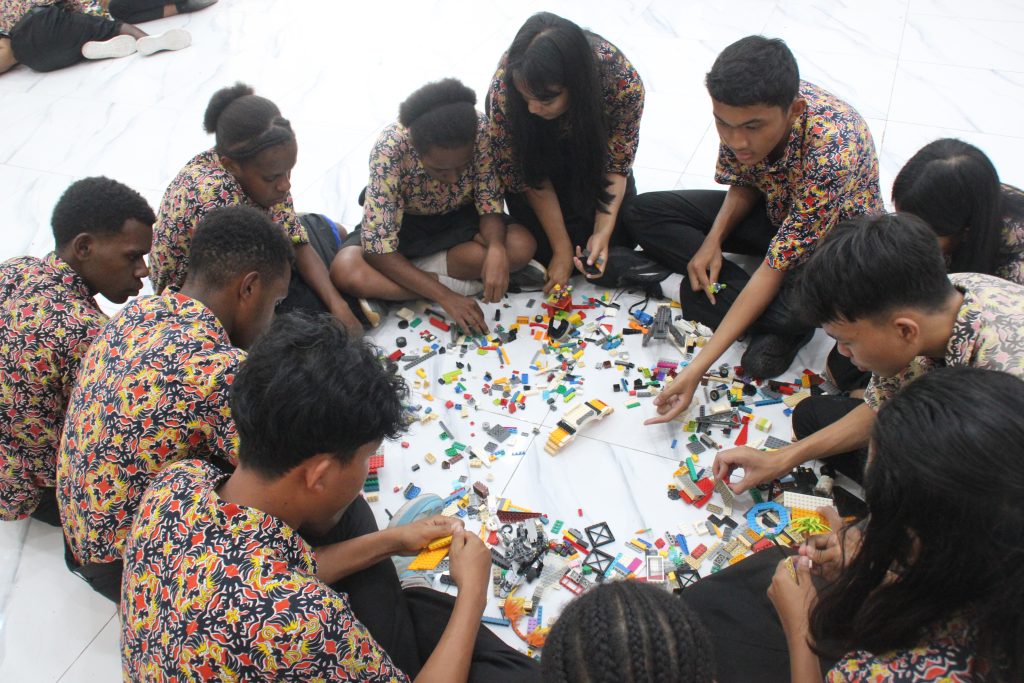
Students shared stories about family traditions, local languages, traditional houses, and cultural practices inherited from their communities.
“The students began to see that although they come from different cultures, they share the same values: togetherness, solidarity, family, and respect,” one teacher accompanying the program said.
Another major focus of the workshop was intercultural communication and the role of meaningful dialogue in building relationships across differences.
“If you are able to ask good questions, you will not easily become lonely, you will be able to learn from anyone, and you will be more capable of resolving conflicts in a humane way,” Vale told participants.
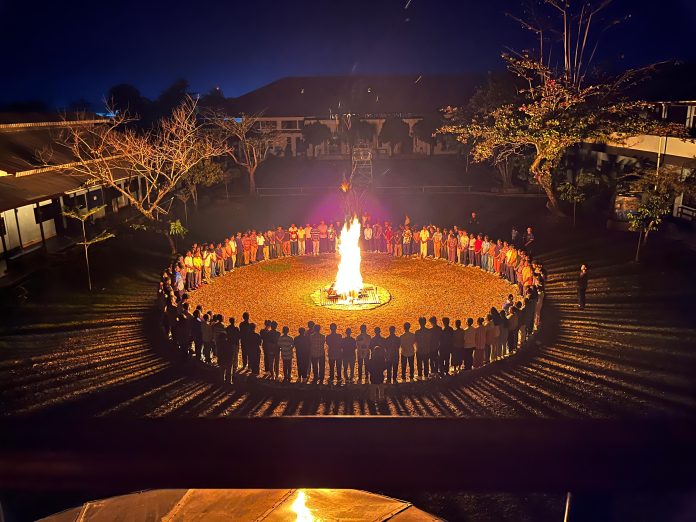
One of the workshop’s central activities was a reflective evening around a bonfire, where students took part in a shared examen and discussed their experiences throughout the week. Organizers said students who previously stayed within familiar social circles began forming connections with classmates from other backgrounds.
The final sessions focused on building trust across cultures through walking meditation, heart-to-heart conversations with “Emmaus partners,” and reflections on what makes people feel safe, accepted, and trusted.
Teachers also participated in separate sessions on fostering trust in classrooms marked by cultural, social, and economic diversity.
The school described the initiative as part of its broader effort to strengthen character formation and social awareness among students in Papua.
“Papua is often viewed only through the lens of conflict, underdevelopment, or development challenges,” the program reflection said. “However, the experience at YPPK Adhi Luhur Le Cocq d’Armandville High School … revealed another face of Papua: a living and vibrant space for learning diversity.”
Student reflections during the closing session centered on coexistence, acceptance, and mutual respect despite cultural differences.
“We are all different. But we are still the same,” one student said.
Another participant said: “Even though we are all different here, we remain together without discriminating against one another.”
Several students said the workshop allowed them to better understand the cultures and experiences of their classmates.
“What I gained was getting to know the cultures of other ethnic groups,” one student said.
Others highlighted lessons on communication and trust.
“What I remember most is learning how to make conversations deeper through quality questions,” one participant reflected.
Another student said: “What I learned is how to make people trust us, and how to maintain that trust.”
The school said the program sought to demonstrate that education is not only about academic achievement, but also about forming young people capable of dialogue, coexistence, and community-building in a diverse society.
“We are different, but we remain together,” students said during the final reflection.