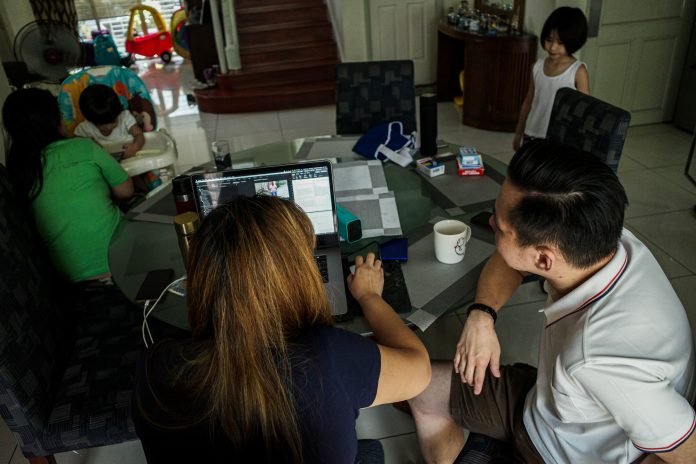
The Filipino family is revered worldwide for its many values, its unity, and the mutually supportive and harmonious love between parents and children. Such families have wise Filipino parents who maintain respectful, positive, and caring relationships with their children. They neither dominate nor neglect them. They are not punishers or scolders, and they never emotionally or verbally abuse their children. They encourage their children to be independent, cherish freedom, and serve their community.
Close-knit families are resilient and bound by these values, enabling them to endure and overcome struggles and poverty. Dire poverty is caused by corrupt politicians and their cronies involved in graft, fraud, nepotism, and cronyism. The Filipino family, in general, is resilient and remains the heart and strength of the nation. Good and dedicated parents strive to protect and teach their children to be upright and compassionate toward their neighbors.
The United Nations’ theme for this year’s International Day of Families was “Families, Inequalities and Child Wellbeing.” It is a particularly timely reminder for Filipino families, which must remain strong as they face the challenges posed by corruption that feeds an unequal society, leaving 17.5 million families in poverty out of a population of 117.5 million, according to government statistics.
However, surveys by the Social Weather Stations and other research firms indicate that roughly 50 percent of Filipino families rate themselves as poor. There are an estimated 2.19 million overseas Filipino workers (OFWs). The Filipino diaspora numbers roughly 10.7 million people who left in search of a better life abroad, unable to endure corruption, social inequality, and the lack of opportunities for themselves and their children at home.
These 2.19 million OFWs provide critical financial support for their families through massive monthly money transfers. In 2025, they sent home a record $35.63 billion in cash remittances. Including informal remittances, the figure rises to $39.62 billion. Besides the daily struggles many Filipino families face in coping with worsening poverty, especially during oil crises, they are also confronted with the onslaught of negative content on social media. Traditional family unity is under severe threat.
The historical roots of this unity and togetherness are found in the “balangay,” the wooden boat that traveled across seas for weeks carrying families bound by their desire to survive. These families arrived on the islands, where they lived and worked in mutual cooperation. Working together came to be known as the “bayanihan,” or community spirit. This cooperation and togetherness became life-saving experiences for an intelligent and proud people.
From this precolonial heritage emerged a culture in which teamwork remains strongly present in Filipino family traditions today. “Utang na loob,” or debt of gratitude, evolved from a tribal system of mutual help and reciprocity into a deeper moral obligation. Teamwork for prosperity beyond survival, known as “pakikisama,” or getting along with others, arose from the need to maintain peace, order, and cooperation in small communities so that all could thrive.
An important family value is respect for parents, which also came from early tribal living, where age denoted wisdom and knowledge of traditional herbal medicine that helped people survive for thousands of years.
Enduring values
Many enduring values of Filipino family life remain strong and healthy today, such as the love of education, a deep commitment to freedom and justice, compassion for the sick and needy, generosity in sharing with others, hospitality, welcoming strangers, sharing food and drink with them, and the sacrifice of poor parents working desperately at home or abroad to provide for their children amid poverty and hunger rooted in inequality and injustice.
The value of “malasakit,” or concern for others, remains strong, while dignity and self-worth are powerful driving forces for success. This is where we see the vast majority of parents deeply loving their children and providing for their needs.
Filipino family values, traditional lifestyles, and familial relationships themselves are under serious threat as families struggle for survival amid an onslaught of negative social and economic forces. A profound transition is underway, driven by economic pressures, the rising cost of living, unemployment, teenage pregnancies, and exploitation through social media, all of which are placing great strain on family unity as teenagers drift further from their parents and siblings under the negative influence of abusive online content.
The departure of children to cities, where employment is more likely than in the countryside, also poses challenges for parents. Today, capitalist society draws families away from fields and farms, where people once helped one another in an “all for one, one for all” spirit. Now, many are engaged in isolated, and often isolating, work in factories or business enterprises in cities, leaving parents and grandparents alone.
While the internet connects family members virtually, it is also driving them apart. Church attendance is declining because many institutional rites and sermons are increasingly seen as irrelevant. The absence, with some exceptions, of strong and outspoken Christian moral leadership challenging the ills in government and society leaves a vacuum in which evil can erode family values.
The government’s inability or unwillingness to implement laws regulating internet content is among the greatest threats to Filipino families, young adults, and children. Internet service providers continue to ignore laws blocking child sexual abuse materials, and the government is complicit through its inaction. This is contributing to moral decadence among families, adults, and the youth. The availability of abusive online materials to young boys drives some to sexually assault girls as young as six years old.
UNICEF says as many as 2 million Filipino children have been sexually abused online and within their communities in a single year. Nearly one in five children, or 17.1 to 22.4 percent, have experienced sexual violence within their community or home.
This is the great challenge facing Filipino families, as well as leaders in society and the Church: to unite on board the balangay of human rights, especially children’s rights, and defend moral values and human dignity.
Note: Any original information, stories, or news articles posted on this site that are authored by the Preda Foundation and Father Shay Cullen may be shared, copied, or reproduced without further permission, in support of truth, freedom of expression, and the public’s right to know.
LiCAS News was granted permission to republish and adapt this article by Father Shay Cullen in the spirit of truth-telling and the pursuit of justice.
Irish missionary Father Shay Cullen, SSC, founded the Preda Foundation in Olongapo City in 1974 to promote human rights and the rights of children, especially victims of sexual abuse.
The views expressed in this article are those of the author and do not necessarily reflect the editorial stance of LiCAS News.