
When we said that we wanted less of the “band-aid” solutions and more long-term, forward-looking style of governance, this is not what we had in mind at all.
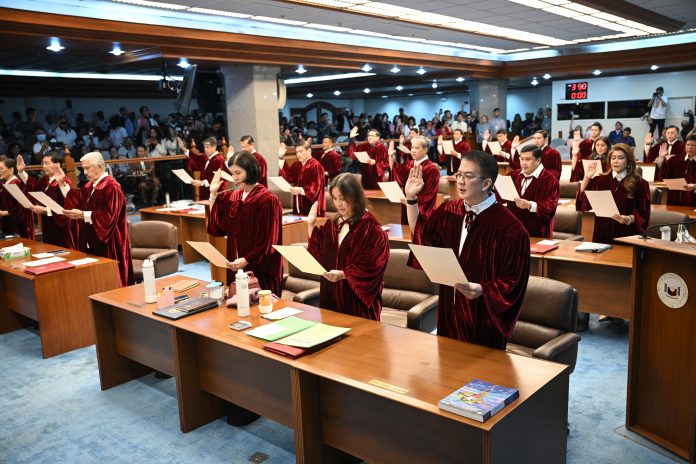
These past few days, it is clear to the nation that many Senators are looking ahead to 2028, not as the latest deadline for enacting new laws or finishing investigations in aid of legislation, but to protect their own interests in anticipation of an expected election outcome. It is hard to quickly think of more blatant acts of political self-preservation than what Filipinos have seen in the Senate lately.
While these issues are obviously serious, the moments of this latest political saga caught on camera do resemble your typical teleserye: plot twists, gunfire, unknown whereabouts, dramatic escapes, and, if some are to be believed, scripting.
Yet this is not 2028. We are not even halfway through what already feels like the longest year in recent history. And right now, there are so many problems to address, in which the upper chamber of the legislature has simply been underperforming.
An overlooked agenda
While the headlines have shifted to the whereabouts and the “whodunit” over the well-being of the public, it is hard to forget that the state of the nation is one of the worst in quite some time. No matter what the President says in his annual speech in the coming weeks, the climate and environment-related issues alone tell us exactly what is happening on the ground.
The country is at risk of water bankruptcy. Oil prices, while not as high as in previous weeks, remain elevated, not to mention the already expensive electricity rates becoming even more costly. Several provinces are already experiencing droughts, and that is before a likely El Niño in the coming months.
Forests and islands continue to be sacrificed for corporate interests, from mining to gray infrastructure.
And do we need to remind everyone of the climate crisis?
The Senate does not exactly have a stellar recent track record on prioritizing the green agenda.
Aside from the fact that many of its current members are being linked to massive corruption in flood control projects, they have also failed to pass urgent bills into law or perform other necessary functions to strengthen climate action.
In the 19th and 20th Congress, the Senate has enacted only a few major climate-related laws: the Philippine Ecosystem and Natural Capital Accounting System Act, the Declaration of State of Imminent Disaster Act, and the Loss and Damage Fund Board Act. In relation to that last measure, it has yet to formally concur with the Host Country Agreement for the Philippines to host the Fund’s Board, despite a fourth Board meeting already happening in the country this July.
The legislative process has never been known for its speed, but if the Senate collectively focused more on addressing the needs of the public instead of their own interests or those of their allies, maybe more green bills long overdue for passage, including the National Land Use Bill and the Sustainable Forest Management Bill, would be laws by now.
There are laws that also need updating to sufficiently address the new landscape, like the Mining Act and, yes, even the Climate Change Act. But is the current crop of Senators even interested in doing any of this?
The best ability
It has become common to dismiss social surveys as part of mind-conditioning strategies meant to benefit politicians. But the recent survey showing that more Filipinos prefer public opinion to matter more than evidence in the impeachment of the Vice President, which many believe triggered the switch in Senate leadership, speaks volumes about the deep distrust surrounding our nation.
These findings highlight strong regional loyalties fueled by endless political clashes. While many still see impeachment as necessary for transparency and restoring institutional trust, they also show that a large portion of Filipinos do not believe that formal legal mechanisms will be conducted in a fair or just manner.
Yet this is also a dangerous trend because it perpetuates the ad populum fallacy, the idea that popularity automatically equates to merit or quality. If that were true, then this country would be in a much better place by now.
Signs of declining institutional trust have existed long before these past few days. We have seen that in the House of Representatives, which has its own version of a runaway lawmaker. We have seen that in agencies like the Department of Public Works and Highways, especially as media attention on flood control corruption scandals has significantly decreased in recent months.
But in a personality-driven political landscape, aside from the Presidency and Vice Presidency, the Senate is the institution where these flaws become most evident. Long gone are the days when the chamber was known as a place of prestige, honor, and competence.
Going back to the 2028 angle, if this nation is truly ready to move away from these cycles of impunity, then it should vote for those with the right set of abilities: knowledge of the legislative process, understanding of critical societal issues, and willingness to actually attend sessions, among others.
But in this age of Philippine politics, perhaps the most important ability is accountability.
The Senate is supposed to be one of the institutions that upholds the highest standards of accountability. It must hold all public officials accountable regardless of political factions. It must ensure that national budgets are truly aligned with the country’s development objectives, including the climate agenda, and the needs of the people. It must also uphold the highest ethical standards among its members, figuratively “walking the talk.”
These past few days alone have shown that the Senate has fallen far short of that. We must change that in 2028, and not just in that part of government.
Remember, we still have two more years with these legislators.
John Leo Algo is the National Coordinator of Aksyon Klima Pilipinas and the Deputy Executive Director for Programs and Campaigns at Living Laudato Si’ Philippines. He has been representing Philippine civil society at UN climate and environmental conferences since 2016 and has worked as a climate and environment journalist since 2016.