Climate disinformation in Indonesia is being used by state and corporate actors to justify rapid economic development while sidelining Indigenous Peoples and weakening environmental accountability, according to a new report by Asia Centre.
The study, Climate Disinformation in Indonesia: Prioritising Development Over Indigenous Peoples’ Vulnerability, said misleading climate narratives are embedded in governance and development strategies pursued by successive governments and expanded under the current administration.
“In Indonesia, climate disinformation has been systematically spread by state and corporate actors to reinforce the prioritisation of rapid development and economic growth,” the report said.
It added that such narratives have been used to “legitimise the erasure and delegitimisation of Indigenous Peoples’ (IPs) knowledge systems and environmental stewardship in the name of ‘development’.”
The report linked climate disinformation to Indonesia’s developmentalist economic model, which promotes extractive industries and large-scale infrastructure projects as essential to national progress.
These projects are often framed as climate solutions, the study said, while their environmental and social impacts are downplayed or omitted.
To meet ambitious growth targets, the government has continued a state-led development strategy centered on industrialization and expansion, now described by President Prabowo Subianto as “human-centric.”
The report said this framing “functions largely as a façade to position extractive development as necessary” while obscuring its impact on Indigenous communities and the environment.
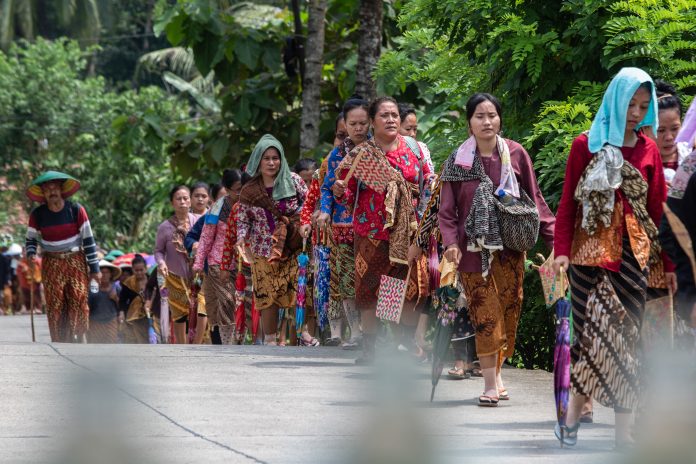
Indigenous Peoples make up an estimated 18% to 26% of Indonesia’s population, or about 50 million to 70 million people. Many live in forested and ecologically vulnerable areas that are increasingly targeted for mining, plantations and national strategic projects.
The report said climate disinformation plays a central role in subordinating Indigenous rights to national development priorities.
By portraying Indigenous practices as incompatible with development, misleading narratives are used to justify exclusion from environmental decision-making and land governance.
The report also linked climate disinformation to declining press freedom and shrinking civic space.
Journalists, activists, and Indigenous leaders who challenge development projects are often labeled “anti-development” or threats to national stability, it said.
Asia Centre said addressing climate disinformation is critical to protecting Indigenous rights and improving climate governance in Indonesia.
The report called for stronger international monitoring, improved media accountability, and legal reforms recognizing Indigenous Peoples under national law.