The president of the social action arm of the Catholic Church in the Philippines urged the public to confront what he described as “tolerated evils” embedded in governance, ecology, and the economy.
“Many evils persist not because they are hidden, but because they are tolerated,” said Bishop Gerardo A. Alminaza of San Carlos, adding that “indifference allows injustice to endure.”
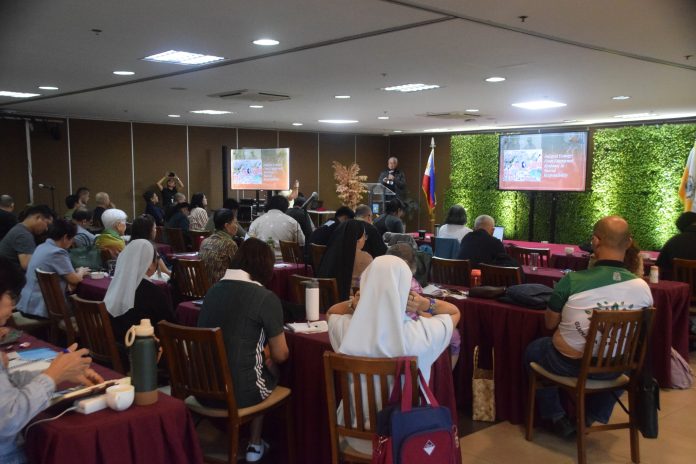
The prelate made the statement during the “Hayuma: Mending the Broken” convergence at the University of Santo Tomas in Manila on Jan. 15.
Alminaza said poverty, environmental destruction, and economic exclusion persist not because they are unavoidable but because they have become socially acceptable.
He said repeated exposure to suffering risks numbs both the public conscience and faith communities. “The greatest threat is not outrage but indifference,” he said, describing a society that “grows used to suffering.”
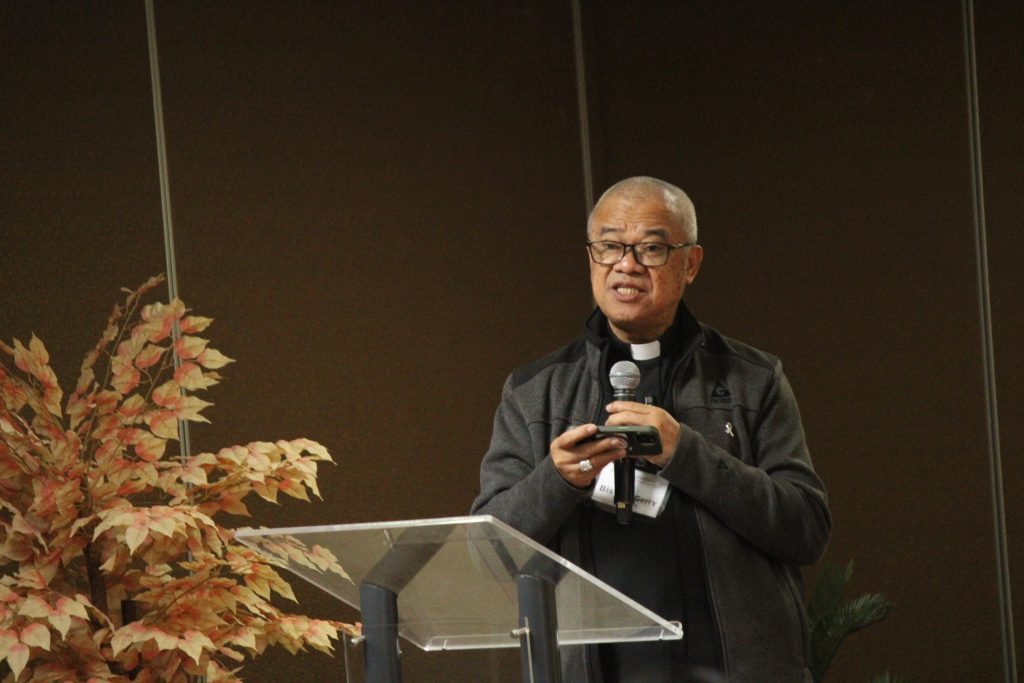
The three-day gathering, running from Jan. 14 to 16, brings together Church leaders, climate advocates, labor groups, people’s organizations, and sectoral representatives to address interconnected social crises through dialogue grounded in Catholic social teaching and the lived realities of Filipinos.
In his address, Alminaza linked environmental degradation to systemic decisions that heighten vulnerability, particularly among poor and marginalized communities.
“If we only respond after disaster, we silently accept that disaster is inevitable,” he said, stressing that integral ecology requires addressing the conditions that repeatedly expose communities to harm.
He also challenged economic narratives that equate growth with justice, noting that inequality and insecurity persist even during periods of expansion.
“Growth alone is not proof of justice,” Alminaza said, pointing to labor arrangements that leave many workers poor despite long hours of work. Citing Scripture, he added that “wages withheld from workers cry out to God.”
Turning inward, the bishop warned that faith communities themselves risk complicity when they avoid economic, ecological, and governance issues.
“Silence in the face of injustice is not neutrality. It allows harm to continue,” he said.
Alminaza emphasized that the Church’s role is not to replace political institutions but to serve as a moral guide.
“The Church is not called to replace political institutions. But she is called to be a conscience,” he said.
He encouraged participants to move beyond charity toward collective transformation, saying, “Love that remains at the level of individual compassion is not enough.”
“We are called not only to mend what has been torn, but to confront why it keeps tearing,” Alminaza added, calling on the Church and civil society to refuse “tolerated evils” and to walk with affected communities in the struggle for justice.