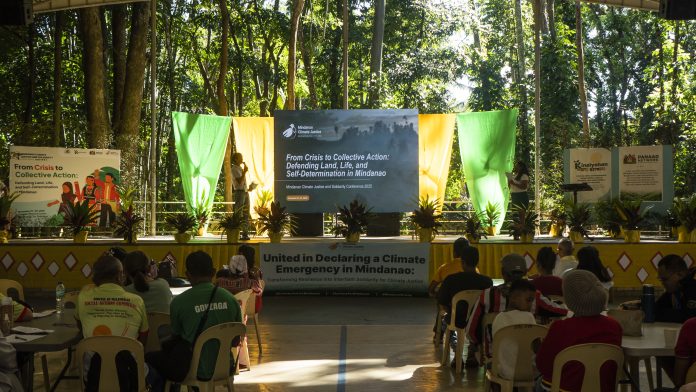
Under the canopy of towering trees at the Diocesan Pastoral Center in Malaybalay, Bukidnon, delegates from across Mindanao gathered to discuss the climate crisis alongside long-standing struggles over land, environment, and identity.
Over two days, Nov. 27–28, the Mindanao Climate Justice and Solidarity Conference 2025 brought together Lumad, Moro, Indigenous leaders, peasants, youth, faith workers, and environmental defenders, united by a shared resolve to respond collectively to the climate crisis.
“The reason is for us to act collectively, never in isolation, in our continuing dialogue with one another, with our Mother Earth, with the cry of the poor, as part of a global family of God the Father, of Magbabaya, and of Allah,” said Bishop Noel Pedregosa of Malaybalay in his opening speech.
Between 2001 and 2024, Global Forest Watch reports that 27,000 hectares of tree cover were lost in the province, driven by timber poaching, land grabbing, and the expansion of commercial agriculture. The mountain ranges of Pantaron, Kitanglad, and Kalatungan have been among the affected areas.
Bukidnon is home to diverse Indigenous and upland communities whose livelihoods depend on forests and rivers for farming, hunting, and daily subsistence. These ecosystems also hold cultural and spiritual importance for many communities.
As forest cover declines and access to land, water, and fertile soil becomes more limited, communities report growing challenges related to food security, traditional practices, and cultural continuity, concerns that were raised repeatedly during the conference.
The conference was co-hosted by Mindanao Climate Justice, a nonprofit organization advocating for sustainable development and social transformation in the region.
“Corruption and the plundering of public funds are inseparable from the seizure of land and natural resources from the Lumad, Moro, and farming communities,” said Ma. Victoria Nolasco, executive director of the group.
“These are two forms of plunder that both worsen the climate crisis and weaken our communities. It is not for lack of warnings or action in the past. Many initiatives have started, but we need to continue and strengthen these efforts,” she added.
Gathering to renew Panaad (pledge)
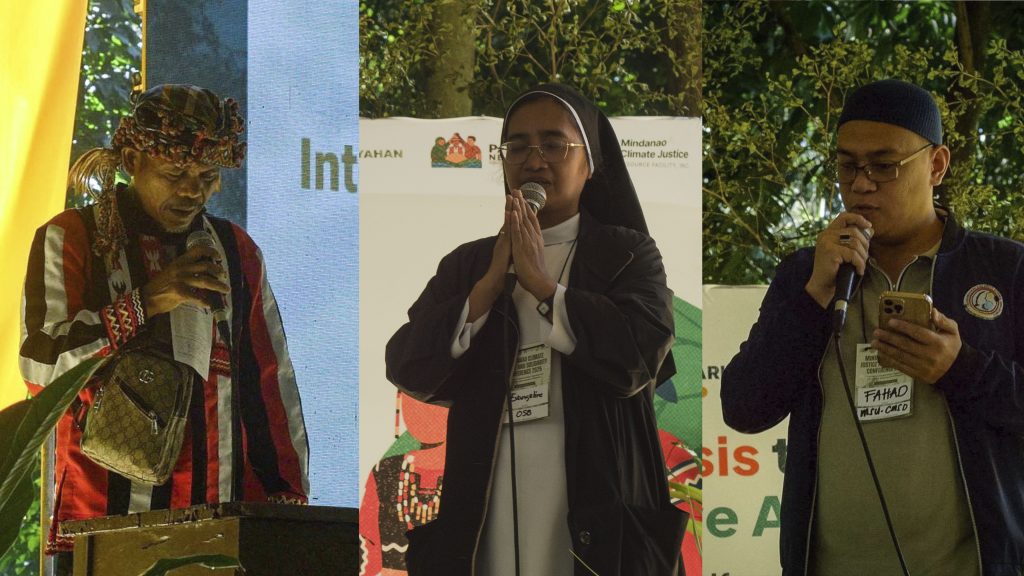
The conference opened with an interfaith prayer, during which Lumad, Moro, and Christian participants offered prayers of gratitude and remembrance for communities affected by displacement, threats, and violence.
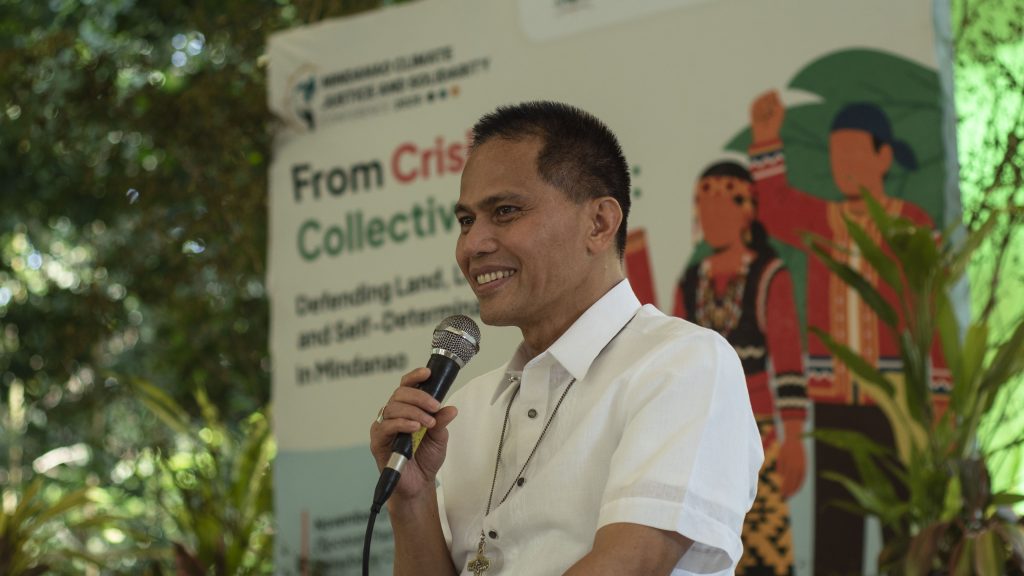
“No single sector can face this crisis alone. We must stand together, Church, communities, and civil society, to protect our common home,” said Bishop Pedragosa.
Bishop Raul Dael of Tandag told delegates that ecological care is a moral imperative rather than a choice, and spoke about reports of harassment and red-tagging faced by Lumad schools and communities involved in protecting ancestral lands.
“It is often Lumad communities, not the state, that are the first and most consistent guardians of forests and rivers,” he said.
Fr. Reynaldo Raluto, chair of the Integral Ecology Ministry of the Diocese of Malaybalay, spoke about the links between poverty and environmental degradation in Bukidnon.
“Ecological advocacy must also confront dehumanizing poverty and social injustice,” Raluto said.
“We engage politically in ecological activism. Do not fear political engagement, because in times of climate emergency, it is crucial that we collectively practice ecological virtues,” the priest added.
He called on the Church and communities to take what he described as a prophetic stance against “ecological sins” and unsustainable practices. “Those responsible must be held accountable, not only for corruption, but especially for the destruction of our environment,” he added.
Prof. Rufa Cagoco-Guiam, a cultural anthropologist and board member of Mindanao Climate Justice, discussed how the Bangsamoro experience overlapping challenges arising from decades of armed conflict and the accelerating climate crisis.
She said disasters often deepen existing inequalities, with Indigenous, Moro, and rural communities bearing disproportionate impacts.
Drawing from a feminist climate justice framework, she highlighted redistribution, recognition, representation, and reparation as key principles for advancing the rights and well-being of women, gender-diverse peoples, and other marginalized sectors.
Timuay Justice and Governance leader Allan Olubalang spoke about the ongoing struggle of the Teduray-Lambangian and non-Moro Indigenous Peoples to defend their ancestral domains in Maguindanao and Sultan Kudarat.
He cited the formation of grassroots task forces, including FUSAKA INGED’s Bantay Kalikasan, which communities have organized in response to mining projects in their areas.
From Marawi, internally displaced person Hanifah Pangcoga described the situation of families displaced eight years ago, many of whom continue to live in cramped shelters with limited access to water and food. “Hanggang kailan kami magiging Internally Displaced People?” she asked. (How long will we remain internally displaced people?)
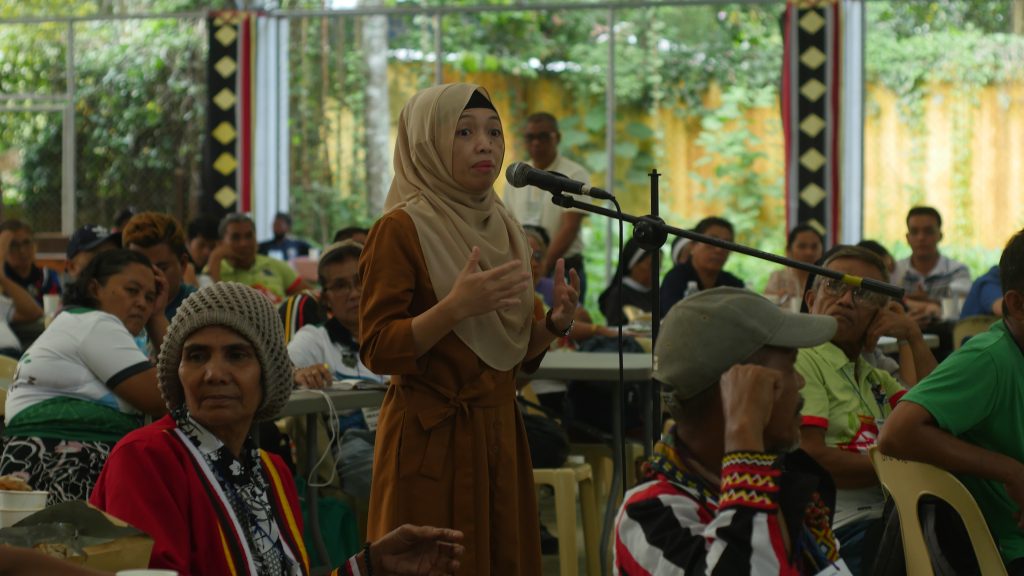
Representatives of Lumad communities in Bukidnon, including members of the Manobo-Pulangiyen, Matigsalug, Talaandig, and Higaonon tribes, shared their experiences during dialogue sessions.
Speakers detailed long-standing disputes over ancestral lands and military reservations, as well as the expansion of large-scale agribusiness operations, including Del Monte Philippines.
“Nagpapasalamat kami sa suporta ng diocese, ng ibang organisasyon, sa pagpapaintindi sa amin sa mga batas at sa kalikasan, para ang komunidad ay magkaisa at hindi isusuko ang karapatan sa aming lupain. Nasa atin ang solusyon, kung ano ang gagawin natin para sa pagprotekta sa ating ancestral domain,” a woman Lumad leader said.
(We are grateful for the support of the diocese and other organizations, for helping us understand the laws and care for the environment, so that the community can unite and not surrender our rights to our land. The solution lies with us, in what we choose to do to protect our ancestral domain.)
During the sessions, participants discussed ways to support Lumad communities in defending ancestral domains and advancing Indigenous rights advocacy in the region.
More than Panaad: Developing capacity for collective action
The second day of the conference opened with a video message from Archbishop Jose Cabantan of Cagayan de Oro.
“We are not just facing an ecological crisis but a moral one,” he said. “In moments of crisis, faith must lead us toward courage.”
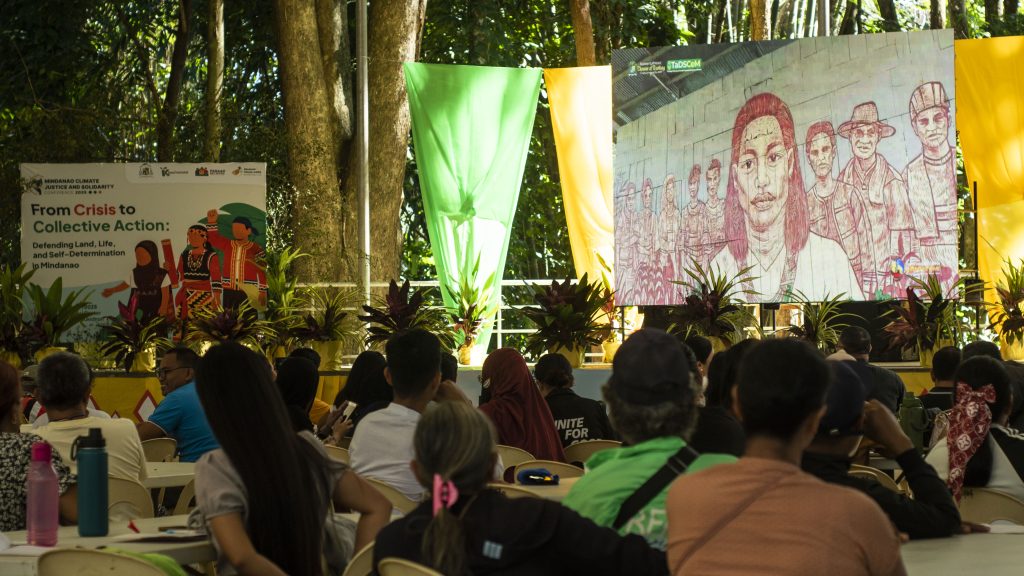
In his message, Cabantan called on the Church to accompany communities affected by displacement, militarization, and environmental damage.
Fr. Pedro Walpole, a Jesuit missionary and environmental scientist who recently attended COP30 in Brazil, spoke about the lack of accountability among major polluters. He connected the global climate crisis to conditions in Mindanao, saying that “conflict starts with poverty.”
As of 2023, Bukidnon has a poverty incidence of 27 percent, meaning nearly one in four residents lives below the poverty line, the highest rate in Northern Mindanao.
Walpole urged the government to allow Mindanao communities to take the lead in climate action, drawing on Indigenous ecological knowledge and locally grounded initiatives.
Dr. Reggie Pamugas, a psychiatrist, conducted training on psychological first aid for advocacy support groups.
Altermidya Network held discussions with Kinaiyahan youth on truth-telling and disinformation, while Atty. Thaddeus Tuburan led sessions mapping legal issues related to land grabbing, Indigenous Peoples’ rights, and state and corporate harassment.
The conference concluded with the formal launch of the PANAAD Network, a multisectoral alliance that committed to providing rapid response, legal assistance, psychosocial support, and interfaith accompaniment.
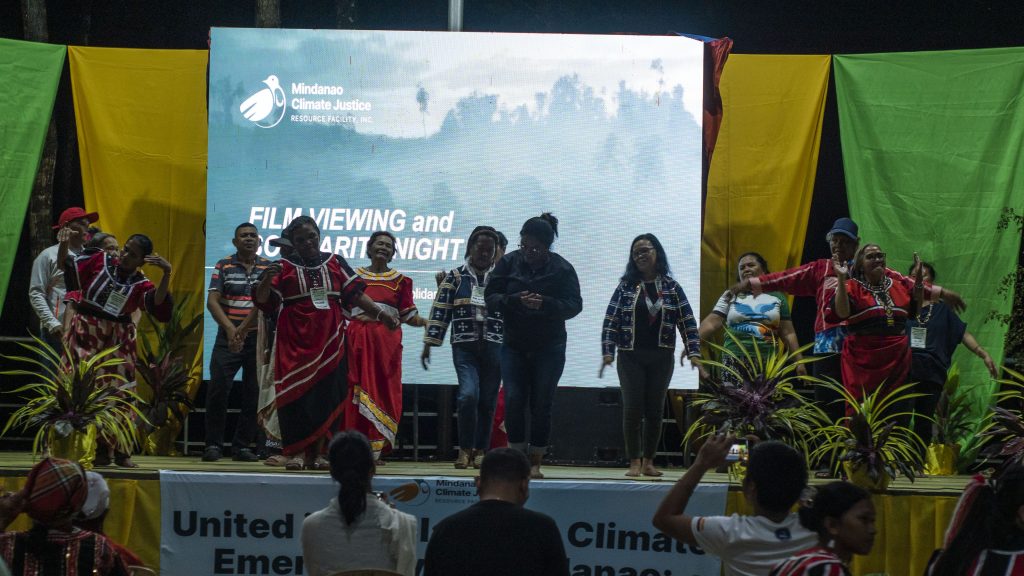
Sr. Zeny Jean Amar led the launch and addressed participants, saying, “If yesterday we heard their cries, today we must live out our responsibility.”
Participants also heard the Bukidnon Declaration, which was drafted from conference testimonies, research, and prayer.
The document cites historic injustices in Mindanao and affirms calls for self-determination, collective defense of land and life, opposition to red-tagging and harassment, and the dignified return of displaced families.
Its final line states, “No community should face these converging crises alone.”
During a candlelit rite, delegates raised candles and recited together, “Panaad ko, Panaad nato, magkahiusa ta.” (My pledge, our pledge, let us unite.)
In the closing synthesis, Fr. Arthuro Paraiso, lead convenor of the PANAAD Network of Care, described the hardships faced by communities as systemic rather than accidental.
“Their hardship is not an accident; it is produced by a system that favors a few,” he said.
“Because the forces harming them are systemic, our response must also be organized, united, and rooted in love and empathy,” he added.
Paraiso said communities are not seeking saviors, but katuwang, or companions, willing to share risks and accompany them in legal struggles, community defense, and long-term efforts toward healing, rebuilding, justice, and self-determination.