Parents, grandparents, guardians: beware. If you love the children in your care, you need to know how vulnerable they are to abuse on the internet through social media platforms. Knowledgeable parents demand controls over telecommunications corporations (telcos) and internet service providers (ISPs) to block these abusive platforms. Some nations, like Australia, have enacted laws that restrict children aged 16 years and younger from accessing a number of these platforms. The Philippines should also pass such laws.
Children are becoming increasingly secretive and distancing themselves from their parents and siblings as they spend hours on social media daily. Parents and guardians feel they are losing their children or wards to manipulative people who are contacting, grooming, and controlling these youngsters online.
Such contacts, and the streaming of child abuse images and videos, expose children and young people to negative influences that are causing serious mental health issues, sexual grooming, sextortion, harassment, bullying, emotional distress, and other serious problems.
A United Nations Children’s Fund (UNICEF) study in the Philippines in 2015 found that one in two children experienced online violence of some kind. One in every five children aged between 12 and 17 who use the internet suffered serious online sexual abuse and exploitation. This translates to about 20 percent of internet-using children, or an estimated 2 million children, every year. Only 4 percent of those victimized ever report such abuse and exploitation to the police or call helplines due to stigma, fear, and a lack of awareness of available help. In 2016, UNICEF found, through another study, that 80 percent of Filipino children are in danger of being sexually abused or taken advantage of online.
More disturbing revelations indicate that despite the passage of Republic Act (RA) 11930, or the Anti-Online Sexual Abuse or Exploitation of Children (OSAEC) and Child Sexual Abuse or Exploitation Materials Act of 2022, the production, distribution, and possession of abusive materials continue online, and telcos do little to block them. RA 11930 makes it illegal to give anyone access to such materials.
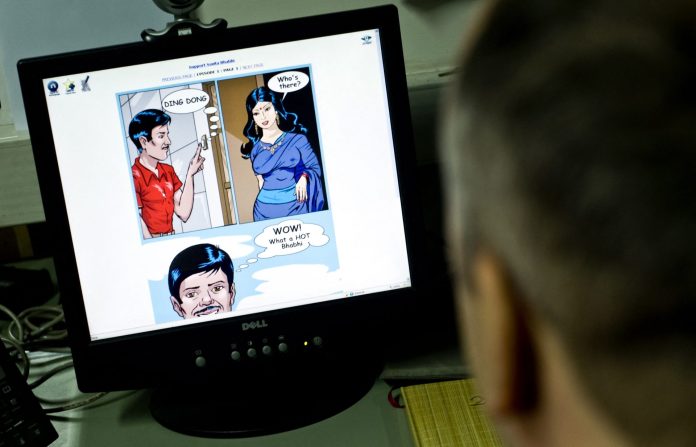
Maria (not her real name), 6, was sexually assaulted by her neighbor Joshua (also not his real name), 13, after he watched videos on a child pornography website. He borrowed a low-cost mobile phone and connected to the internet for an hour by paying a pittance to the telco and ISP. Maria told her parents about the assault. Her father threatened to kill Joshua. He was brought to the Preda Foundation’s home for children in conflict with the law to learn moral values and adolescent reproductive health and sexuality. There, he described how he was aroused by what he viewed online and was encouraged to commit the serious crime.
In Australia, parents demanded a new law banning people aged 16 and younger from accessing social media platforms such as TikTok, X, Facebook, Instagram, YouTube, Snapchat, and Threads. Under that law, those younger than 16 will not be allowed to open new accounts and must delete their accounts on these platforms.
An international study in 2025 discovered that 96 percent of children aged 10 to 15 were using social media for hours every day. As many as seven in 10 had experienced being groomed by adults, and half of them had suffered bullying online. The harmful content they saw online was emotionally disturbing, and some even visited sites telling kids to kill themselves.
In the Philippines, telcos and ISPs allow these platforms to be available to children without screening or installing artificial intelligence (AI)-powered software that can block sexual abuse images and videos, and the livestreaming of such abuse aimed at gratifying foreign pedophiles who pay the abused children’s parents or relatives to commit these crimes. Foreigners arrested in France and Switzerland have been convicted for the sexual abuse of Filipino children online. This is evidence that there is no AI-powered blocking software to stop them.
The question is: are the telcos committing a more serious heinous crime by allowing such illegal content to flow through their lines unblocked, unscreened, and unhampered? The implementing rules and regulations of RA 11930 allow the Anti-Money Laundering Council to freeze or confiscate properties associated with OSAEC activities. It is recommended that certain ISPs be shut down and certain properties of telco executives be confiscated.
Again, telcos are mandated by law to install software to intercept and delete all images and videos of, and block the livestreaming of, child sexual abuse. But they only report abusive websites to the Internet Watch Foundation, a United Kingdom–based nongovernment organization. The abusive content is uploaded on a new website within days.
Such harmful content that children can easily view on their mobile phones or computers can damage them, and even prompt or entice some of them to abuse other children. The world, through the abuse of the internet, is becoming sex-obsessed. The dangerous sites children visited were not only Facebook, Instagram, Snapchat, Threads, TikTok, X, and YouTube, but also Reddit and streaming platforms Kick and Twitch.
Australia’s social media ban is being studied worldwide and puts the responsibility on telcos and social media companies to protect children. What can National Telecommunications Commission Commissioner Ella Blanca Lopez, and Deputy Commissioners Jon Paulo Salvahan and Alvin Bernard Blanco do to protect Filipino children at grave risk? Impose fines for noncompliance?
Stephen Scheeler, former chief executive officer of Facebook for Australia and New Zealand, once told the media: “It takes Meta about an hour and 52 minutes to make AU$50 million in revenue.” How much more do Philippine telcos earn in one hour? Their astronomical earnings can buy anything, and their threat to close the internet, if held to account, makes them more powerful than any government agency, even more powerful than President Ferdinand Marcos Jr. himself. He has said he was shocked by how much abusive material aimed at young people was available. What is at stake is the well-being and the mental and emotional health of Filipino children, but it seems some powerful and morally corrupt tycoons control the nation.
Note: Any original information, stories, or news articles posted on this site that are authored by the Preda Foundation and Father Shay Cullen may be shared, copied, or reproduced without further permission, in support of truth, freedom of expression, and the public’s right to know.
LiCAS News was granted permission to republish and adapt this article by Father Shay Cullen in the spirit of truth-telling and the pursuit of justice.
Irish missionary Father Shay Cullen, SSC, founded the Preda Foundation in Olongapo City in 1974 to promote human rights and the rights of children, especially victims of sexual abuse.
The views expressed in this article are those of the author and do not necessarily reflect the editorial stance of LiCAS News.