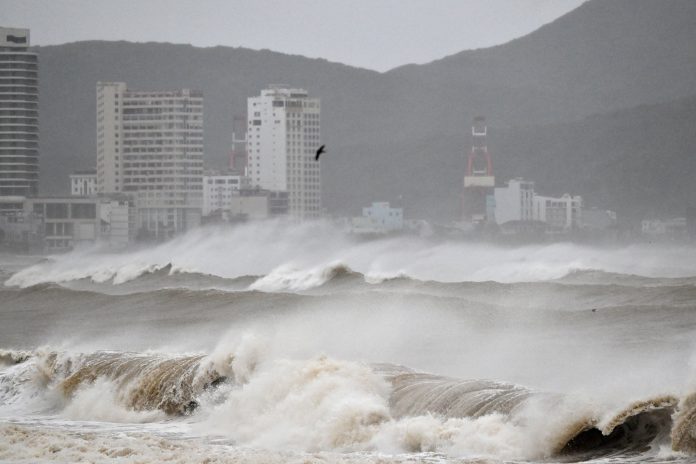
A pro-environment group has called on world leaders attending the COP30 summit in Belém, Brazil, to deliver concrete action on the climate crisis as Typhoon Kalmaegi left widespread devastation across the Philippines and Vietnam.
In a statement, 350.org Asia said the disaster must serve as a wake-up call for governments to end their reliance on fossil fuels and commit to a just energy transition.
The organization urged delegates to produce “a clear roadmap to rapidly and equitably phase out fossil fuels and triple renewable energy” — a demand it said reflects the urgent needs of frontline communities in Asia “forced to deal with the worst impacts of a crisis they did not create.”
“As leaders and billionaires think up more elaborate ways to extend the life of fossil fuels, more intense climate disasters take away lives, homes, and livelihoods in just a flash,” said Norly Mercado, 350.org Asia Regional Director.
“Justice does not just demand that our losses be recognized and compensated. Justice demands real action that will propel us towards a rapid and equitable transition to renewable energy,” she added.
Mercado said communities no longer want to “witness these tragedies of climate inaction unfold,” calling on world leaders to “rewrite the script: no more lies, no more excuses.”
She said the group expects COP30 to conclude with a firm commitment that prioritizes people and communities over corporate polluters.
Typhoon Kalmaegi’s toll
The group’s appeal came as Typhoon Kalmaegi, one of the most destructive storms this year, killed 188 people in the Philippines and five more in Vietnam, according to Agence France-Presse (AFP).
Philippine authorities said more than a hundred remain missing, with the nation under a state of emergency as another super typhoon approaches.
Kalmaegi unleashed record rainfall across central Philippines, sweeping away vehicles and homes before making landfall in Vietnam late Thursday.
In Gia Lai province, where winds reached 149 kilometers per hour, residents described widespread destruction.
Vietnam’s environment ministry said 57 houses collapsed and nearly 3,000 were damaged across Gia Lai and neighboring Dak Lak provinces. Eleven boats sank, and more than 1.6 million households lost power.
In the Philippines, “unprecedented” floodwaters submerged towns across Cebu and Negros as rescue operations continued.
Scientists have warned that human-induced climate change is making tropical cyclones more powerful and destructive, with warmer oceans intensifying storms and a hotter atmosphere trapping more moisture.
“World leaders,” Mercado said, “must now act with courage and conscience — before the next storm hits.”