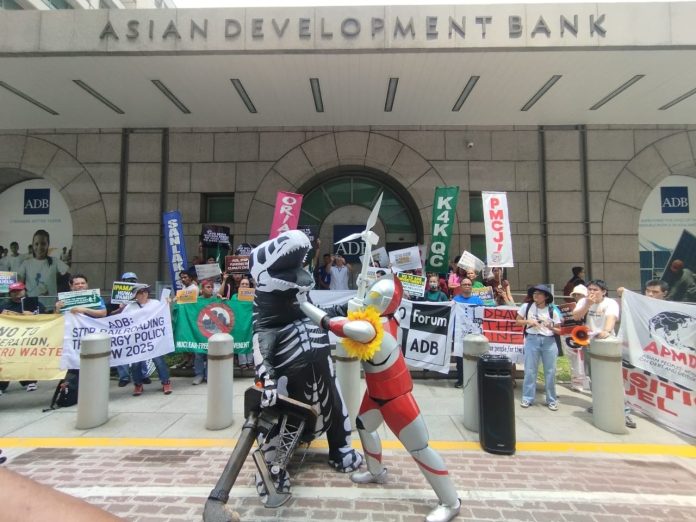
Civil society groups have denounced the Asian Development Bank’s (ADB) 2025 Energy Policy Review as a rushed, opaque process that could lock the region into decades of fossil fuel dependence and harmful “false solutions.”
Originally due in early 2026, the review is now set to conclude in September 2025, with key documents released only on July 30 — halfway through the process. Groups said the accelerated timeline undermines meaningful consultations and breaches ADB’s transparency standards.
“ADB is treading on a slippery slope as it intends to finance more extractivism at the expense of biodiversity, water resources, and land rights,” said Jaybee Garganera of Alyansa Tigil Mina (ATM), warning that nickel and copper mining would create “sacrifice zones” in fragile ecosystems and Indigenous territories.
One of the most contentious proposals is lifting the bank’s ban on nuclear financing. The Nuclear/Coal-Free Bataan Movement said, “The BNPP is a monument to failed energy policy and corporate recklessness. Reviving nuclear financing will only deepen debt, displace communities, and expose generations to irreversible harm.”
APMDD’s Lidy Nacpil described nuclear energy and fossil plant retrofits as “dangerous distractions” when renewables are “affordable, increasingly scalable and widely adopted.” She warned the policy would “lock us into decades more emissions, debt, and harm.”
The review’s push for large-scale “critical minerals” mining also drew criticism. “A wholesale promotion of transition mining without a deeper look at how poor communities will be affected is just green extractivism,” said Maya Quirino of the Legal Rights and Natural Resources Center.
Campaigners also opposed expanding the Energy Transition Mechanism to cover oil and gas, continued framing of fossil gas as a “transition fuel,” and promoting waste-to-energy incineration, carbon capture, and co-firing fossil plants with ammonia or hydrogen.
“It’s heinous for ADB to continue investing in waste-to-energy incineration,” said Mayang Azurin of GAIA Asia Pacific, citing air quality monitoring in Surabaya and Dumaguete that recorded particulate matter exceeding international thresholds by 100%.
Nazareth Del Pilar of the NGO Forum on ADB said the review “shows how corporate interests are being put on the pedestal over people and the planet,” while PMCJ’s Elle Bartolome accused the process of being “railroaded to protect the Bank’s fossil fuel investments.”
Civil society groups urged ADB to extend the review to 2026, reject nuclear power, fossil gas, large-scale mineral extraction, and embed strong human rights safeguards, including Free, Prior, and Informed Consent.
“Fast-tracking weak policies wastes the precious time we have left to reverse the climate crisis,” said Chuck Baclagon of 350 Pilipinas. “Without genuine consultation with communities whose lives and livelihoods are at stake, there can be no real climate justice.”