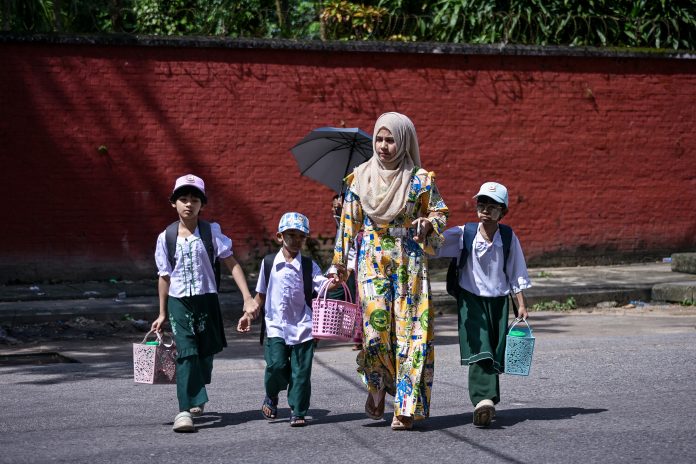
A Catholic bishop in Myanmar said the collapse of the country’s education system is driving young people to flee or consider leaving as war and displacement continue to uproot communities.
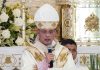
“They have fled because the education system has collapsed,” said Bishop Bernardino Ne Ne, coadjutor bishop of Taungngu, according to Fides News Agency.
Many young people are considering building their lives elsewhere, including abroad, as conflict, economic hardship and insecurity persist, the bishop said.
“Young people are not only the future of the Church; they are an essential part of the Church today,” said Bishop Ne Ne. He said accompanying them means listening, walking with them and helping them “encounter Christ personally.”
Taungngu is in Myanmar’s Bago Region, an area linking central parts of the country with predominantly Karen areas in the east, where conflict between the Myanmar military and ethnic armed groups has continued for decades.
The conflict expanded after the February 2021 military coup, with fighting, military operations and airstrikes affecting Bago and surrounding areas.
Bishop Ne Ne said pastoral work continues despite widespread displacement.
“We are experiencing widespread displacement, but pastoral ministry continues despite the difficulties,” he said. “Priests remain in the parishes and care for families; they listen to them and offer comfort.”
The United Nations estimated that about 3.6 million people were internally displaced in Myanmar in 2026.
The bishop said many people in the Diocese of Taungngu had been forced to leave their homes and were living in precarious conditions.
“There are airstrikes around the cities. People are afraid and struggling to survive. Inflation is soaring, and the population is suffering,” said Bishop Ne Ne.
Of the diocese’s 64 priests, 44 are engaged in pastoral ministry, according to the bishop.
He said priests remain close to families, visiting them, listening to them and offering comfort. The Church, he said, “stands alongside those who suffer, especially the poor, the vulnerable and those affected by conflict and hardship.”
The Church continues charitable work, pastoral care and education while proceeding cautiously because of the insecurity.
“We do not hold large gatherings that are not permitted. Nevertheless, faith remains strong despite the challenges and insecurity,” said Bishop Ne Ne.
The bishop also said “peace is imperative” after five years of civil war, but prospects for dialogue remain difficult because “there is no mutual trust between the two groups involved in the conflict.”
He said ASEAN had attempted to intervene, but “its plan has remained on paper.”
“Peace and reconciliation begin in our hearts and in our communities,” said Bishop Ne Ne. “As followers of Christ, we are called to be instruments of peace, forgiveness and unity.”