
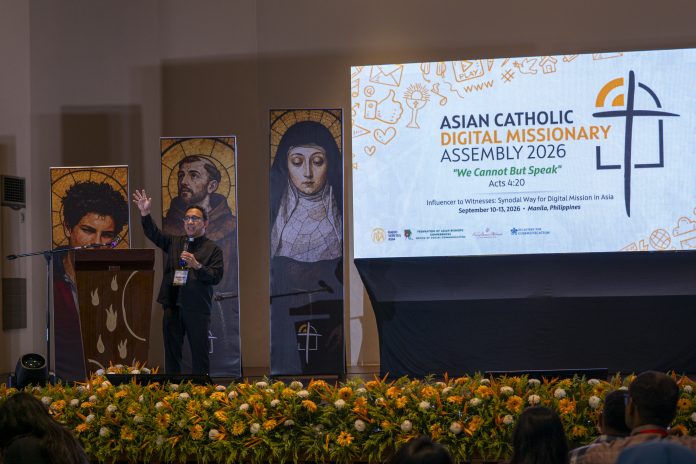
The head of the social communication office of the Federation of Asian Bishops’ Conferences urged Catholic digital missionaries to confront Asia’s digital divide and algorithm-driven polarization as matters of human dignity and social justice.
Bishop Marcelino Antonio Maralit Jr. of San Pablo said technological advances risk deepening existing inequalities when poor and marginalized communities are excluded from access and participation in the digital world.
“Sometimes it is also an issue about human dignity, social realities, even social justice, and sometimes for many nations it’s an issue of survival,” Maralit said in his keynote address during the Asian Catholic Digital Missionary Assembly (ACDMA) 2026 in Manila on Sept. 11.
The prelate told the nearly 100 digital missionaries who have gathered for the first-ever Asian assembly that the continent has the highest number of people connected to the internet globally because of its large population, but the region continues to face a wide digital divide.
Maralit said technological development does not automatically benefit everyone and warned that unequal access could further widen the gap between rich and poor communities.
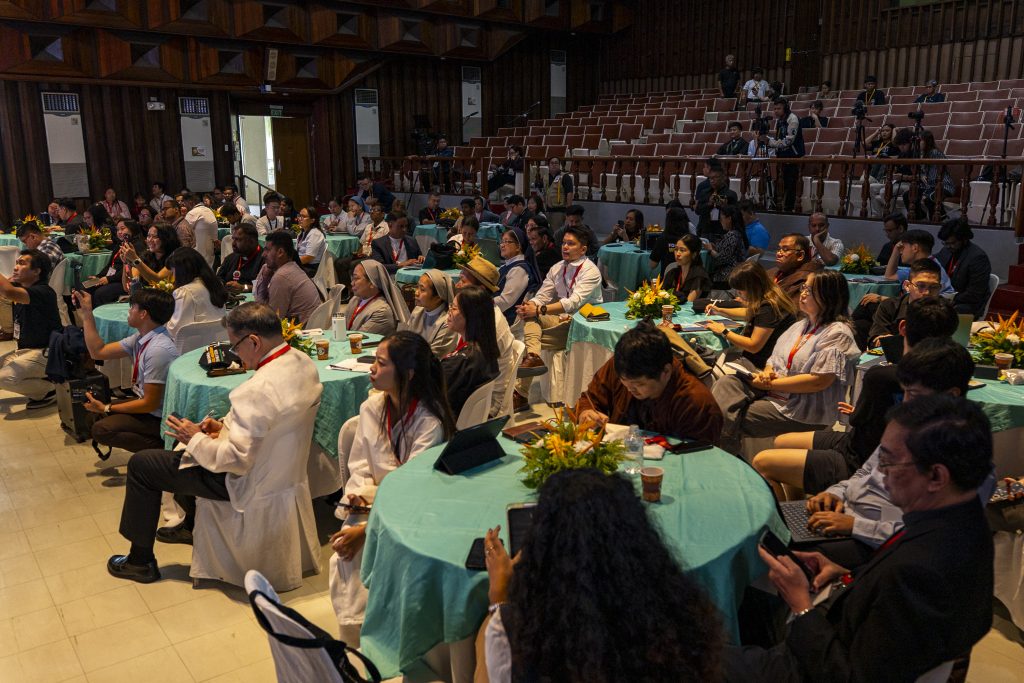
“Unless human dignity and social inclusion are intentionally built into the system, technological innovations will simply deepen structural inequalities, whether we like it or not,” he said.
“It widens the gap between the rich and the poor more, because the more technologies develop, unless it is inclusive, the more it pushes the poor from having these technological advancements,” he added.
The bishop also warned that social media algorithms reward speed, novelty, outrage, and controversy, while encouraging the formation of echo chambers that can push people toward more extreme positions. “What has been created is rather echo chambers,” Maralit said.
He said the problem is also present within the Church, where online spaces can reinforce divisions instead of encouraging dialogue.
Maralit contrasted the logic of social media platforms with the values he said should guide Christian mission. “The algorithmic system is optimized for speed and novelty,” he said.
By contrast, he said, “our gospel asks us to be patient.”
Maralit said the Gospel also requires closeness, compassion, tenderness and authentic relationships rather than interaction shaped only by digital platforms.
He stressed that the question for the Church is no longer whether it should enter digital spaces because people, particularly young people, are already there.
“What kind of church will people encounter when they meet you and me on the digital highway?” he asked.
Maralit said Asia’s cultural, religious, and social diversity should be treated as a foundation for mission rather than an obstacle. “This reality is not an obstacle to mission, but rather, I believe, is the platform itself for mission,” he said.
He pointed to the Asian Church’s tradition of dialogue with cultures, religions and the poor, saying the same approach should shape Catholic engagement online.
Maralit also urged Catholic content creators to move away from an emphasis on personal branding, followers and virality and toward a form of digital mission centered on witness.
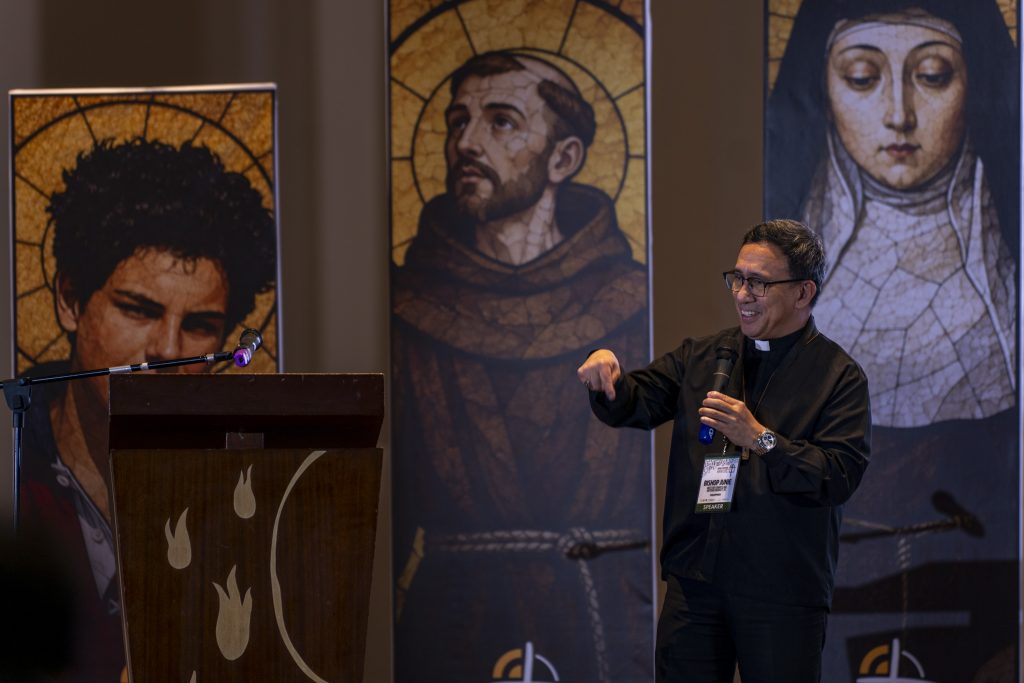
“The thing about influencers, the center is you,” he said, adding that in contrast, “the witness asks people to look at God.”
The bishop proposed five shifts for digital mission in Asia: “from content to encounter, from audiences to communities, from virality to fidelity, from complication to collaboration, and from influence to witness.”
He said digital missionaries should seek genuine encounters with people rather than treat them simply as audiences, followers, or online profiles.
“The next is to seek an encounter, finding the neighbor behind the avatar, the neighbor behind the screen,” he said.
Maralit said Asia’s digital mission should remain rooted in dialogue, human dignity, and relationships, particularly as technological change reshapes how people communicate, form communities, and encounter the Church.