Every day, when we wake up, see the new light of day and acknowledge that we are still alive, we become better, more aware, more alert and more fulfilled people if we affirm our personal worth and dignity as human persons and give thanks to the Creator. Few people are aware of their own dignity and self-worth and, as a consequence, they may have a reduced awareness and recognition of the dignity, value and rights of other persons.
What a more peaceful, just and happier world it would be if most people had this self-awareness of their infinite value and dignity as human persons and recognized the inherent dignity of other people, one that can never be taken away. It is only when we, as humans, acknowledge, respect and treasure our own value that we will value and respect others and their rights and dignity. Thus, transforming our society to make it more humane, just and dignified for all starts with ourselves.
The word “education” is derived from the Latin word “educere,” which means “to lead out,” “to draw out,” or “to bring forth.” In education, the student is not an empty bucket to be filled with facts, figures and other information, nor is the teacher a “payloader” dumping information into that bucket. Instead, a wise teacher must recognize that the student has inherent abilities, latent potential, natural gifts, knowledge and even wisdom that must be given an opportunity to pour out and be discovered.
A teacher’s purpose is to help students become aware of and learn not only about themselves but also about everything in the world around them. It is to help them know, value and respect all people and all things in our world. This knowledge is at the heart of being human, and it is this that unites us with every other human being. This is the heart of true education.
Being educated is more than having talents, gifts, intellectual abilities, knowledge and skills. It is being a fully human person with concern for other people’s needs and feeling compassion and a sense of duty to help others in need. Educational success is not measured by the accumulation of accolades, but by the level of one’s commitment to helping those in need.
The role of the teacher is to affirm, approve and recognize the abilities of students, which need encouragement and opportunities to develop, and to provide a harmonious experience in learning and understanding things. The teacher should be an expert “gardener,” encouraging students to explore and hone their abilities and pursue more knowledge and understanding. Teaching is like tending to various plants and flowers, allowing them to grow.
Enlightened law
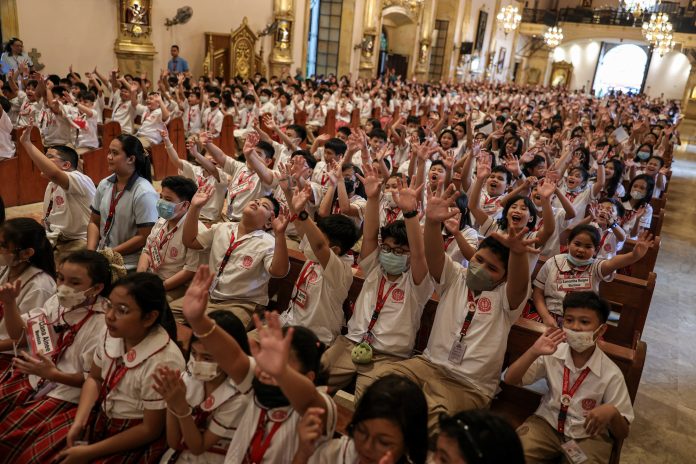
I had the opportunity to share insights with the students of The Manila Times College of Subic at Subic Bay Freeport. Their participation and response were excellent. We discussed children’s rights and education. This is a progressive high school and college that has anticipated the new educational provisions in Republic Act 12322, or “An Act that allows the DepEd the flexibility to determine the pedagogical approaches to be implemented in the basic education curriculum.” This is an enlightened law designed to free the creative abilities of gifted teachers to inspire and stimulate their students to develop self-awareness and self-knowledge, as well as knowledge of things, society and the world, to express themselves and to pursue their natural curiosity in creative ways.
This law gives greater freedom to creative teachers and autonomy to the Department of Education to choose the most enlightened teaching techniques and strategies that will excite and encourage students to engage in self-learning, participate in group learning and explore learning. This approach starts with self-study, knowing oneself and having a commitment to defend their rights and dignity and those of others, and to fulfill their duties to self, family and society.
The freedom given to teachers as a result of this law enables them to develop their own creative teaching methods, bringing their enthusiasm, commitment and personality into their teaching. Teachers are no longer forced to use traditional and rigid teaching styles. They now have the freedom to employ the pedagogical tools that will inspire and create enthusiasm for learning among their students. Gifted teachers are free to give attention to and focus their expertise on specific fields and areas of knowledge that will most benefit students, such as advanced mathematics and science. The days of endless, soul-destroying repetition must be dumped in the dustbin of educational history.
Traditional teaching methods are hardwired into the system, and many teachers know no other method at present. Intensive retraining will take a long time. Traditional teaching methods are highly generalized and have multidisciplinary content, and that tends to slow down the learning process of students who need new and varied stimuli and entertaining teaching methods. The best kind of learning is enjoyable learning. Participatory learning encourages students to think for themselves and to have the freedom to express their opinions and insights. When students feel they are truly respected and valued, and that their insights are valued and respected, they learn all the more with understanding and self-confidence. It helps them develop the ability to understand their own emotions, relationships, inner strengths and human weaknesses.
True education nurtures personal values among students, such as respect for one another and for nature. It guides, encourages and challenges students to think critically for themselves and understand their society and the world. Such an education gives students a compass to distinguish right from wrong, what is true from what is false, and good from bad. It gives them a moral compass for life, enabling and empowering them to choose to do good and oppose evil and wrongdoing. This kind of education gives students the enhanced ability to become independent, reflective people with strong moral opinions and to be confident and self-aware in society. It also helps develop in students a sense of concern for others — especially the poor and marginalized — as well as empathy, ethical reasoning and a sense of justice. Parents also have an important role in this, teaching their children by showing kindness and support and by being good examples of a moral life.
That is education at its best. The freedom of gifted teachers to improvise, promote creative learning and team learning is the future of a more enlightened teaching curriculum for the Philippines.
Note: Any original information, stories, or news articles posted on this site that are authored by the Preda Foundation and Father Shay Cullen may be shared, copied, or reproduced without further permission, in support of truth, freedom of expression, and the public’s right to know.
LiCAS News was granted permission to republish and adapt this article by Father Shay Cullen in the spirit of truth-telling and the pursuit of justice.
Irish missionary Father Shay Cullen, SSC, founded the Preda Foundation in Olongapo City in 1974 to promote human rights and the rights of children, especially victims of sexual abuse.
The views expressed in this article are those of the author and do not necessarily reflect the editorial stance of LiCAS News.