The peace and security of all people depend on the establishment and implementation of a strong rule of law in all nations. Otherwise, chaos and atrocities of all kinds, including war crimes, will prevail, as they have in several countries. More than 20 permanent and active international tribunals currently operate worldwide, and the international rule of law is upheld in large part by the International Criminal Court.
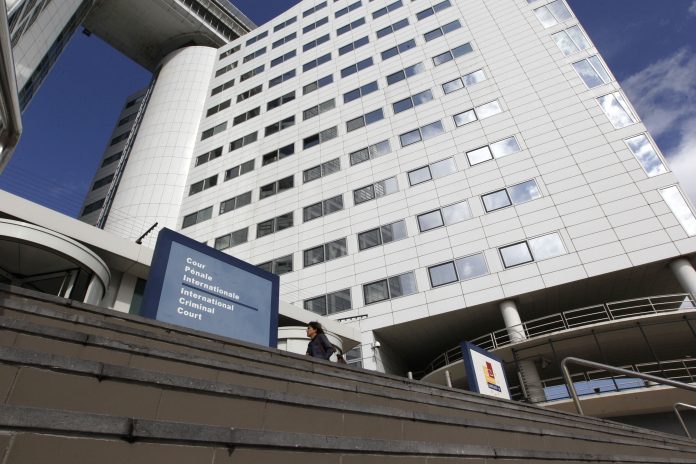
The ICC was established on July 1, 2002, after 60 countries ratified its founding treaty, the Rome Statute. The treaty was adopted by 120 nations during the Rome Conference on July 17, 1998. The court was created as a permanent judicial body to address critical gaps in global justice and end the impunity that sometimes allows heads of state, government leaders, and war criminals to evade justice. Some become so powerful and beyond rebuke in their own countries that domestic courts are incapable of or unwilling to prosecute them for the atrocities they have committed.
Before the ICC, the United Nations had to create temporary, ad hoc courts to handle specific cases, such as the Nuremberg trials after World War II and the tribunals established in the 1990s for Rwanda and the former Yugoslavia. The ICC was formed as a permanent institution to hold leaders accused of crimes against humanity or war crimes accountable. Based in The Hague, the Netherlands, the court sends a clear message to political and military leaders that crimes against humanity, war crimes, and crimes of aggression will not be tolerated.
Severe rhetoric
According to a report in The Guardian, a newspaper renowned for its independent reporting, U.S. President Donald Trump has repeatedly used severe rhetoric against Iran, threatening to wipe it “off the face of this Earth” and saying a “whole civilization will die” if Tehran attempted to assassinate him or refused to comply with Washington’s demands.
In late March and early April, Trump issued an ultimatum to Iran, demanding that it reopen the Strait of Hormuz. He also threatened a “complete demolition” of Iran’s bridges, power plants, and desalination facilities, warning on April 7 that the United States would bomb the country “back to the Stone Age.”
He eventually postponed strikes on civilian infrastructure but later resumed airstrikes across Iran. If he strikes civilian infrastructure, the president and members of his administration could be prosecuted for war crimes or crimes against humanity, especially after they leave office.
Under international law, the general targeting of purely civilian infrastructure, such as power plants, bridges, and water systems, is prohibited and typically constitutes a war crime. However, whether a specific strike is legally classified as a war crime depends on strict criteria concerning military necessity, dual-use capabilities, and proportionality.
Striking a power plant or water purification facility could cause civilian deaths or severe disease and, if deemed disproportionate, be classified as a war crime. Such actions could carry severe repercussions for the perpetrators, including being branded war criminals and charged before the ICC or other international tribunals.
As threats to destroy civilian infrastructure mounted and were repeated, they drew responses from numerous lawmakers, international law experts, humanitarian organizations, and retired military lawyers. They publicly warned Trump that targeting civilian infrastructure could constitute a war crime.
Massachusetts Rep. Seth Moulton, for example, told MSNBC that “bombing civilian power infrastructure is a war crime,” directly challenging Trump’s assertion that he was “not at all” concerned about potential war crimes.
More than 100 U.S.-based legal experts and international practitioners signed a joint letter published in the Just Security policy journal. The letter warned that Trump’s threats to destroy infrastructure indispensable to civilian survival, leaving a nation in a condition from which it “could literally never rebuild,” would entail war crimes if implemented.
This criticism may have encouraged the president to renew his rhetoric against any legal effort to hold him accountable, whether before the ICC or the International Court of Justice and whether while in office or afterward.
Awaiting trial
Former President Rodrigo Duterte is detained in The Hague as he awaits trial for alleged crimes against humanity arising from his so-called war on drugs. As many as 30,000 people were allegedly shot dead by his “death squads,” which included police officers and vigilantes, many of whom were reportedly rewarded.
Leaders who feel they are being criticized can retaliate. This writer was charged in court after calling on a Davao City leader to stop the killing of street children and human rights workers. The legal battle lasted a year and ended when the mayor withdrew the charges.
In 2024, the ICC issued arrest warrants for Israeli Prime Minister Benjamin Netanyahu and former Defense Minister Yoav Gallant for crimes against humanity over their relentless attacks against Palestinians in the Gaza Strip and the West Bank. The attacks followed the Hamas assault in southern Israel on Oct. 7, 2023, which sparked the war and left at least 1,200 Israelis dead.
As of July 2026, at least 73,250 Palestinians had been killed in Gaza and 1,109 in the Israeli-occupied West Bank since Oct. 7. Their long-term plan, it seems, is to occupy and control all Palestinian territories and eliminate or deport the Palestinians. Approximately 5.56 million Palestinians live in those territories.
The United States was displeased when the ICC opened an investigation in 2020 into alleged crimes committed by American forces in Afghanistan and at CIA, or Central Intelligence Agency, “black sites” in Europe. That investigation, now dormant, had already prompted sanctions against former ICC prosecutor Fatou Bensouda.
On July 13, the Trump administration launched a “diplomatic campaign” against the ICC as an institution, led by U.S. Secretary of State Marco Rubio.
“As we speak, the ICC and its friends are waging war against our country,” Rubio said. “Not with bullets and missiles, but with statutes and compacts and the force of so-called international law.”
The United States would use “all the tools at our government’s disposal,” he added, “working beside every ally with whom we can make common cause.”
“We will dismantle the ICC,” he said.
The United States says the ICC has “no jurisdiction over US persons — anywhere in the world.” It intends to persuade other nations to withdraw their support from the ICC, threatening to cancel aid if they refuse.
Other tactics include imposing sanctions on ICC prosecutors and judges, blocking their credit cards, and preventing them from accessing banking and online platforms. One official described the measures as a “financial death penalty.” An international travel ban on ICC prosecutors and judges has also been suggested. All these sanctions are being imposed merely for doing their jobs.
In June 2026, sanctioned ICC judges Kimberly Prost of Canada, Solomy Balungi Bossa of Uganda, and Reine Alapini-Gansou of Benin filed a lawsuit against the Trump administration in a Manhattan federal court. They argued that the U.S. executive orders were unlawful, constituted an abuse of national emergency powers, and exerted illicit, extrajudicial pressure designed to coerce and punish judges for their independent judicial decisions.
We hope the rule of law will prevail everywhere.
Note: Any original information, stories, or news articles posted on this site that are authored by the Preda Foundation and Father Shay Cullen may be shared, copied, or reproduced without further permission, in support of truth, freedom of expression, and the public’s right to know.
LiCAS News was granted permission to republish and adapt this article by Father Shay Cullen in the spirit of truth-telling and the pursuit of justice.
Irish missionary Father Shay Cullen, SSC, founded the Preda Foundation in Olongapo City in 1974 to promote human rights and the rights of children, especially victims of sexual abuse.
The views expressed in this article are those of the author and do not necessarily reflect the editorial stance of LiCAS News.