In the mountains of northern Thailand, Buddhist university students gathered around a Catholic priest to learn how Indigenous Karen wisdom could respond to climate anxiety, consumerism, and spiritual disconnection.
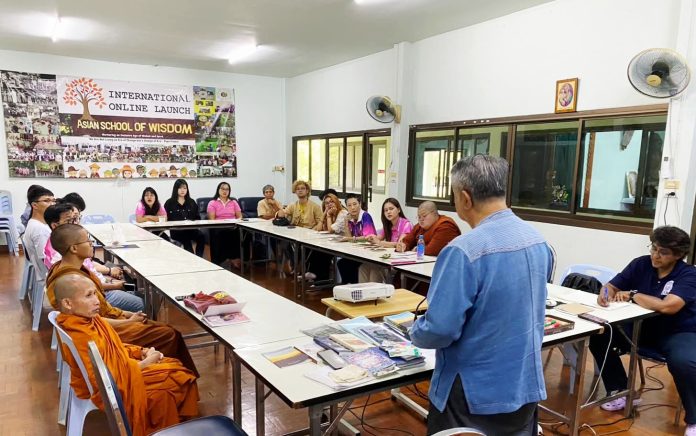
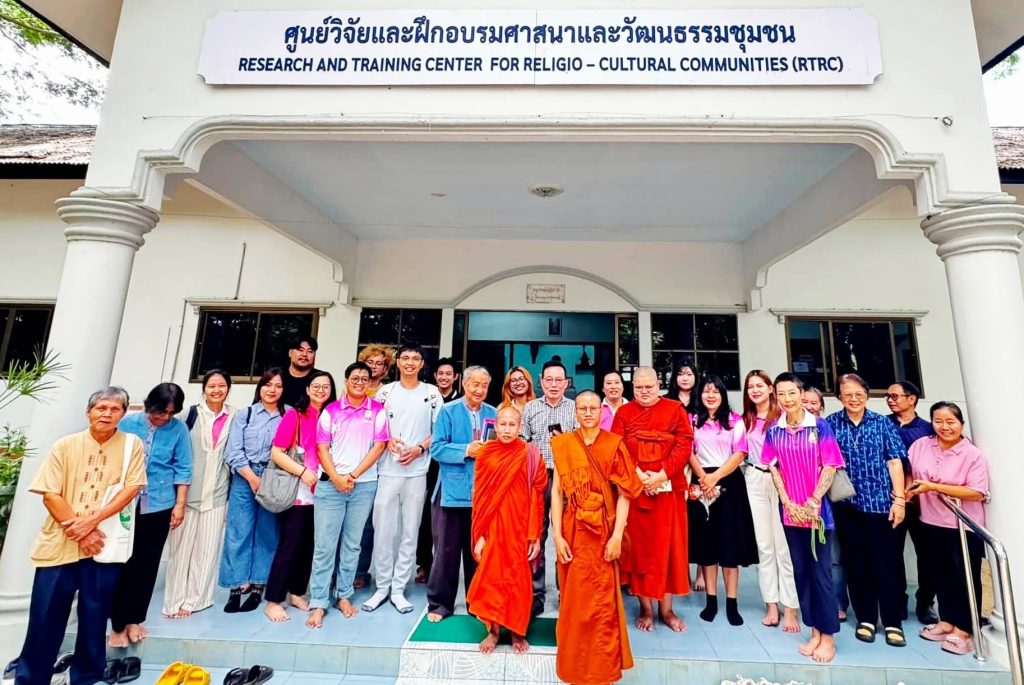
Third-year English Program students from the Department of Religion and Philosophy at Mahachulalongkornrajavidyalaya Buddhist University’s Chiang Mai campus visited the Asian School of Wisdom in Ban San Pu Lei last week as part of their “Religion and Local Wisdom” curriculum.
Dr. Boonchuay Doojai, a Thai Buddhist scholar and former monk, led the visit. The school brings together ancestral knowledge, faith, and care for creation.
A Sanctuary Where the Future Is Indigenous
The Asian School of Wisdom operates under the Research and Training Center for Religion and Community Culture.
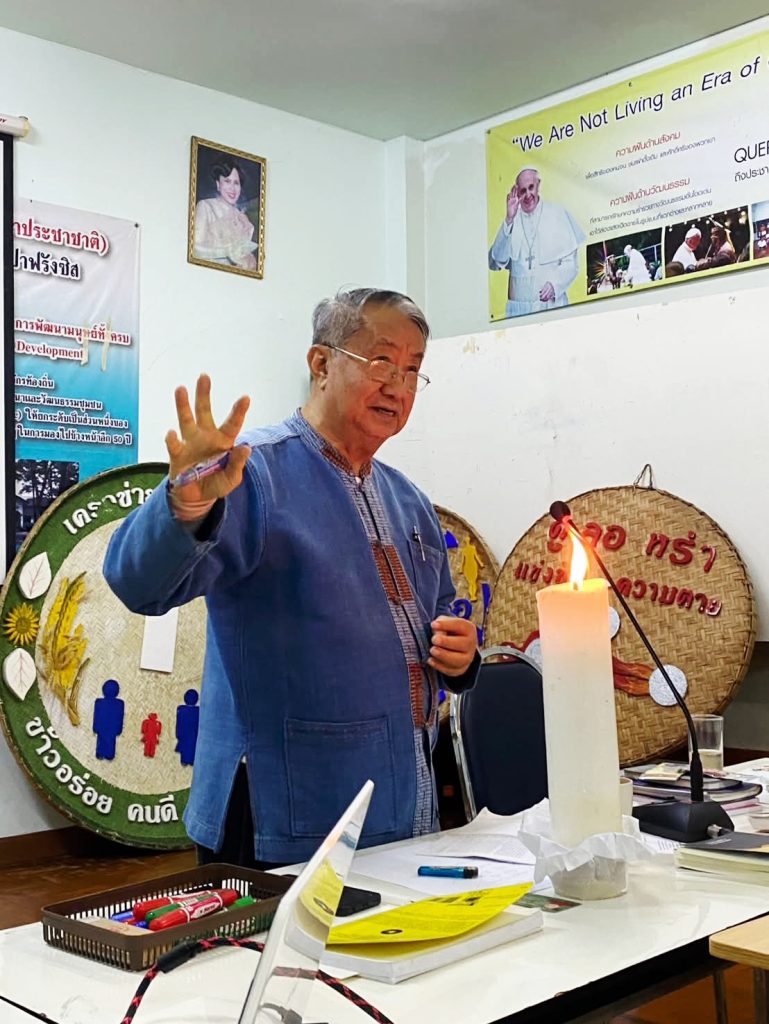
Fr. Niphot Thianwihan, a diocesan priest of Chiang Mai, founded the school after spending five decades accompanying the Indigenous Karen, or Pga K’nyaw, people in the mountains of northern Thailand.
Guided by the vision that “the future is Indigenous,” the institute preserves and passes on the ancestral knowledge of Asia’s ethnic communities, not as museum pieces but as a way to heal relationships with God, with one another, and with creation.
“The review of postmodern development shows us something painful,” Fr. Niphot told the students. “We have lost the sacredness of nature. Unbridled progress in science and material life has left deep wounds — in the environment, in society, and in the human soul.”
From Unlearning to Re-Enchantment
Fr. Niphot, whose father was Christian and whose mother was Buddhist, invited the students to undergo a conversion of heart.
“Global salvation,” he said, “will not come from clinging to rigid Western models of development. It will come when we return to the spiritual wisdom of indigenous life.”
He outlined two steps.
The first is unlearning, or letting go of consumerism and the belief that having more gives life meaning.
The second is relearning, which involves following a path of mindfulness, reflection, and self-understanding.
Fr. Niphot called the process “re-enchantment” — the work of restoring sacred depth to daily life, work, and vocation so that people are no longer isolated from God, from one another, or from the earth.
The Wisdom of the Karen: Rice as Mercy
The students encountered this practice in Karen villages, where food, rice, and other resources are shared so that widows, children, and poor families do not go hungry.
“One striking example: the Karen transformed the commercial idea of a ‘rice bank’ into a ‘rice merit fund.’ For them, rice is not only food. It is prayer. It sustains family, honors ancestors, feeds religious life, and becomes a sign of hope for a more compassionate world,” Dr. Boonchuay observed.
A Sign of Interfaith Hope
The partnership between Dr. Boonchuay, who works on social development and HIV/AIDS advocacy, and Fr. Niphot, a Catholic priest known as a “practical theorist,” shows how interfaith cooperation can take root in local communities.
During the visit, Buddhist mindfulness, Christian social action, and Indigenous ecology became part of the students’ lessons.
The two educators offered the students a message: Healing the world may begin by listening to the mountains and the communities that have long cared for them.
The students returned to campus with a renewed conviction that local wisdom rooted in reverence, community, and care for creation may help address the challenges facing society.