A Catholic bishops’ commission urged organizers of a mass protest along EDSA to prioritize public welfare while exercising their constitutional right to peaceful assembly, saying that calls for transparency and accountability should not come at the expense of ordinary Filipinos.
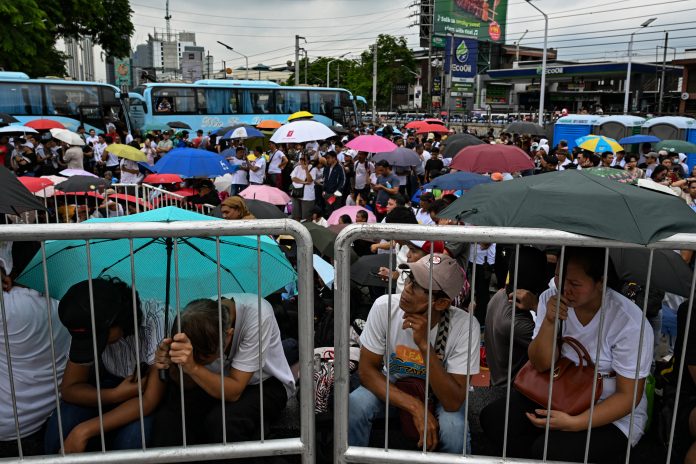
The appeal came June 30 as thousands of members of the Iglesia ni Cristo gathered along Metro Manila’s main thoroughfare to protest the expected filing of graft charges against Sen. Rodante Marcoleta, a church member and ally of Vice President Sara Duterte.
Government officials announced a day earlier that Marcoleta would face graft charges over his alleged failure to declare ₱75 million in unused election campaign contributions. Iglesia ni Cristo leaders said the rally sought transparency and opposed what they described as “selective justice.”
In a statement, Bishop Jose Colin Bagaforo of Kidapawan, chairperson of the Catholic Bishops’ Conference of the Philippines’ Episcopal Commission on Interreligious Dialogue, affirmed that public assemblies are a legitimate expression of democracy.
“As we witness the public assemblies in Metro Manila today, we are reminded of the vibrant democracy God has blessed us with,” Bagaforo said.
“Every citizen holds the inherent right to express their views, seek redress, and hold institutions accountable,” he added.
The prelate said the exercise of those rights also carries responsibilities, adding that “the expression of our convictions must always balance personal freedom with a loving concern for our fellow Filipinos.”
While “the constitution guarantees the right to assembly,” he said, it also places “a sacred duty upon group leaders and organizers to ensure public safety, peace, and strict adherence to the law.”
The bishop urged protest organizers to consider the impact of demonstrations on commuters and essential services.
“The gridlock of major thoroughfares like EDSA inflicts heavy burdens on daily wage earners, students, and emergency services,” Bagaforo said.
He added that advocates could “effectively champion the urgent calls for transparency and institutional accountability through avenues that do not inadvertently harm the very people we seek to uplift.”
Bagaforo also stressed that accountability should be pursued through legal institutions, saying “a healthy democracy thrives on the fair application of justice through established legal channels, free from external pressure.”
He added that “true solidarity means voicing our grievances without disrupting the lives of our neighbors.”
He likewise appealed to law enforcement authorities to respond to the assembly with restraint.
Bagaforo urged citizens and public officials to engage in national discourse “with deep mutual respect and a shared commitment to the common good.”