The Diocese of Calapan on Thursday awarded solarization contracts to seven parishes, deploying 200 kilowatt-peak (kWp) of solar capacity as the Church moves to expand renewable energy use amid high electricity costs and recurring power outages on the island.
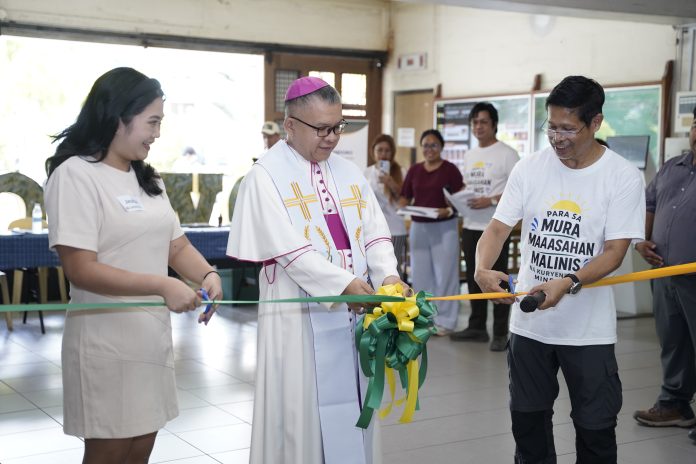
The contracts were formalized during the REnew Mindoro Investments Summit at the Divine Word College of Calapan, the first gathering of its kind in Mindoro, bringing together investors, government officials, Church institutions, and community groups to accelerate clean energy projects.
Church officials said the solar capacity was raised entirely by the parishes over five months, marking one of the most concrete local initiatives to shift to renewable energy in the province.
In his keynote address, Fr. Edwin A. Gariguez, executive director of the Diocesan Social Action Center of the Diocese of Calapan, pointed to the contrast between the province’s celebrations and its persistent power problems.
“Tonight, Mindoro celebrates light. But for many of our people, light remains uncertain,” he said.
Gariguez said the recurring outages reflect deeper structural issues in the island’s energy system.
“This is not an act of God. If this happens every year, we can no longer call it a coincidence – this becomes a designed system which we cannot simply let go of,” he said.
He attributed the problem largely to dependence on fossil fuels.
“Mindoro’s power issues are mainly drawn by too much dependence on diesel, further highlighted by the ongoing global crisis,” he said.
At the same time, he pointed to the island’s renewable energy potential.
“We are not energy poor; we have just yet to unlock how our natural resources can generate mura, maaasahan, at malinis na kuryente for every Mindoreño,” Gariguez said.
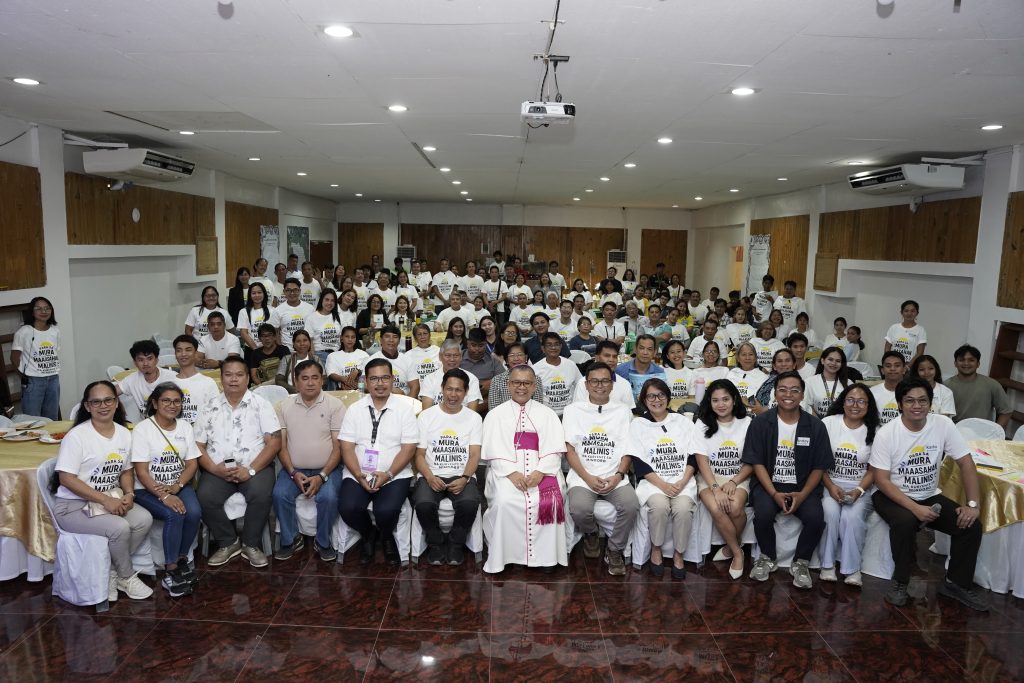
The Diocese of Calapan said the seven parish projects are expected to generate between 800 and 1,000 kilowatt-hours of electricity per day, supplying clean energy to church facilities and demonstrating the viability of decentralized power systems.
The initiative builds on earlier pilot solar installations in Victoria town, including projects serving parish facilities and Indigenous Mangyan communities.
Mindoro remains among the most electricity-burdened island groups in the country, with a heavy reliance on oil-based generation and frequent outages affecting households and livelihoods.
Church leaders linked the transition to broader vulnerabilities in the Philippines’ energy system, particularly its dependence on imported fossil fuels.
“Our dependence on imported fossil fuels continues to push electricity costs higher and leaves many communities uncertain about the stability of their power supply. It is the poor who feel these pressures most,” said Bishop Gerardo Alminaza of San Carlos, president of Caritas Philippines.
He said the shift to renewable energy must also address inequality.
“The transition to renewable energy is not only a technical shift. It is about fairness, responsibility, and ensuring that no one is left behind,” Alminaza said.
Alminaza pointed to community-led initiatives as emerging alternatives.
“In many parts of the country, however, communities are already building alternatives. Community-led and inclusive renewable energy initiatives are taking root,” he said.
“These efforts show that energy can be produced closer to where it is needed, managed by communities, and shared more fairly,” he added.
The REnew Mindoro Investments Summit continues with sectoral discussions involving fisherfolk, farmers, Indigenous Peoples, transport groups, and other stakeholders, alongside a public renewable energy fair connecting households and small businesses with providers and financing institutions.
Organizers said the broader campaign aims to mobilize investments and partnerships to deliver affordable, reliable, and clean energy across Mindoro, with communities at the center of the transition.
The summit was co-convened by the Center for Energy, Ecology, and Development (CEED), a civil society group promoting people-centered energy transition.