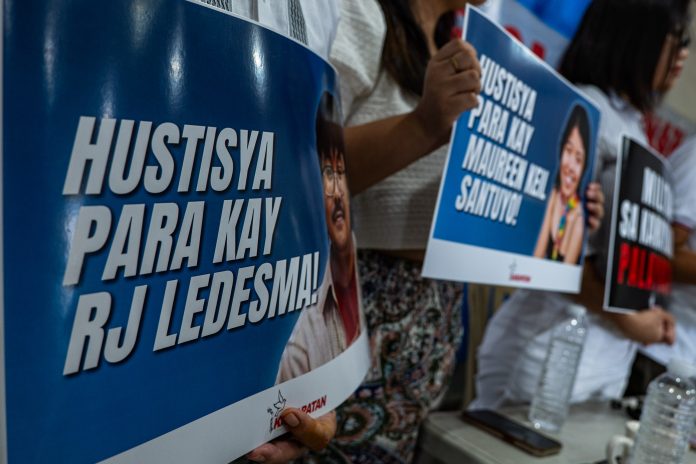
Before dawn on April 19, soldiers entered a remote community in the town of Toboso in the central Philippine province of Negros Occidental. By the time the gunfire stopped hours later, 19 people were dead. Families fled. Homes were left behind.
Among those killed was a journalist.
RJ Nichole Ledesma had been in the area for days. He was not there for a press conference or a prepared statement. He was there to listen.
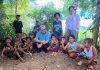
In the days before the supposed encounter between the Armed Forces of the Philippines and the communist-led New People’s Army, he moved through farming communities, speaking with people whose lives were changing. Some feared losing land they had worked for years. Others said life was getting worse with each passing day.
This was his work.
It did not produce quick headlines. It took time. It required patience. It meant staying long enough for people to speak and to be heard.
In Negros, that kind of work brings a journalist to places where stories are rarely told and where telling them carries risk.
RJ knew that.
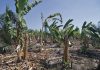
For years, he followed changes across the island. He reported on communities facing displacement as renewable energy projects expanded. He wrote about land being converted and livelihoods becoming uncertain. He documented reclamation efforts in Bacolod and the spread of a palm oil plantation in Candoni. He covered the lives of sakadas, seasonal sugarcane workers whose labor sustains the industry but whose futures remain uncertain.
These were not dramatic stories. But they mattered.
They required trust. They required showing up. They required coming back.
RJ did.
The media outfit he led had long been under scrutiny. Its reports were dismissed in official channels. Its work was labeled. In the Philippines, labels do not stay as words. They carry consequences.
Still, he went.
He went where the stories were.
In another conflict, far from Negros, a journalist was doing the same kind of work.
Amal Khalil was reporting near a village in southern Lebanon that had just been hit by an air strike. She and a colleague were documenting what had happened when another strike came. They ran and took shelter inside a house.
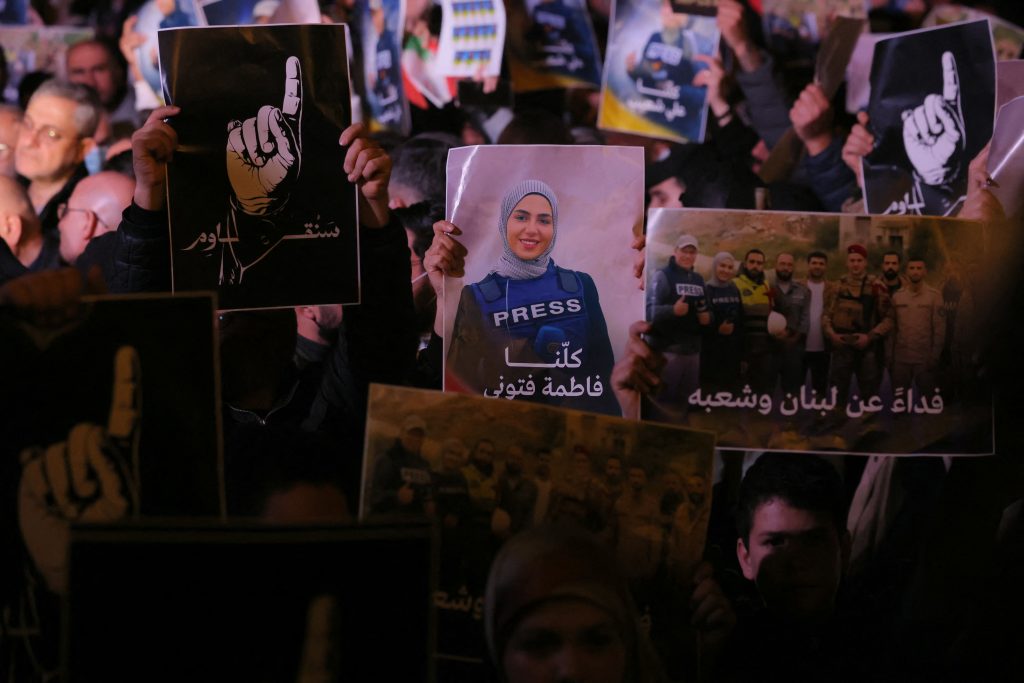
A second strike hit the house.
Hours later, her body was pulled from the rubble. Her colleague survived, wounded.
Khalil had spent years reporting from border communities. She covered families living under constant threat, homes destroyed, and fields damaged. She focused on civilians, on the impact of war on everyday life.
She stayed where the story was.
That was her work.
Back in Negros, the question began to circulate.
Why was he there?
Why was a journalist in a farming community where an armed encounter would later take place?
In the days that followed, officials spoke of safety. They reminded journalists working in conflict areas to follow protocols, to wear vests or markings that could identify them, suggesting that this might reduce the risk of being mistaken for combatants. Even then, they acknowledged that such measures could not guarantee safety.
It is an idea that seems reasonable, at a distance.
But on the ground, in places like Negros, the work does not unfold that way.
A journalist does not arrive in a village wearing a label and begin reporting. Trust is not built that way. Presence is quieter than that. It takes shape over time. It grows through conversations, through returning, through sitting with people who are often wary of outsiders and weary of being misrepresented.
There are no fixed markers in those moments. No clear lines between observer and participant. Often, there is only the act of listening.
To ask, then, why a journalist was there is to miss what journalism requires.
And to suggest that safety depends on how clearly a journalist can mark themselves is to shift the weight of risk onto those already carrying it.
The burden does not belong to them.
It does not belong to the journalist to prove, in the middle of a remote community, that they are there for a story that matters.
It belongs to those who hold power, to ensure that civilians are protected, that journalists are recognized as such, and that the spaces where people live and speak are not turned into places where presence itself becomes dangerous.
Because the danger is not only in being mistaken. It is also in being seen and named in ways that erase the truth of what one is doing.
RJ was there because farmers were speaking.
Khalil was there because bombs had fallen.
They were there because that is where the story was.
And often, they were not outsiders to these stories. They lived among the communities they covered, returned to them, and built trust over time. The lines between observer and neighbor were not always clear, and that closeness was part of the work.
When journalists are killed, the loss is immediate.
But something else follows.
Stories are interrupted. Accounts remain unfinished. What is happening on the ground becomes harder to see, harder to verify, easier to deny.
RJ Nichole Ledesma was not a statistic. Amal Khalil was not a number.
They were journalists doing their work, alongside the very communities whose lives they were trying to understand.
That is why they were there.
Because someone has to be there when stories unfold.
Because without that presence, much of what happens will not be recorded at all.
And in any society that values truth, that should be enough.
Mark Saludes is the managing editor of LiCAS News. He is a Manila-based journalist reporting on human rights, social justice, environmental issues, and the role of faith communities across Asia.