Social media has recently been flooded with the dehumanizing term “corned beef” to mock the deaths of activists.
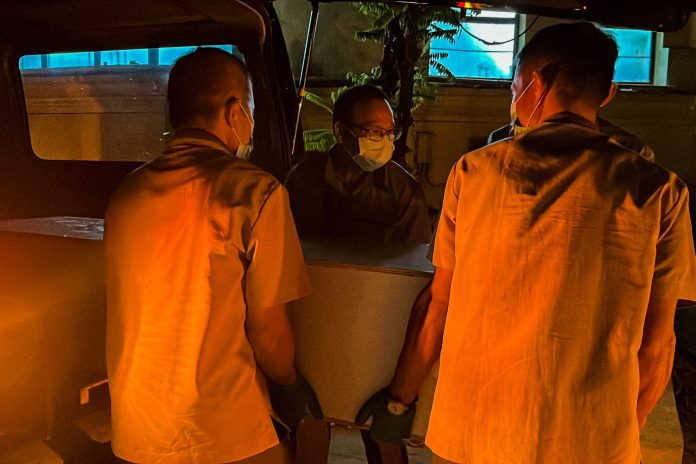
On April 19, 2026, a military operation in Barangay Salamanca, Toboso, Negros Occidental, left 19 people dead.
The civilian casualties include student leader Alyssa Alano and land rights activist Maureen Keil Santuyo, both from the University of the Philippines (UP); community journalist RJ Ledesma; land rights activist Errol Wendel; and Filipino-American activists Lyle Prijoles and Kai Sorem. Roel Sabillo, a 19-year-old resident of Toboso, as well as two minors whose names were withheld, were also identified.
The remaining 10 were identified as armed New People’s Army (NPA) revolutionaries.
Since then, the public has been met with conflicting accounts about what happened, who those 19 people were, and whether the operation was lawful.
The military maintains that all 19 fatalities were armed NPA members and that firearms were recovered from the encounter site. It says the operation was legitimate, intelligence‑driven, and directed against armed insurgents. It insists that those killed were combatants and that the operation followed rules of engagement.
On the other hand, civil society and UP groups said they were civilians conducting community immersion work, documenting a peasant activity alongside farmers who have faced long-standing land grabbing and systemic oppression. They added that the fatalities were not combatants but bystanders and collateral damage in an armed encounter.
Familiar lines surfaced again on social media: “corned beef,” “NPA,” “that’s what activists deserve”—often accompanied by laugh reactions or graphic commentary.
Despite questions on whether the deceased were real members of the NPA, the term “corned beef” is used on social media to describe the bodies of suspected rebels killed in armed encounters.
The term is a form of dark slang that refers to the reddish, shredded, or mutilated appearance of severely damaged human remains, which some claim resembles canned corned beef.
Reducing a person to a “processed and disposable” food item, “corned beef” is often used by pro-military or anti-insurgency users to mock the fallen alleged rebels by stripping away their humanity.
Activists are often framed as threats to social order—“troublemakers,” “anti-development,” or “enemies of peace.”
“Corned beef” is also linked with long-running state counterinsurgency disinformation narratives and the red-tagging of UP as a breeding ground for communists, downplaying UP’s role as a stronghold of academic freedom and independence.
“No UP student is limited to lessons learned within the classroom. We stand by the right of all students to lawfully and peacefully exercise their constitutionally protected freedoms, especially in furtherance of raising their social consciousness. The University shall remain a beacon of critical thinking, conscience, and courage,” UP said in a statement.
UP appealed to the public to withhold judgment on the students amid reports that both were engaged in community activities for their respective organizations and not university‑sanctioned programs.
Former UP student leader Gigo Alampay said that until the truth surfaces after a thorough investigation, Alano had done nothing wrong.
“She was young. She was idealistic. She was a leftist involved in advocacy work—spending time in farming communities, participating in immersions, engaging in campaigns around land and labor issues. None of that is a crime. If anything, it is something we should want more young people to do,” Alampay said.
“You can disagree with their politics. You can question their methods. That’s part of any healthy democracy. But to suggest that they deserve what happens to them because they chose to step outside the lanes—that’s something else entirely. That’s not critique. That’s indifference, even ignorance,” he added.
“Corned beef” is perhaps a permutation of the extrajudicial killings narratives that see certain lives as expendable in the anti-drug campaign: nightly body counts, jokes about “nanlaban,” and speeches that openly promised death.
It is not just a descriptor but a tool of psychological warfare used to dehumanize dissenters and desensitize the public by turning violent scenes into internet memes or jokes.
State-prepared scripts of vicious language are propagated—mostly by trolls—to drown out progressive voices and ensure that the public perceives activists as legitimate targets.
Dehumanizing words become normal through a gradual process in which language that strips individuals or groups of their human qualities is repeated, accepted, and integrated into everyday discourse.
Atty. Dennis Gorecho heads the seafarers’ division of the Sapalo Velez Bundang Bulilan law offices. For comments, e-mail [email protected], or call 0917-5025808 or 0908-8665786