A Catholic bishop on Wednesday urged stronger support for elderly and isolated priests, warning that loneliness and neglect remain pressing but often overlooked challenges within the Catholic Church.
Bishop Julito Cortes, chairman of the CBCP’s Commission for the Retired, Sick and Elderly Priests, said aging priests continue to carry out a quiet but vital ministry despite declining strength and visibility.
He warned of growing isolation, citing Pope Leo XIV’s apostolic letter “A fidelity that generates the future,” that “attention to our most lonely and isolated brothers… cannot be considered less important” than pastoral care for the faithful.
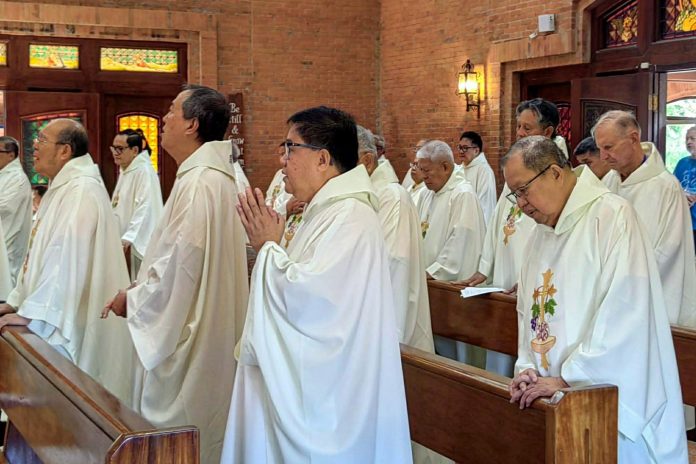
Cortes made the statement in his homily during Mass at a retreat with retired priests at Mary Help of Christians Spirituality Center in Nasugbu, Batangas.
Cortes said priests, even in retirement, remain essential to Church life, quietly offering prayer, sacraments, and presence despite physical weakness and reduced public roles.
He acknowledged the emotional toll of ministry, including “misunderstandings or loneliness” and wounds from scandals that have shaken trust and tested priestly commitment over time.
Quoting Scripture, he said a priest’s mission endures in any condition: “What I do have, I give you,” pointing to Christ as the Church’s true gift.
The bishop also highlighted the hidden sacrifices of clergy, saying “many will never know how much it costs you to keep saying yes to the Lord.”
“My brothers, many will never know how much it costs you to keep saying yes to the Lord, to keep saying yes, the long journeys, the hidden sacrifices, the nights of mourning you had, but the Lord knows,” Cortes said.
Cortes urged Church communities to actively support elderly clergy, warning that loneliness can lead to “a sad closing in on oneself” without sustained fraternity and care.
He emphasized that priesthood is lifelong, saying it is “not a career to be completed, but a friendship to be lived to the end.”
Cortes said the fidelity of retired priests remains vital, describing their witness as “a seed for tomorrow” that continues shaping future generations of clergy.