Church leaders warned against propaganda and the misuse of religion in the Middle East war as Iran flagged widening global repercussions from the escalating conflict.
The warnings come as the conflict involving the United States and Israel against Iran intensifies, raising concerns over global instability, economic disruption, and competing narratives shaping public understanding of the war.
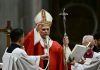
Speaking amid the violence, Cardinal Pierbattista Pizzaballa cautioned that the use of religious language to justify military action distorts both truth and faith.
“The abuse and manipulation of God’s name to justify this and any other war is the gravest sin we can commit at this time,” he said, stressing that the Church must continue to speak truth even when appeals for peace “may well fall on deaf ears.”
He emphasized that the conflict should not be framed in religious terms, warning that such narratives obscure its real nature, according to a report by Vatican News.
“War,” he said, “is first and foremost political and has very material interests, like most wars. We must do everything we can to leave no room for this pseudo-religious language, which speaks not of God, but of ourselves.”
The patriarch was responding to efforts by political leaders to invoke scripture in support of the ongoing U.S.-Israeli attacks on Iran, a move Church leaders say risks turning faith into a tool for legitimizing violence.
He also warned that communication itself has become part of the conflict, shaping how the war is understood and justified.
“It is a way of making it known, but also of justifying it or making it acceptable,” he said, underscoring the responsibility of journalists to provide accurate interpretation and help audiences “make their own judgment.”
Rejecting any portrayal of the war as a religious confrontation, he added: “As believers (…) we need to say that no, there are no new crusades. If God is present in this war, He is among those who are dying, who are suffering, who are in pain, who are oppressed in various ways, throughout the Middle East.”
His remarks come as humanitarian conditions in Gaza and the West Bank remain dire, with widespread displacement, destruction, and limited access to basic services.
Iran, meanwhile, warned that the consequences of the war are already extending beyond the region.
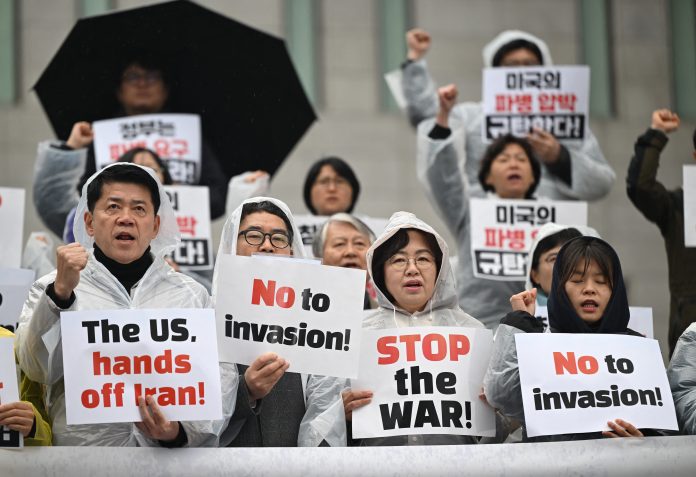
“Wave of global repercussions has only begun and will hit all — regardless of wealth, faith, or race,” Foreign Minister Abbas Araghchi said, urging more Western officials to oppose the conflict.
“A rising number of voices — (including) European and U.S. officials — exclaim that the war on Iran is unjust. More members of the international community should follow suit,” he added.
In Washington, President Donald Trump faces growing criticism over the direction and justification of the war, with analysts and officials pointing to the absence of a clear strategy.
Agence France-Presse reported that Trump has reached an impasse, “having failed to clearly define an objective or exit strategy – and sell the American public on a new war in Iran.”
The uncertainty deepened after a senior U.S. counterterrorism official resigned, saying Iran posed “no imminent threat to our nation” and that he could not “in good conscience support the ongoing war in Iran.”
Despite Trump’s claims that Iran has been “decimated” by U.S. and Israeli strikes, the conflict has continued to expand, with Tehran showing no intention of surrender and maintaining its capacity for retaliation.
The war has already driven up oil prices and spread violence across the region, from Lebanon to the Gulf, while key U.S. allies have declined to join the campaign or assist in securing vital shipping routes.
Analysts say a military resolution remains unlikely. Richard Haass of the Council on Foreign Relations said that “while the United States initiated this conflict on its own, it will require both Israel and Iran to sign on to stopping it.”
“The longer this war goes on, the more the balance between its costs and benefits shifts toward the former,” he added.
Other experts have pointed to diplomacy as the only viable path forward. Sina Toossi of the Center for International Policy said that “there are no clean options at this point, only less bad ones,” adding that “the most realistic path is a negotiated de-escalation that allows all sides to save face.”
As narratives around the war continue to compete for influence, Church leaders insist that truth must not be shaped by political or ideological interests.
“What is built on violence perishes; it has no future,” Cardinal Pizzaballa said, warning that war ultimately creates “fear, resentment, hatred—all that which, in Christian language, belongs to the world of death.”