
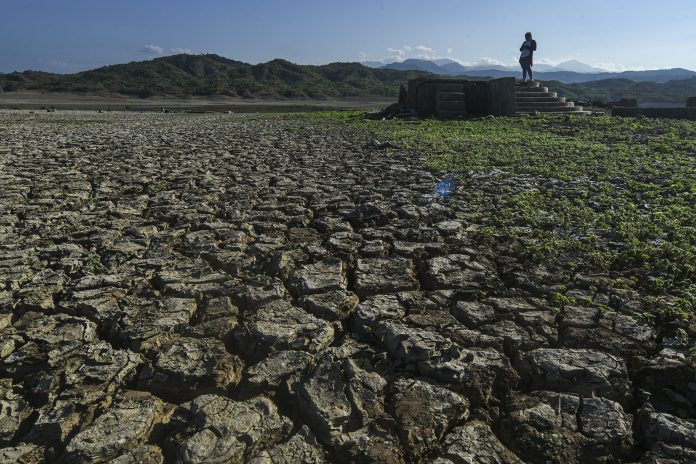
Scientists warn that a potential El Niño later this year could bring drought and extreme weather to parts of Southeast Asia as global temperatures continue to rise.
The United States’ National Oceanic and Atmospheric Administration (NOAA) estimates there is a 50- to 60-percent chance of El Niño developing during the July–September period and beyond, raising concerns about shifting rainfall patterns and intensifying heat worldwide.
The United Nations’ World Meteorological Organization (WMO) said the recent La Niña episode is expected to fade, potentially giving way to neutral conditions and then to El Niño before the end of the year.
“The WMO community will be carefully monitoring conditions in the coming months to inform decision-making,” said Celeste Saulo, secretary-general of the UN weather and climate agency.
El Niño and La Niña are opposite phases of the El Niño-Southern Oscillation (ENSO), a natural climate cycle across the tropical Pacific Ocean that affects winds, rainfall, and ocean temperatures around the world.
When El Niño develops, weakened trade winds allow warmer waters to spread across the central and eastern Pacific Ocean. The heat released into the atmosphere can temporarily raise global temperatures and alter weather patterns across continents.
“All else being equal, a typical El Niño event tends to cause a temporary increase in the global mean temperature on the order of 0.1C-0.2C,” said Nat Johnson, a meteorologist at NOAA.
El Niño typically brings drier conditions to Southeast Asia, Australia, southern Africa, and northern Brazil, while increasing rainfall in parts of the Horn of Africa, the southern United States, Peru, and Ecuador.
The WMO said natural climate patterns such as El Niño are now unfolding in a world already affected by human-driven warming, which is “increasing global temperatures in the long-term, exacerbating extreme weather and climate events, and impacting seasonal rainfall and temperature patterns.”
Recent El Niño events have coincided with record global heat. The 2023–2024 episode contributed to making 2023 the second-hottest year on record and 2024 the hottest.
Scientists say the timing of a new El Niño could determine when its strongest warming effects are felt.
“It takes time for the global atmosphere to react to the El Niño,” said Tido Semmler, a climate scientist at Ireland’s National Meteorological Service.
“Having said this, there is a risk of 2026 being the warmest year on record even without El Niño, due to the global warming trend,” he said.
If El Niño develops later this year, Semmler said the biggest global temperature increase could follow in the next year.
“2027 would face an increased risk of getting a record warm year if El Niño developed in the second half of 2026,” he added.
Climate agencies say seasonal forecasts help governments prepare for potential impacts on agriculture, water resources, public health, and disaster risk management as weather patterns shift across regions. – with reports from Agence France-Presse