A senior Church official warned that Filipinos must resist becoming accustomed to injustice, urging Catholic universities to form leaders who confront corruption, ecological destruction, and social systems that continue to burden the poor.
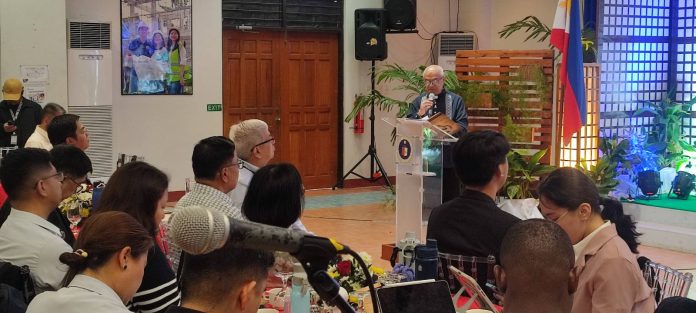
Speaking at the national conference of the Association of Catholic Universities of the Philippines (ACUP) at Ateneo de Naga University on March 12, Bishop Gerardo Alminaza of San Carlos cautioned that the normalization of injustice poses a serious moral challenge to society.
“The deeper danger is when injustice becomes familiar. When broken systems become ordinary. When people begin to believe that nothing can change,” said Alminaza, who serves as president of Caritas Philippines.
The ACUP gathering brought together leaders of Catholic higher education institutions from across the country to reflect on the mission of universities in shaping ethical leadership and responding to social challenges.
Alminaza illustrated his message by recalling an unfinished flood-control structure in the town of Baao, Camarines Sur, which had been intended to protect communities from flooding but remained incomplete when heavy rains returned.
Residents affected by the floods expressed resignation, he said, recalling how some told him, “We are used to it. Used to unfinished projects. Used to waiting for accountability. Used to rebuilding after preventable loss.”
He said such experiences raise broader questions about governance and the responsible use of public resources.
“When funds are allocated, but protection never reaches communities, people begin asking: where did the resources go?” he said.
The prelate also pointed to wider social and economic pressures affecting the country, noting how global conflicts can quickly impact the lives of ordinary Filipinos.
“The escalating conflict in the Middle East, particularly the military strikes involving the United States and Israel against Iran, has shaken global energy markets once again,” he said.
“When oil becomes entangled with war, the ripple effects reach vulnerable economies like ours.”
Rising fuel prices often lead to higher transportation, electricity, and food costs, with poor families typically bearing the greatest burden.
“And as always, it is the poor who feel the impact first and the hardest,” Alminaza said.
The bishop urged the country to reduce its dependence on imported fossil fuels and pursue renewable energy sources.
“Renewable energy is not only a climate solution. It is also a peace strategy, a justice strategy, and a national survival strategy,” he said.
Alminaza said Catholic education must go beyond preparing students for professional success and instead focus on forming citizens who act with responsibility, moral courage, and commitment to the common good.
“If Catholic education teaches students merely how to survive within broken systems, we fail,” he said. “But if we teach them to question those systems, strengthen weak structures, and refuse tolerated evils, then we begin to draw new maps of hope.”