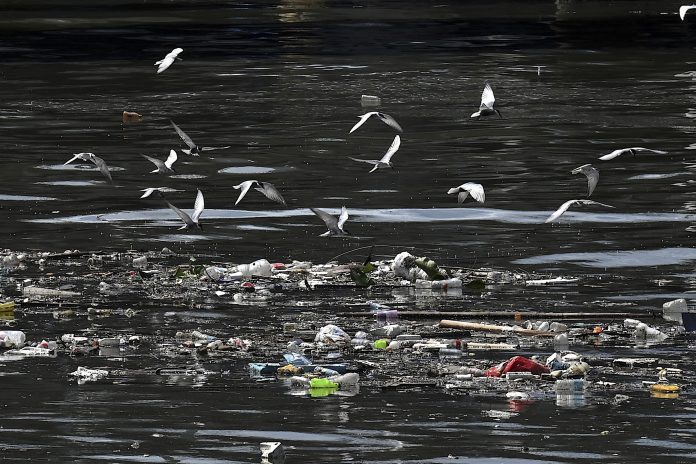
A senior Catholic prelate has issued a sharp warning on the country’s mounting waste crisis, saying the Philippines has become the world’s leading source of ocean trash because of failed environmental governance, entrenched public habits, and long-standing corruption in waste management.
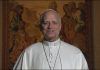
Cardinal Pablo Virgilio David of Kalookan said it is “painful to look at” that the Philippines is now ranked first globally in ocean plastic pollution.
“The Philippines—our beloved archipelago of 7,641 islands—is ranked Number 1 in the world in contributing trash to the ocean,” he posted in his Facebook account.
“Not number one in reading, science, or mathematics. Not number one in good governance or environmental stewardship. But number one in polluting the very seas that give us life,” the prelate said.
The Kalookan prelate said the country had once taken a major step toward ecological reform when it passed the Ecological Solid Waste Management Act more than two decades ago.
“I remember reading it and being struck by its moral clarity,” he said, noting that the law required LGUs to use sanitary landfills only for residual waste, a condition possible “only if segregation from source actually happens.”
He stressed that “the heart of RA 9003” remains simple and uncompromising: “Segregation, Composting, Recycling → Residual Waste (the least possible amount).”
Despite this, he said the country has largely ignored the law’s most basic requirement. “We continue a national habit of throwing everything together—biodegradable, recyclable, hazardous, medical, industrial—into the same black bag, the same truck, the same dumpsite.” Without segregation, he said, “sanitary landfills, without segregation, become nothing more than unsanitary landfills.”
Cardinal David pointed to worsening impacts in coastal communities, citing Navotas as a stark example of how mismanaged dumpsites have contaminated water and destroyed livelihoods.
Leachate, he said, has “poisoned aquaculture, killed livelihoods, and threatened food security,” while plastic waste flushed through waterways has left “the sea that once fed our people… choking with plastic.”
He warned that the crisis persists because accountability is routinely deflected. “We love to blame government, or corporations, or the informal waste sector,” he said. “But the truth is harder: RA 9003 failed because we, as a nation, refused to change our daily habits.”
The cardinal criticized local governments that opted for “the easy way out—hauling and dumping—as if ‘out of sight’ meant ‘out of responsibility,’” and noted that “corruption fattened itself on hauling contracts and tipping fees rather than investing in real waste reduction, composting, and Materials Recovery Facilities.”
He described the country’s waste crisis as “one of the great ecological sins of our time,” calling it a sin “not only against creation, but against the poor who suffer first from polluted water, poisoned fish, and floods worsened by canals clogged with our own negligence.”
He added that it is also “a sin against future generations whose shores will be lined not with seashells, but with our plastic shame.”
Still, Cardinal David urged Filipinos not to remain in guilt but to act decisively. “But guilt is not the ending. Repentance is. And repentance means change,” he wrote.
He appealed to households, communities, and local governments to reclaim the intent of RA 9003: “Segregate from home. Demand that LGUs comply with RA 9003.
Support recycling and composting. Stop treating the ocean as a bottomless pit.” He added that citizens must “start treating our country as the fragile, beautiful, irreplaceable archipelago that God entrusted to our care.”
“We can do better,” he said. “For the sake of the seas that surround us, the children who will inherit them, and the Creator who commanded us to ‘till and keep’ His garden— we must do better.”