
The Philippines has been battered by devastating storms in recent weeks. We endure about 20 powerful typhoons a year and occasionally experience earthquakes and volcanic eruptions. Recently, in Liloan, Cebu, several families were caught in floods rising as high as their rooftops. They had to climb mango trees to escape. Entire homes were flattened, and all properties were lost. They have nothing, not even extra clothes. That is how destructive typhoons can be.
Filipinos remain resilient as climate change tightens its grip on the weather and affects their lives. They have the determination and strength to recover and continue surviving day by day. Inexplicably, many take this with grim humor, even joking about their plight. But it is no joke for the poor when their humble houses are obliterated, and they survive with nothing left for their families. Those involved in massive corruption in flood control projects that President Ferdinand Marcos Jr. first exposed in July have a lot to answer for. Meanwhile, world leaders gathered at the 30th United Nations Climate Change Conference (COP30) in Brazil have to continue serious efforts to bring global warming under control.
Yet we know that the climate is changing for the worse, and stronger, more intense weather is affecting many people all over the world. Like in previous editions, COP30 reminds us of the historic Paris Agreement signed 10 years ago. This pact binds countries to limit global temperatures to “well below” 1.5 degrees Celsius above preindustrial levels. However, in parts of the globe, temperatures have exceeded 1.5 C, and scientists say it is likely to rise higher. This could lead to catastrophic consequences, and our climate could reach a tipping point of no return.
The good news is that in the European Union, renewable energy produced by wind turbines and solar plants, as well as geothermal, hydropower and biomass facilities, has just overtaken fossil fuel as the main source of electricity. This is the ongoing struggle at COP30: efforts to mitigate the negative effects of climate change are being thwarted by the fossil fuel industry and some powerful nations, like the United States under President Donald Trump — who is not at the conference — that want fossil fuel as their power source. However, many U.S. states are going with renewables and working to hold global temperatures under 1.5 C.
U.N. Secretary-General António Guterres has said the “sun is rising on a clean energy age,” as 90 percent of renewable energy projects are cheaper than fossil fuels. He has called on every major tech company to switch all of their data centers to run on 100 percent renewables by 2030.
Guterres has also said fossil fuels threaten the planet. Renewable sources of energy are the only way to go, and they’re much cheaper and safer. “The greatest threat to energy security today is fossil fuels. They leave economies and people at the mercy of price shocks, supply disruptions and geopolitical turmoil,” he said. “There are no price spikes for sunlight. No embargoes on wind. Renewable energy sources are cost-effective, too,” he said. Solar power is about 41 percent cheaper than the cheapest fossil fuel alternative, and onshore wind generation is less than half the price of fossil fuels, according to a report from the International Renewable Energy Agency.
The late Pope Francis was outspoken about the dangers of climate change, as well as solutions to it. He said it was a matter of deep faith to do good and protect creation and oppose the forces destroying it, as these are rooted in our “deepest convictions about love, justice and peace.”
When he was still alive, he called for a global “ecological conversion” and a radical change in lifestyles, production and consumption to “save the planet.” His core message, detailed primarily in his 2015 encyclical Laudato Si’ and 2023 apostolic exhortation Laudate Deum, is that the environmental crisis is a moral and ethical issue inextricably linked to social injustice and a “throwaway culture.” He urged the “progressive replacement without delay” of highly polluting fossil fuels — coal, oil and gas — with renewable energy sources, of which the Philippines and the developing world have great capacity.
This is the heart of the Christian commitment: to care for creation and challenge the powerful economic and political forces blocking renewables and increasing global warming. What we can do is challenge the multinational power and mining corporations involved in extracting coal, oil and gas and persuade them, for the sake of humanity and creation, to desist. This is what Francis seemed to have called for. The massive amount of carbon and methane gases in the atmosphere is causing the planet to overheat. Stopping the burning of fossil fuels is the only way to halt global warming.
In the Philippines, power corporations have to phase out coal- and oil-powered generation plants sooner to meet our international obligations and save the country from more natural and humanmade disasters. The government must cancel all new applications for coal plants and improve tax benefits for solar and wind farms. More home-based solar panels are essential, but they are very expensive despite low import taxes. Corporations supplying and installing panels are out to maximize profit.
It seems Francis’ words and actions have had some impact on COP30. Greater attention will be given to the so-called Global Ethical Stocktake. It will focus on the moral, ethical and cultural impacts of climate change. This will center especially on the poor, the vulnerable and disadvantaged groups to help women, children and Indigenous people. A large group of Indigenous people broke into the conference center to present their demands. Brazil is starting an international fund to pay developing nations to preserve their rainforests.
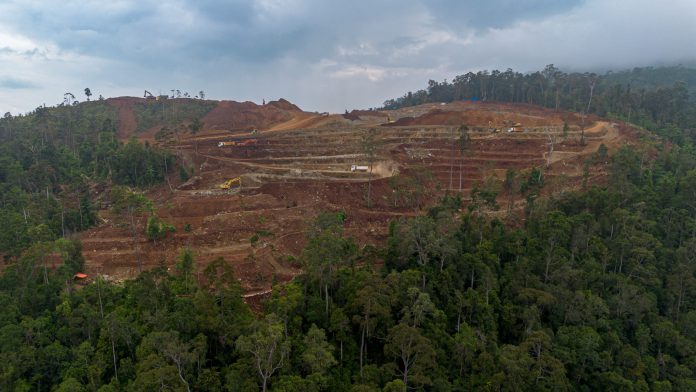
Sadly, in the Philippines, there is only 3 percent, or 861,000 hectares, of primary rainforest left and an estimated 5 million hectares of secondary growth forest. The overall remaining forest is about 24 percent of its total land area, government statistics show. However, Global Forest Watch estimates a higher total of natural forest area of around 13 million hectares, or 45 percent of the land area.
Denuded forests can recover and regenerate if given the chance. In the Philippines, many brave environmentalists are being persecuted for protecting them. They need our support and protection.
Note: Any original information, stories, or news articles posted on this site that are authored by the Preda Foundation and Father Shay Cullen may be shared, copied, or reproduced without further permission, in support of truth, freedom of expression, and the public’s right to know.
LiCAS News was granted permission to republish and adapt this article by Father Shay Cullen in the spirit of truth-telling and the pursuit of justice.
Irish missionary Father Shay Cullen, SSC, founded the Preda Foundation in Olongapo City in 1974 to promote human rights and the rights of children, especially victims of sexual abuse.
The views expressed in this article are those of the author and do not necessarily reflect the editorial stance of LiCAS News.