The Apostolic Vicariate of Calapan clarified on Monday that it does not oppose legitimate river restoration in Oriental Mindoro, south of Manila.
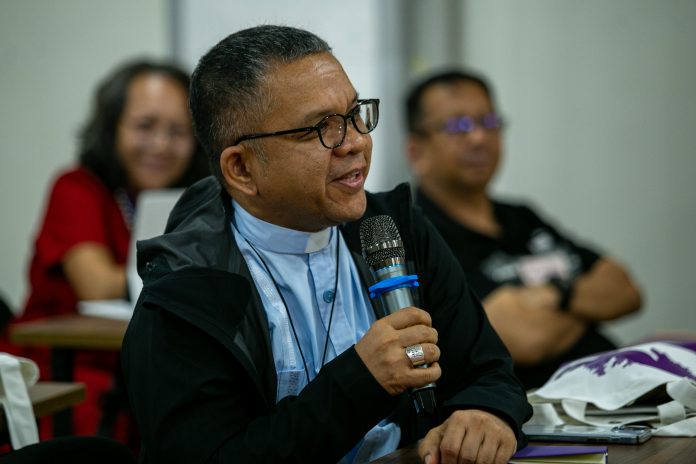
Bishop Moises Cuevas of Calapan reiterated that the Church rejects large-scale commercial dredging and black sand mining projects that threaten the province’s ecosystems and vulnerable communities.
In a pastoral letter released on August 16, the prelate described the debate over dredging in the province as a “highly contentious issue” that raised doubts whether it is “a genuine flood control measure, or does it hide large-scale sand resource extraction?”
The prelate said the Church “strongly oppose[s] large-scale commercial dredging, seabed or black sand quarrying, or any form of mining in our rivers, coastlines, and beaches.”
He warned that when such activities “prioritize profit over people and ecosystems, the risks and potential impacts will certainly cause serious and irreparable harm to our province.”
At the same time, Cuevas said the Church does not object to dredging if carried out under strict conditions.
He explained that river restoration is acceptable “insofar as dredging is part of an authentic, science-based flood mitigation plan, without commercial exploitation, with full compliance to environmental safeguards, and under transparent public monitoring, pursuant only to a Flood Master Plan with detailed engineering design and proper flood control methods.”
Media misrepresentation
On August 18, Cuevas issued a rejoinder to address reports that portrayed his pastoral letter as outright opposition to dredging. A Philippine Daily Inquirer article bore the headline, “Bishop bucks massive sand dredging in Oriental Mindoro.”
The bishop said the report “one-sidedly highlighted one aspect of our position – opposing large-scale commercial dredging; while the second part of our position – supporting legitimate river restoration flood control – is downplayed.”
He added that such framing has shaped social media reactions, prompting the need to “explain the full meaning of our stand.”
Cuevas reiterated that the Apostolic Vicariate of Calapan does not oppose legitimate river restoration or dredging. “In fact, we have no objection to dredging if it is carried out as part of a genuine, science-based flood management plan,” he said.
Call for balanced approach
The bishop warned that prohibiting dredging outright without providing viable alternatives for flood control would expose communities to greater risks.
“Absolute prohibition of dredging without parallel provisions for legitimate flood control measures risks leaving communities vulnerable to worsening flood hazards,” he said.
He stressed the need for a “dual approach, safeguarding ecosystems while implementing ecologically sound flood mitigation projects.”
He also cautioned against projects that exploit disasters for commercial gain. “Our opposition is not against river restoration per se; it is against projects that put profit before people and the environment,” he said.
“It should be clear that we support, in consideration of our flood-prone communities, the legitimate, well-planned, clear, and environmentally responsible river restoration initiatives to address flooding in the province of Oriental Mindoro,” the prelate added.
Dialogue and truth
Cuevas urged local leaders, environmental advocates, and residents to resist divisive debate and work toward common solutions.
“What we should avoid is simplifying this serious and complex issue into a divisive ‘for or against’ debate. Our province of Oriental Mindoro deserves better socio-political environment,” he said.
Cuevas underscored that protecting the environment and safeguarding vulnerable communities are inseparable responsibilities, calling them a single moral duty entrusted by God.