
Behind the facade of Philippine democracy lies a deeply entrenched oligarchy created during the Spanish and American colonial eras. An elite group of powerful families now rules the country after consolidating their influence through their control of Congress and mainstream media. Political power rests not in winning the popular vote, but on influential families that can buy as many votes as they wish using government funds that are usually disguised as allocations for “humanitarian and social projects.”
While the Philippines is rich in natural resources and is a large economy, about 250 to 300 super-wealthy families own vast properties and corporations. They control the politics and economy in 82 provinces where the greatest poverty is widespread. The richest people in the Philippines, Enrique Razon Jr. and the Sy siblings, have a combined wealth of $31 billion.
Historically, these families form a network that has cleverly dominated government through relatives in high positions and gained control of state budgets for their own use, disguised as “projects for the people.” For example, of those 300 families, about 40 to 50 secured nearly 50 percent of the total loanable funds and foreign loan guarantees managed by government institutions.
This is the extent of cronyism, wherein they work together to maintain control. These powerful families, as recorded and researched, have deep roots in the Spanish colonial period. There are the Chinese-Filipino (the “taipans”) and mestizo elites (among them the Ayalas, Razons and Lopezes), as well as the Villar, Ang, Consunji and Gokongwei clans. They completely dominate major sectors of the economy, including banking, utilities, telecommunications, infrastructure, real estate and agriculture.
Forty years ago, the 1987 Constitution explicitly ordered Congress to ban political dynasties, but since the legislature is dominated by these families, they understandably refused. Why commit political suicide? Their political power and connections give them easy access to legal permits and lucrative contracts to expand their power and wealth, as well as protect their massive holdings and block competition.
Approximately 76 percent of the country’s gross domestic product (GDP) is controlled by 40 elite families — the highest in Asia. Their corporations are responsible for exploiting the ancestral lands of Indigenous peoples and destroying the environment with massive mining projects for raw minerals that are exported unprocessed. Few, if any, ordinary Filipinos benefit.
This is why poverty continues in a very unequal society such as ours. Filipinos see this great inequality and suffer generations of poverty, and their children are forced to migrate to support their families.
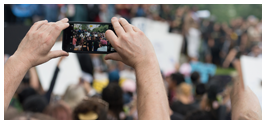
Others stay and try to resist the social injustice and take to the streets to demand justice. But again, the government is run by the relatives and cronies of powerful families, and after such protests — which the media regularly reports — government officials make concessions or promises that are seldom implemented. They allow their elite “masters” to do what they want.
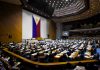
According to data from the Philippine Center for Investigative Journalism (PCIJ) and various academic studies, dynasties control roughly 80 to 83 percent of the Senate, about 75 to 80 percent of members of the House of Representatives, and 87 percent of provincial governors.
Great tragedy
This oligarchic rule is the great tragedy of the Philippines, and the cycle of corruption and rigged “elections” continues, with wealth still concentrated in the hands of a few while the majority go hungry and yearn for a life without poverty. The media is the only avenue through which voices of protest can be heard. But media practitioners are themselves under pressure and facing threats.
“The truth shall set you free” is widely believed by many, and they go on revealing the truth through the media — both traditional and social — and on the streets in the hope of freeing themselves from the elites’ political and economic oppression. They hope to succeed in casting off the chains of poverty.
Protests and growing demands for freedom from injustice and poverty have brought increasing pressure on an anxious elite to respond and stop some of the corruption by the greediest among them and spend more on eradicating poverty.
As a result, the poverty rate in the Philippines dropped to a historic single-digit low of 9.7 percent in 2025 — affecting about 11.08 million individuals — down from 15.5 percent in 2023, according to the Philippine Statistics Authority. While less than one in 10 Filipinos live below the official poverty line, roughly 28 percent of the population remains just above it, leaving as many as 11 million poor Filipinos in dire poverty. They are most vulnerable to economic shocks, job losses and inflation.
Inflation has reached a staggering 7.2 percent. Transportation costs are up 11.9 percent, while housing, water, electricity, gas and other fuels increased by 7.7 percent nationally. Some food items, like vegetables, increased by 10.7 percent.
The strength and influence of the media have been to unite people behind a particular issue that has made the ruling elite direct the response of the police to be harsh and abusive. The police, it seems, are ordered to silence the protests, intimidate the media and punish investigators and reporters.
“Red-tagging” — branding certain people, including media practitioners, as communists, subversives or terrorists — is used to silence critics. The Philippines continues to be classified as “one of the most hazardous nations globally for journalists under the administration of Ferdinand Marcos Jr.,” said The Diplomat magazine. Memories of activist media reporting that helped topple the regime of Ferdinand Marcos Sr. are still fresh.
The National Union of Journalists of the Philippines reported 256 press freedom violations since the start of the current administration, while the Center for Media Freedom and Responsibility recorded 239 cases from July 2022 to April 2026 — a disturbing increase. Their investigations pointed to police as enforcers of the media crackdown. At least eight journalists have been killed during the current administration, with provincial broadcasters particularly targeted.
Media practitioners, editors and news managers, while dedicated and committed to the highest standards of truth-telling, walk a moral tightrope, trying to maintain a balance between the demands and expectations of their corporate owners and their commitment to reporting the truth. Their continued existence depends on their many abilities and commitment to truth in crossing that divide.
Note: Any original information, stories, or news articles posted on this site that are authored by the Preda Foundation and Father Shay Cullen may be shared, copied, or reproduced without further permission, in support of truth, freedom of expression, and the public’s right to know.
LiCAS News was granted permission to republish and adapt this article by Father Shay Cullen in the spirit of truth-telling and the pursuit of justice.
Irish missionary Father Shay Cullen, SSC, founded the Preda Foundation in Olongapo City in 1974 to promote human rights and the rights of children, especially victims of sexual abuse.
The views expressed in this article are those of the author and do not necessarily reflect the editorial stance of LiCAS News.