
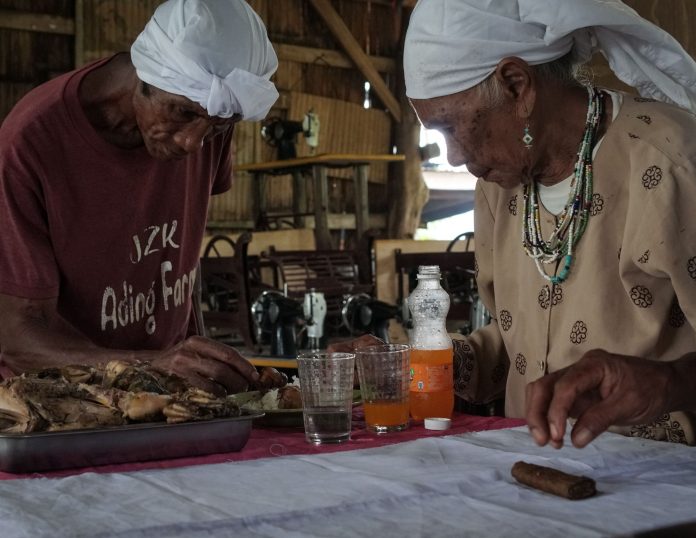
A Philippine legal and advocacy group has raised an Indigenous community’s land dispute involving an agro-forest plantation before a U.N. environment expert, warning that carbon and biodiversity projects can overlap with land conflicts and alleged rights violations.
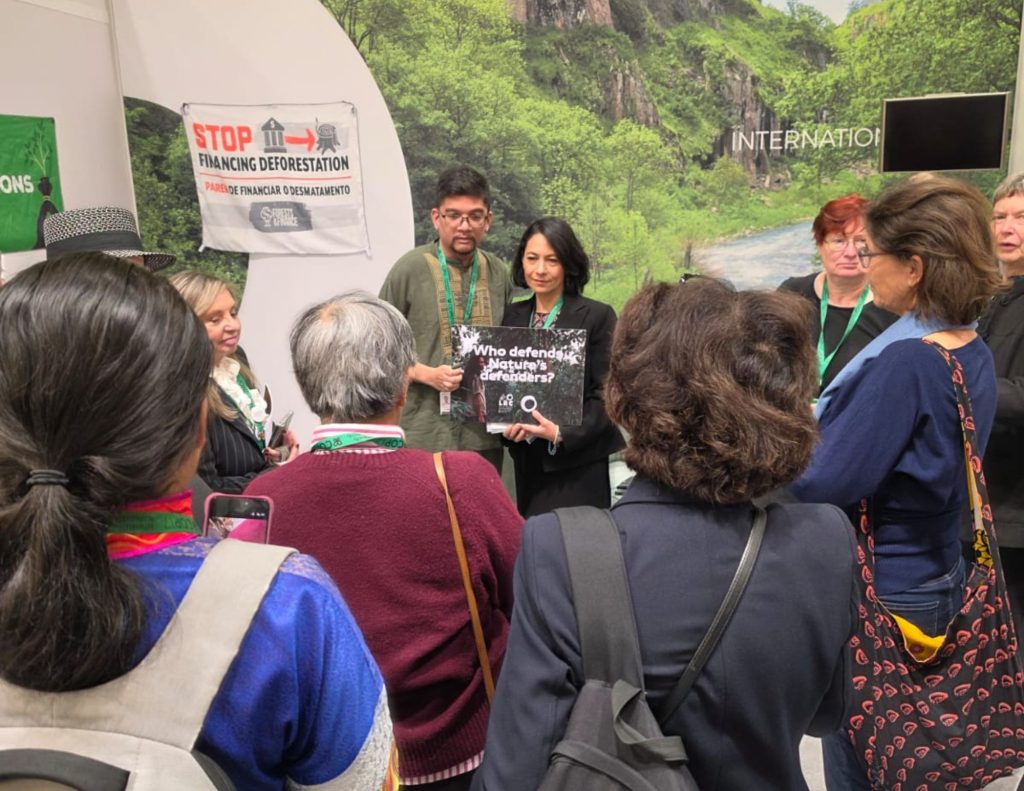
The Legal Rights and Natural Resources Center (LRC) raised the case of the Kirinteken-Ilentungen Menuvu community during a dialogue with U.N. Special Rapporteur on the Human Right to a Healthy Environment Astrid Puentes at the 17th Conference of the Parties to the U.N. Convention on Biological Diversity, or CBD COP17, in Yerevan.
LRC said the dispute involves a banana plantation operated by Kennemer Foods International in the southern Philippines on land claimed by the Indigenous community as part of its ancestral domain.
Leon Dulce, LRC campaigns support and linkages coordinator, said the company had benefited from carbon and biodiversity credits while one of its plantations stands on disputed Kirinteken-Ilentungen Menuvu land.
“There are no regulatory hard stops to such drivers of both biodiversity loss and human rights harm that have been documented to have caused human rights violations,” said Dulce.
Dulce joined a Friends of the Earth International delegation at COP17 to raise concerns about alleged rights violations involving environmental defenders in the Philippines.
LRC said Kennemer used land ownership titles that conflict with the community’s Certificate of Ancestral Domain Title. The group said the conflicting titles gave the company tenurial legitimacy and social acceptability over the disputed area.
The group also reported health and environmental concerns linked to aerial spraying at the plantation.
“They continue to document epidermal and respiratory problems especially among women and children, and observed their deep well water sources turn milky white and unsafe to consume,” said Dulce.
According to LRC, the community occupies and nurtures only seven hectares of what it described as its original 2,084-hectare territory because of encroachment by Kennemer and other agribusiness companies.
Community members are reforesting the land with native tree species to prevent its occupation by conflicting land uses, including industrial agriculture, the group said.
LRC said two datus, or tribal chieftains, have been killed since 2020. It also documented at least three harassment cases filed against community members and several incidents of threats and intimidation, including an attempt to fence them out of the land in May 2026.
The material did not provide details about the circumstances of the killings or identify those responsible.
LRC said the Menuvu case was among 27 case studies it documented in 2025.
Dulce said LRC’s latest report on the state of Indigenous Peoples in the Philippines estimated that 2.8 million hectares, or 51% of the total land area covered by formal ancestral domain titles, potentially overlap with projects involving forestry, plantations, critical minerals, fossil fuels, renewable energy and infrastructure.
“This is but one of 27 case studies we documented in 2025,” said Dulce.
Puentes invited environmental defenders participating in the dialogue to submit information for her upcoming reports on environmental human rights defenders and environmental rights legislation.
She also reminded states of their obligations to ensure human rights are at the center of biodiversity conservation and protection policies.