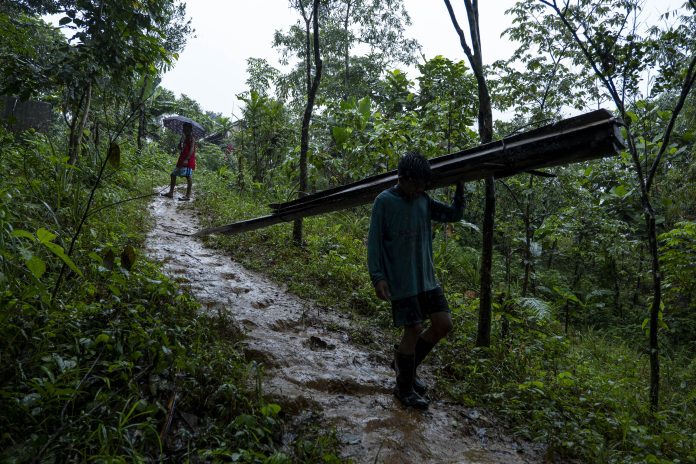
This article is an output of a consultation and assessment aimed at defining and understanding the concept of development from the perspective of Indigenous Peoples’ communities and examining how development interventions can possibly be integrated into the horizon of cultural perspectives — into the realm of integral ecology vis-à-vis the encroaching waves of the market economy and the mainstream socio-political milieu.
Context and Summary
Acclaimed as the seventh-largest island in the Philippine archipelago, Mindoro is located off the southwest tip of Luzon. The Mangyans are the original settlers and inhabitants of Mindoro. Over time, the Mangyans are believed to have been displaced from their original coastal dwellings and forced to retreat into the mountainous interior.
The Mangyan Indigenous Peoples in Mindoro are among the poorest people in the Philippines. This article explores the factors that contribute to poverty among the Mangyan people, with particular focus on the loss of their land. Deforestation, driven by commercial logging, agricultural expansion and lowland migration, has uprooted and displaced Mangyan communities.
Consequently, the Mangyans endure economic marginalization, limited access to vital services and discrimination from the dominant lowland population. The article also underscores the Indigenous understanding of development as an alternative paradigm, emphasizing the importance of holistic well-being, social harmony and sustainable interaction with the natural environment. It advocates a shift away from the prevailing materialistic and market-driven mindset toward a development model that honors Indigenous values, drawing wisdom from the integral ecology of the Mangyans.
Factors Contributing to Poverty of Indigenous Communities
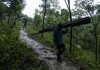
One significant factor that contributes to poverty among the Mangyan people is the loss of their land. The forest is home to Mangyan Indigenous communities. However, Mindoro has lost 40% of its forest cover since the 1960s. This deforestation has been driven by a number of factors, including commercial logging, agricultural expansion and lowland migration. Lowland settlers have encroached on Mangyan territory, and they have often forced the Mangyans to sell their land at below-market value. Many Indigenous Mangyan communities continue to be displaced and, in many instances, have lost access to their ancestral land.
Mangyans are also economically marginalized. They often lack access to education, healthcare and other essential services. This makes it difficult for them to compete in the market economy and leaves them vulnerable to exploitation. They also face discrimination from the dominant Filipino lowland population. They are often seen as backward and uneducated. This climate of discrimination makes it difficult for them to access opportunities and resources and can also lead to abuses and violations of their rights.
Moreover, the export-led industrialization that took place beginning in the 1950s in developing countries signaled the encroachment of transnational business corporations into the territories and ancestral lands of Indigenous Peoples in their ventures involving logging, mining and other extractive industries. The Mangyans were not spared from these pressures of resource competition, in which they were always in a disadvantaged position.
Mangyan Subsistence Economy and Integral Ecology
For the Mangyans, the ancestral domain comprises interacting landscapes of human communities, natural ecosystems and the living spirits of the land, including the spirits of their ancestors. Traditionally, the Mangyan Indigenous Peoples believe in an integrated cosmology in which the Creator, linked to other deities and spirits, is considered the source of land and life. It is for this reason that land is considered sacred and cannot be sold, owned or leased. They live with nature, and their lives depend on the resources around them. In traditional Mangyan society, what is generally practiced is a subsistence agricultural economy in which households normally produce only what they need for their day-to-day food consumption.
For Indigenous Peoples, land is communally owned, and an individual cannot claim absolute ownership. They, as a community, are stewards of the gift of creation. As such, land and nature’s richness are meant for the community’s use and sustenance, as intended by the Creator. Clearly, the idea of owning land by virtue of a piece of paper is alien to the traditional concept of Indigenous Peoples, as they did not subscribe to the idea of private ownership. They regard the land as something sacred to be cultivated by the community.
When lowlanders and corporations talk about development, they readily equate it with monetary gains, quantifying these in terms of the acquisition of visible material comforts or benefits. However, development, when measured within the framework of Indigenous Peoples’ perspectives, is wider and more inclusive. Development must consider within its purview the general well-being of the community and the healthy social interaction that should be enjoyed by all for their overall fulfillment. This should entail preserving social harmony and their collective cultural identity as a people.
Impact of a Monetized Economy
The dominant legal system on ownership was imposed to facilitate the exploitation of land resources. One consequence of this market-oriented economic framework was the commercialization of the soil and the conversion of land from traditional subsistence use to market-driven production requiring surplus output and revenue generation.
Consequently, among Mangyan Indigenous communities, the traditional pattern of agricultural subsistence was modified in relation to the emerging framework of a market-oriented economy, which necessarily introduced monetary forms of exchange and inevitably influenced the mode of social interaction within the community. A monetized economy somehow redefines the cultural patterns and priorities of communities engaging in market transactions. The commodification of land, ecosystems and the natural environment that Indigenous Peoples once considered sacred is one of the major impacts resulting from lowland encroachment, forcing them to give up their traditional values and the very soul of their culture.
For example, when a monetized economy is introduced, social considerations, particularly concepts of reciprocity, are no longer the primary consideration of the market economy. What predominates in the market system is no longer the social character of production and exchange but the individualistic craving for accumulation, irrespective of wider considerations for the overall welfare and support of the community.
For traditional society, the acquisition of wealth is not a value in itself. What is emphasized more is the gesture of generosity, living together and living harmoniously with the community. But in the emerging socio-cultural system defined by market priorities, such idealized consciousness is slowly fading into the background.
It should not come as a surprise that traditional Mangyan communities have a different paradigm of development, one that goes beyond the parameters of money and is more concerned with preserving the general well-being of the community and maintaining healthy interaction with their natural environment, particularly the forest ecosystem.
Toward an Alternative Development Paradigm
The concept of development among Indigenous Peoples as the promotion of the well-being of both the social community and ecosystems is already part of the ongoing paradigm shift away from the neoliberal economic model. It represents a turning away from a development model that emphasizes financial growth as the only real measure of development.
For the Mangyans, development is the sum total of experiencing peace and harmony within the community and a sense of freedom, serenity and security. In the early part of their history, the experience of poverty was non-existent and simply unimaginable because their forest habitat used to provide them with everything they needed in great abundance. Their subsistence economy did not require them to accumulate surplus “wealth” because they always had what they needed for food from the productive bounty of the land.
Now more than ever, it becomes imperative to rediscover the wisdom of Indigenous values and traditions and to harness this cultural energy in order to redeem us from our prevailing anthropocentric, materialist and overly consumerist mindset.
An alternative development paradigm demands that a more integrative model take into account the inseparable link between human and ecosystem well-being as key considerations in a genuine development process, as already enshrined in the traditional cultural paradigm of the Mangyans. The experiences and traditions of Indigenous Peoples in trying to maintain harmony with their social and physical environment are needed to provide us with significant insights into how to promote an alternative vision toward the sustainable well-being of the earth.
The integral cosmology of the Mangyans offers a workable paradigm for establishing our sacred relationship with the land, which is also the abode of earth spirits and a home not only to the tribe but to all of the earth’s community — the ecosystems and the entire biodiversity. This collective ecology of nature, human society, culture and the spirit world makes up the total reality of their integrated cosmos.
Fr. Edwin Gariguez is the executive director of the Social Action Center of the Diocese of Calapan. A Catholic priest and environmental activist, he serves as convenor of REnew Mindoro and Protect the Verde Island Passage, advancing community-led efforts for a just and sustainable energy transition.
He is a former executive director of Caritas Philippines (CBCP-NASSA) and a recipient of the 2012 Goldman Environment Prize for his leadership in protecting Mindoro’s environment and Indigenous communities.