
In the heart of a bustling European metropolis, away from the grand palaces and historic cathedrals that usually define a papal visit, a different kind of sanctuary came into being. It was a sanctuary built not of stone, but of shared tears, warm embraces, and solidarity.
The setting was the CEDIA 24-hour shelter, a social center run by Cáritas Madrid. This facility, which quietly serves more than 2,500 people a year, was chosen by Pope Leo XIV as his very first stop in Spain, bypassing the customary diplomatic pageantry of an apostolic journey to head straight to the margins.
As the representative for ARCORES, the international solidarity network of the Augustinian Recollect Family, I had the profound privilege of attending Pope Leo XIV’s encounter with Madrid’s social ministries. More importantly, I stood alongside those at the center of the day: the poor, the migrants, the forgotten, and those who have made it their life’s mission to walk with them.
Feet in the Mud, Eyes on Heaven
The tone of the day was set beautifully by Cardinal Jose Cobo of Madrid. Welcoming the Holy Father, he reflected on the official motto of the papal visit: “Lift your gaze.”
“We want to do it without taking our feet off the ground,” Cardinal Cobo noted, his words carrying the weight of reality. He reminded us all that true faith must be lived “with our feet firmly planted in the mud and on the streets where so many people continue to seek housing, decent work, companionship, and hope.”
It was a sentiment that resonated deeply with everyone, especially for us at ARCORES, where our work involves stepping into those very streets to accompany and uplift the vulnerable.
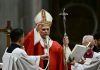
When Pope Leo XIV spoke, his voice carried a tender gravity. He reminded the gathered crowd that the Church’s social commitment is not mere philanthropy. It is the imitation of Christ.
“CEDIA follows the path of the Gospel in the footsteps of Jesus,” the Pope said, his eyes scanning the faces before him: migrants, people experiencing homelessness, and young children accompanied by their mothers. “The Son of God became man not only to heal our illnesses and miseries, but to make them his own, except for sin, living as one of us in weakness and identifying with everyone who suffers.”
He then invoked the definitive mandate of Matthew 25:40: “Just as you did it to one of the least of these who are members of my family, you did it to me.”
In a moment of striking clarity, the Pope addressed the very essence of social ministry. He challenged the “secular ideologies” that often dismiss charitable works as a mere obsession or side project of the Church.
“The poor cannot be neglected if we are to remain within the great current of the Church’s life that has its source in the Gospel. Charitable works are not an obsession; they are the burning heart of the Church’s mission.”
Hearing the Wounds of the Street
For the residents of CEDIA and the participants from various Catholic social projects, the Pope’s visit affirmed their sacred dignity. Luis Hernández, the director of CEDIA, expressed profound gratitude for what he described as an “evangelical gesture” that truly made “the last first today.”
Hernández did not sugarcoat the harsh realities faced by the 2,500 people who pass through the shelter annually. He described them as “men and women marked by the wounds of life on the streets… discarded, undocumented, without job opportunities or housing, often with mental health problems, addictions, and without any kind of support network.”
The encounter represented a tapestry of survival and restoration. Beyond people experiencing homelessness, the participants included survivors of human trafficking, newly arrived migrants seeking a peaceful future, and vulnerable women struggling to rebuild their lives.
“All of us, driven by the power of the Spirit, are involved in meeting with them, caring for the vulnerable, and initiating processes that break the cycle of poverty and exclusion,” Hernández explained.
A Catalyst of Hope for Catholic NGOs
Following the deeply moving encounter with the shelter residents, Pope Leo XIV held a brief and intimate meeting with Catholic NGOs dedicated to social ministry. Representing ARCORES in this encounter, I found the atmosphere charged with a renewed sense of purpose.
The Pope then addressed the charity workers, volunteers, and religious men and women, offering what he described as a “gratitude of hope.”
“I am most grateful to all the associations represented here,” the Holy Father said warmly. “Thank you for the beautiful service you provide, because it is a sign of hope in today’s world. It is the living Gospel that everyone longs to see, feel, and experience, yet which is so often obscured or forgotten amid the profound indifference that affects our society.”
The Pope humbly acknowledged the sacrifices made by Catholic NGOs and social institutions to alleviate poverty in Madrid and around the world.
“You hold in your hands a great opportunity to offer hope, to us and to the whole world, and for this I thank you,” the Pope concluded. “Thank you for your sacrifices. Thank you for saying ‘yes’ to the Crucified Christ. Thank you for embracing the Cross so that you, we, and all people may walk together toward the hope and joy of the Resurrection. Thank you very much.”
Moving Forward: The Mandate of Continuing Solidarity
The stories shared during the visit lingered long after we left the CEDIA shelter. They revealed, in stark and personal ways, the human suffering and systemic injustices embedded in modern society.
Yet rather than leaving us discouraged, Pope Leo XIV’s recognition of the immense work carried out by the Archdiocese of Madrid and its partner NGOs acted as a spiritual catalyst.
For ARCORES, this papal encounter is a powerful affirmation of our mission. It reinforces our commitment to stand by the poor who face dehumanizing situations and to accompany them with dignity and hope.
We return to our work with renewed zeal, inspired by the knowledge that when we look into the eyes of the marginalized, we are looking into the eyes of Christ.
The Pope has lifted our gaze, and our feet remain ready for the mud of the streets, ready to help build a world of justice, dignity, and hope.
Brother Jaazeal Jakosalem, OAR, is a Filipino Laudato Si’ reader. A member of Pusyon Kinaiyahan, an environmental group in the Visayas. He is currently based in Germany as a member of PCPR-Europe, working for the Philippine campaigns related to the protection of human rights.