During the Holy Rosary for Peace, Pope Leo XIV exhorts us all, saying: “Stop! It is time for peace! Sit at the table of dialogue and mediation, not at the table where rearmament is planned, and deadly actions are decided! Yet there is a no less significant responsibility that falls to all of us — men and women from all over the world. We are an immense multitude that rejects war not only in word, but also in deed…” (St. Peter’s Basilica, 11 April 2026).
Returning to the negotiating table, embracing the preconditions of peace
The path to peace requires a commitment to sincere dialogue, a tradition in which the Church has long played a pivotal role. In the wake of the EDSA People Power Revolution, church leaders emerged as trusted mediators and harbingers of peace, with figures such as Bishop Antonio Fortich of Bacolod leading efforts to address the root causes of violence. Unfortunately, these early efforts were often hijacked by right-wing military adventurism, stalling the momentum for peace and shifting the focus away from diplomatic resolution toward renewed hostility.
To reclaim this path, the National Democratic Front of the Philippines (NDFP) has consistently advocated for negotiations grounded in essential preconditions, facilitated by the Norwegian government. Central to this pursuit is the Comprehensive Agreement on Social and Economic Reforms (CASER), a consultative document proposing a radical transformation of Philippine society. By prioritizing state intervention that favors marginalized groups such as peasants, workers, and national minorities over the interests of monopoly capitalist powers, CASER serves as a blueprint for addressing systemic inequality. It remains a “work in progress,” born of nationwide consultations and requiring sustained public engagement and collective struggle to be effectively refined and implemented.
Addressing social transformation, from genuine land reform to uplifting the social conditions of Philippine society, including basic needs such as housing, education, public health, economic reform, food security for all, the end of political dynasties, systemic corruption in governance, and capitalist control, are hallmarks to be considered in achieving a just and lasting peace.
Carrying the burden of responsibility
The responsibility for pursuing an authentic, program-driven peace process ultimately rests with the government, yet recent history reveals a persistent pattern of missed opportunities and active sabotage. Despite initial strides in negotiations, most notably during the Duterte administration, the state never wholeheartedly embraced the process. Instead, it was systematically undermined by military-rightist interference and a superficial commitment to diplomacy that prioritized optics over substance.
Rather than fostering genuine reconciliation, the government established the National Task Force to End Local Communist Armed Conflict (NTF-ELCAC), transforming a potential path to peace into a mechanism of state oppression. Backed by a multi-billion-peso budget, this agency has been used to target activists, human rights defenders, and church leaders through systematic red-tagging and extrajudicial killings, effectively replacing meaningful dialogue with state-sponsored violence.
For a peace process to be legitimate, it must be centered on high-level negotiations between the Government of the Republic of the Philippines (GRP) and the National Democratic Front of the Philippines (NDFP), rather than the so-called “local peace initiatives” championed by the military. These localized efforts are often politically dependent on local government officials and frequently devolve into instruments of intimidation and corruption rather than avenues for justice.
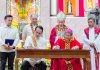
By bypassing formal bilateral agreements in favor of fragmented, military-led schemes, the state abdicates its responsibility to address the structural roots of the conflict. True peace requires a national commitment to reform, not a decentralized strategy of coercion that further marginalizes those seeking systemic change. Momentum had already gained traction: “a breakthrough was achieved in November 2023 when the parties agreed on a shared vision for peace, paving the way for formal negotiations to begin. The agreement was signed at Oslo City Hall on 23 November 2023.” (https://www.regjeringen.no/en/topics/foreign-affairs/peace-and-conflict-resolution/norways_engagement/talks_philippines/id2522232/). However, it again failed due to the Philippine government’s political inconsistency and lack of authentic commitment to addressing the agreed social reforms.
Dismantling the utopia of militarization
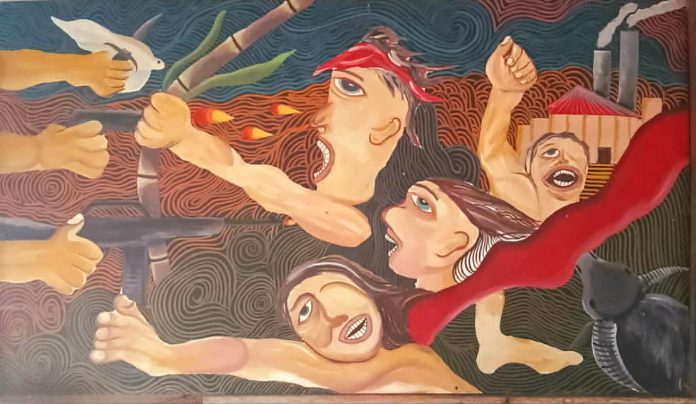
History shows a consistent sociological pattern: as long as systemic social injustice persists, rebellion will remain an inevitable response. When military and police ruthlessness is framed as a means of “addressing peace,” it creates a fundamental contradiction, because true peace can never be rooted in violence.
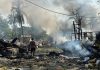
By framing military ruthlessness, specifically the Toboso massacre on Negros Island, which claimed 19 lives, as “peace-building” measures, the state creates this contradiction. As Bishop Gerardo Alminaza of San Carlos stated: “The use of force by the State carries a grave moral weight. It demands not only legality, but accountability; not only authority, but transparency.”
This failure is compounded by a state apparatus that appears either incapacitated or unwilling to prosecute high-level corruption and crimes of inhuman magnitude, leading to the troubling suspicion that the neutralization of “suspected rebels” is driven less by security and more by incentives for monetary rewards and career advancement.
Indeed, true peace should never be stained with blood. The institutionalization of this “utopia of militarization” is most evident in the billions of pesos funneled into the NTF-ELCAC under both the Duterte and Marcos Jr. administrations. Rather than resolving conflict, this narrative of state-sponsored ruthlessness only fuels further rebellion in the countryside, as the government continues to neglect and resist formal peace negotiations in favor of force.
This repressive approach is inherently tyrannical in both form and method, proving that peace is not the language of a government that prioritizes military dominance over the structural reforms necessary to liberate the people from oppression. Pope Leo XIV calls for a sustaining peace rooted in the common good. He says, “authentic peace arises when everyone feels protected, heard and respected, when the law serves as a secure safeguard against the whims of the rich and powerful” (Meeting with the Authorities, Civil Society and the Diplomatic Corps, 15 April 2026, Cameroon).
Journeying towards a fraternal dialogue
“There is a need for paths of peace to heal open wounds.” This was the affirmation of Pope Francis in his call for peace (Fratelli Tutti, 225). Several church leaders have recently called for the resumption of peace talks, asserting that the Philippine Church must embrace its role in the negotiations to mediate for the betterment of society.
Many leaders are already deeply engaged in this mission, collaborating with key institutions such as the Philippine Ecumenical Peace Platform (PEPP), the Catholic Bishops’ Conference of the Philippines (CBCP), and the National Council of Churches in the Philippines (NCCP), among others. To sustain this momentum, a profound “prophetic commitment” is required, one in which these institutions harness their collective leadership, grassroots presence, and spiritual wisdom. By doing so, they can pursue a peace process that goes beyond politics to achieve an authentic, life-giving transformation for the Filipino people.
Pope Leo XIV’s methodology presents a consistent peace ethic. He says: “a peace that is unarmed, that is, not based on fear, threats or weapons, and at the same time disarming, because it is capable of resolving conflicts, opening hearts and generating trust, empathy and hope. Peace cannot be reduced to a slogan: it must be embodied in a way of life that renounces all forms of violence, both personally and institutionally” (15 April 2026, Cameroon).
Brother Jaazeal Jakosalem, OAR, is a Filipino Laudato Si’ reader. A member of Pusyon Kinaiyahan, an environmental group in the Visayas. He is currently based in Germany as a member of PCPR-Europe, working for the Philippine campaigns related to the protection of human rights.