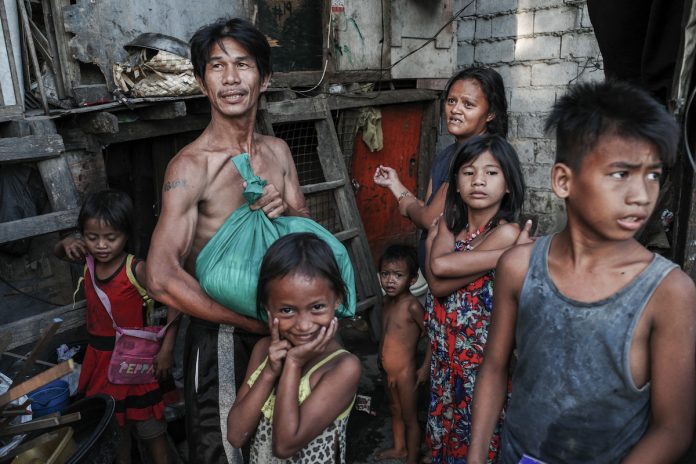
Poorer households and communities outside the capital are bearing the brunt of rising food prices, with more Filipinos pressing the government to act as global oil shocks drive up the cost of basic goods, a new survey showed.
A Stratbase Institute-commissioned survey conducted by Pulse Asia found that 41 percent of respondents want the government to prioritize making food more affordable. The concern was more pronounced in Balance Luzon and Mindanao, where it rose to 46 percent, signaling deeper strain in regions already vulnerable to economic shocks.
The increase was sharpest among Class E respondents, where concern over food prices rose by seven percentage points from December, highlighting how inflation is hitting the poorest sectors hardest.
The survey, conducted from Feb. 27 to March 2 among 1,200 respondents with a ±2.8 percent margin of error, reflects growing unease over the cost of daily necessities, particularly rice, meat, and fish.
Analysts linked the trend to surging global oil prices triggered by tensions in the Middle East, which have pushed domestic fuel prices to between P94 and P115 per liter, raising transport and food costs.
Stratbase Institute president and CEO Victor Andres “Dindo” Manhit said the findings show how global developments are directly affecting Filipino households.
“What we are seeing is how geopolitical tensions are directly affecting Filipino households,” he said. “While corruption remains an important issue, ordinary citizens are now more focused on immediate economic pressures including food prices and income stability.”
Despite the shift toward survival concerns, governance issues remain present. Twenty-six percent of respondents said the government should “lessen or eliminate corruption to provide better services to the community,” though this was lower than in the previous survey.
At the same time, demand for jobs continues to rise, with 24 percent calling for more employment and livelihood opportunities, including a significant increase in the Visayas.
Manhit said the results point to urgent expectations for government action.
“Our commissioned survey’s findings reinforce concerns that Filipinos are overwhelmingly worried by the rising costs of goods,” he said. “That there remains a high demand to eliminate corruption also shows that the public has stronger expectations for government accountability whenever food prices rise.”
He urged authorities to stabilize prices, curb profiteering, and expand support for vulnerable sectors, stressing that “addressing rising food prices must go hand in hand with creating more jobs and ensuring that economic gains are felt at the local community level.”