Despite taking place thousands of kilometers away, the ongoing war in the Middle East is disrupting the daily life of Filipinos.
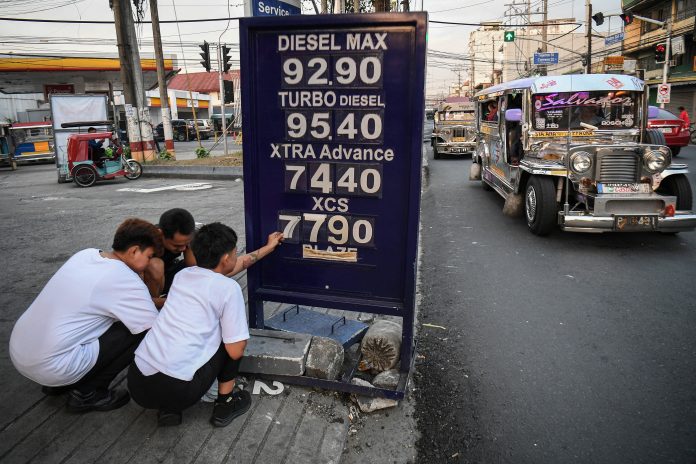
Oil prices have skyrocketed by 50% in the past few days. Prices of goods and electricity are also increasing, just as the country enters its hottest months of the year. Commuters and drivers are burdened by higher fares and fuel costs, respectively. Government offices have shifted to a four-day work schedule.
Policymakers are scrambling to find short-term solutions to ease the burden on consumers and secure the nation’s energy supply, from cash assistance to drivers to reducing excise taxes on fuels, from asking oil companies to slow down their price hikes to looking for imported oil from other countries.
While these are critical steps to respond to immediate concerns, they provide another glimpse into what the Philippines’ future would look like if it remains dependent on fossil fuels.
The country’s track record on long-term planning and coherent implementation has been inconsistent across many development issues. Yet with the current crisis showing how long-term issues on energy, economy, and climate are intertwined and can amplify losses for decades to come, the usual reactive brand of Philippine policymaking will simply not be enough.
Short-term outlook
Why is the national government vocalizing calls for reviewing the Downstream Oil Industry Deregulation Law only now, when prices are already too high and the burden on the public is too obvious?
Before the current dilemma, consumer and labor groups had long criticized this law for failing to deliver its intended benefits. Instead of promoting a fairer market, the oligopoly of the three major oil companies persists, with many viewing their price hikes as coordinated. Filipinos also pay some of the highest pump prices in Southeast Asia. The law has also limited the government’s power to act on fuel pricing during times of crisis, as seen today.
The Secretary of the Department of Energy (DOE) has framed it as a law that only works “during good times” and is ineffective otherwise. If that is how a Republic Act is perceived by top government officials, it raises serious questions as to why it became law in the first place, or why it was not reviewed, let alone amended, “during good times.”
This style of policymaking and governance, one that lacks foresight, fails to plan for multiple scenarios, and does not fully account for the well-being of all stakeholders, should have ended years ago. Instead, it has appeared in every major crisis in recent years, from the oil price surge to the COVID-19 pandemic and super typhoon Yolanda.
It is also another blow to a national government whose reputation has been damaged by corruption in mismanaged flood control projects, exacerbated by extreme flooding in many areas, partly due to the lack of proper long-term land use planning. Even then, public attention and investigations only intensified when the impacts became too severe to ignore.
By this point, we are familiar with the factors that enable this reactionary culture: siloed perspectives, patronage politics, personality-driven governance, political dynasties, among others.
How quickly the country can transition away from this approach will depend on how well Filipinos understand these connections, how they affect daily life, and how they shape public choices, assuming these are not overshadowed by political beliefs.
No matter how urgently this shift is needed, it will take time because of the scale and depth of the problem. Hopefully, it will take years, not decades.
Long-term pathway
In the meantime, the current oil crisis highlights the importance of developing a clear just energy transition (JET) strategy for the Philippines. This strategy must address multiple objectives at once: energy security, self-sufficiency, affordability, reduced air pollution, and lower climate emissions.
However, the same issues persist in how existing programs and directives align. One of the most notable concerns is how many proposed actions remain pro-business rather than pro-people, especially across the energy sector, as the government seeks to attract more investments.
This is evident in the proposed waste-to-energy plant near the increasingly reclaimed Manila Bay, where thousands of people could be displaced. It is also seen in the continued promotion of the mining industry, despite cases such as Dupax del Norte showing that some companies proceed with operations despite regulatory requirements unless ordered to stop.
There is still no phaseout plan for natural gas, labeled as a “transition fuel,” which is likely to receive more support following the discovery of a new gas deposit near Malampaya. The DOE has also rushed guidelines to open the energy sector to carbon markets despite the absence of a comprehensive national framework.
As the national government finalizes the Philippine Just Transition Framework and reviews its energy plans, it must commit to a long-term pathway anchored on three principles: decarbonization, decentralization, and democratization.
There must be a clear timeline and targets to transition away from fossil fuels and prioritize renewable energy, unless the country is prepared to face recurring oil crises. The energy sector must become less dependent on private sector interests and more oriented toward public welfare. Where possible, community-owned and localized energy systems should become the norm in the coming decades.
These transitions will take time, which makes it all the more urgent to begin now.
John Leo Algo is the National Coordinator of Aksyon Klima Pilipinas and the Deputy Executive Director for Programs and Campaigns at Living Laudato Si’ Philippines. He has been representing Philippine civil society at UN climate and environmental conferences since 2016 and has worked as a climate and environment journalist since 2016.
The views expressed in this article are those of the author and do not necessarily reflect the editorial stance of LiCAS News.