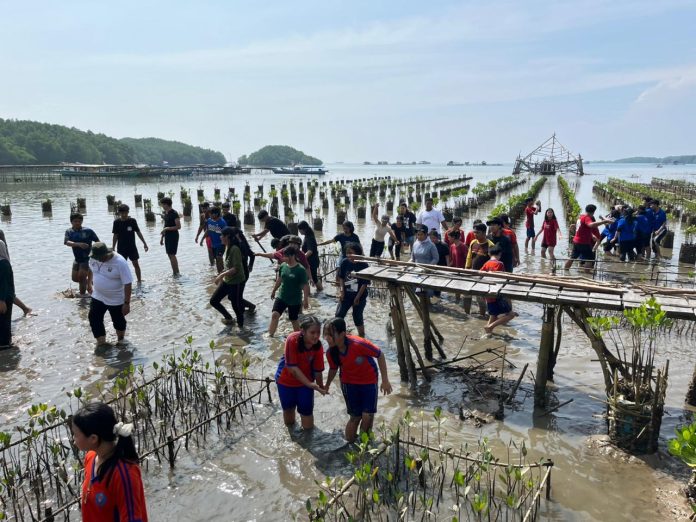
Bishop Vincentius Setiawan “Avin” Triatmojo of Tanjung Karang in Indonesia joined about 80 volunteers in planting 2,000 mangrove seedlings along the shoreline of Cukunyinyi in Pesawaran district, South Lampung, on the island of Sumatra, on Valentine’s Day.
Small waves brushed against legs half-buried in mud. Pants were rolled up, hands held mangrove seedlings, and step by step they moved along the coast.
Among those who entered the sea that morning were three priests of the Diocese of Tanjung Karang, who immersed their feet in seawater and planted mangrove seedlings one by one in the coastal mud.
The planting forms part of the Ninth Pastoral Fundamental Guidance (2026) of the Diocese of Tanjung Karang, which carries the theme “Love for Life and the Environment,” inspired by Psalm 24:1: “The earth is the Lord’s, and everything in it, the world, and all who live in it.”
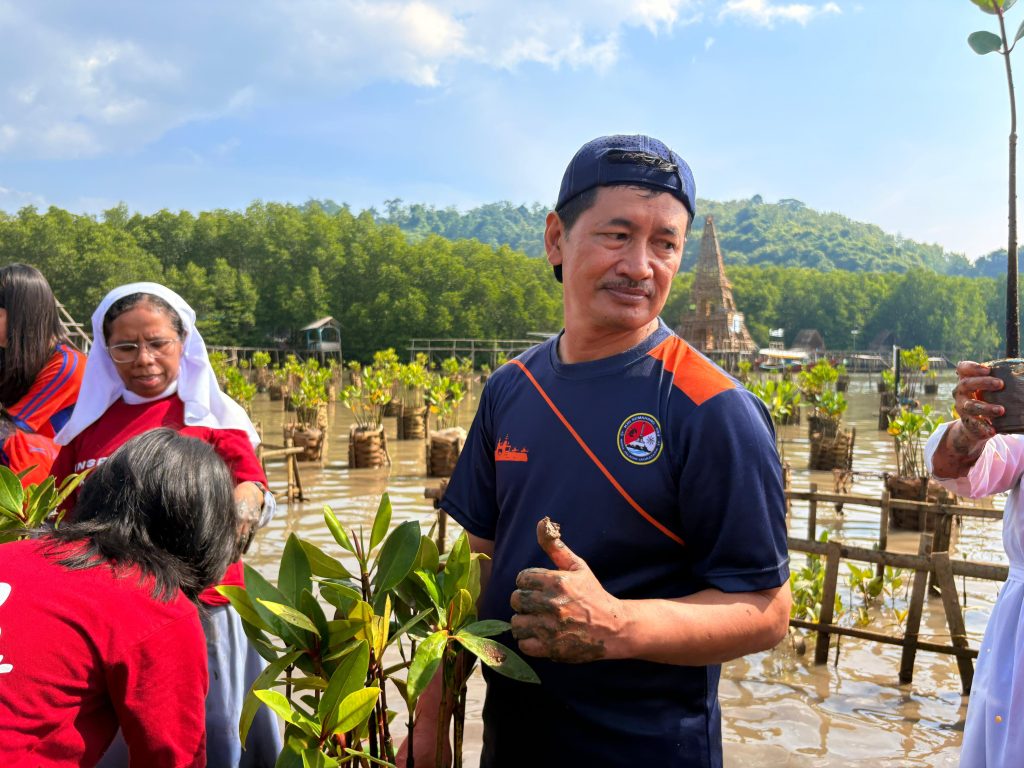
Saturday’s activity took place amid the bishop’s busy schedule, attending the priestly jubilee celebration of an SCJ priest in Lampung. Despite this, the bishop, fondly known as Mgr. Avin, chose to “go into the field” and plant mangroves alongside volunteers.
“Personally, I simply want to do practical things,” Mgr. Avin said, as recounted by Sr. Vincentia HK, the initiator of the mangrove planting movement.
Across faiths and campuses
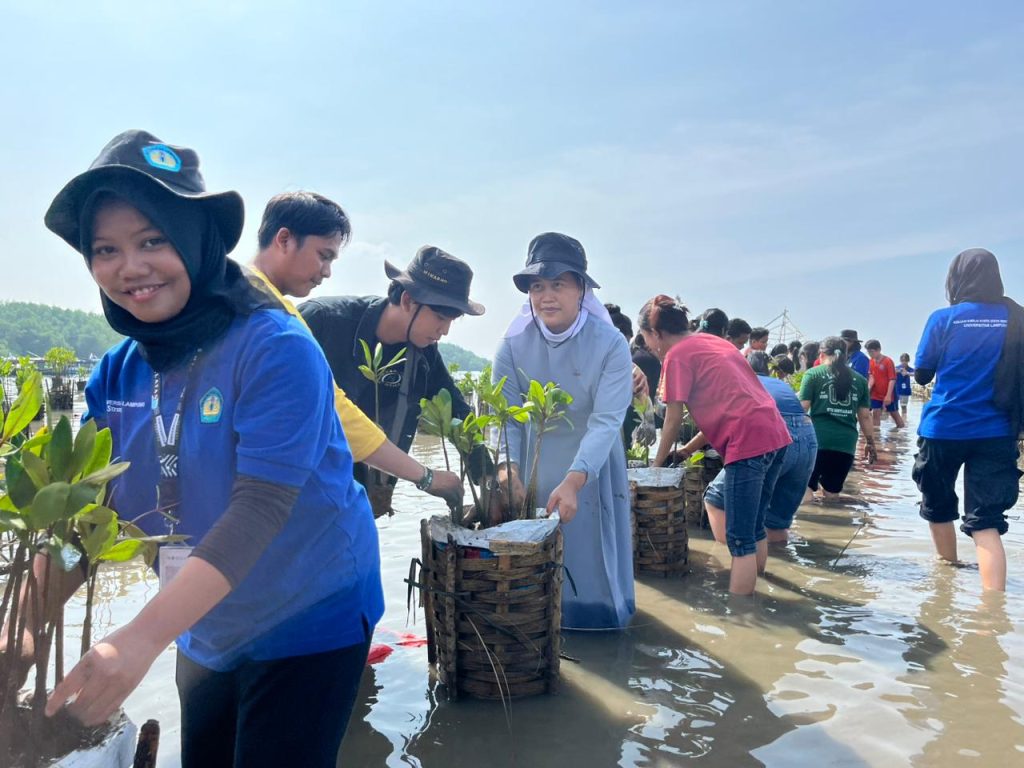
Participants included students from the University of Lampung (UNILA) and the Sumatra Institute of Technology (ITERA), Catholic youth (OMK) from several parishes, students from Gentiaras Higher Education College that belongs to the diocese, local mangrove activists, and members of the GusDurian community.
The involvement of the GusDurian community, a moderate Muslim youth group, added a distinctive colour to the event. Together, participants embodied the spirit of ecological concern emphasized in the encyclical Laudato Si’ by Pope Francis.
The first phase of the movement in November 2025 successfully planted 1,000 mangrove seedlings funded by various donors. In this second phase, 2,000 seedlings were planted.
The procurement of seedlings for this second phase was supported by Sahabat Insan, an environmental care community mentored by Fr. Ignatius Ismartono SJ in Jakarta.
From pessimism to inspiration
Sr. Vincentia HK, a religious sister of the Congregation of the Sacred Heart and Chair of the Environmental Education Program of the Laudato Si’ Indonesia Movement Group, admitted she had doubts when she first sent a WhatsApp invitation to the bishop.
“At first I was pessimistic—would the bishop really be willing to go down into the sea?” she said.
The invitation was reinforced only by a brief verbal reminder during her visit to the diocesan residence. Yet the bishop’s response reignited her spirit.
The bishop did not want the Church merely to “speak words,” but to be present in concrete action to care for the earth.
From the river, then into the sea
Earlier, on Jan. 23 and 31 before last week’s activity, Mgr. Avin also encouraged Sr. Vincentia HK that the ecological movement should not stop at planting mangroves.
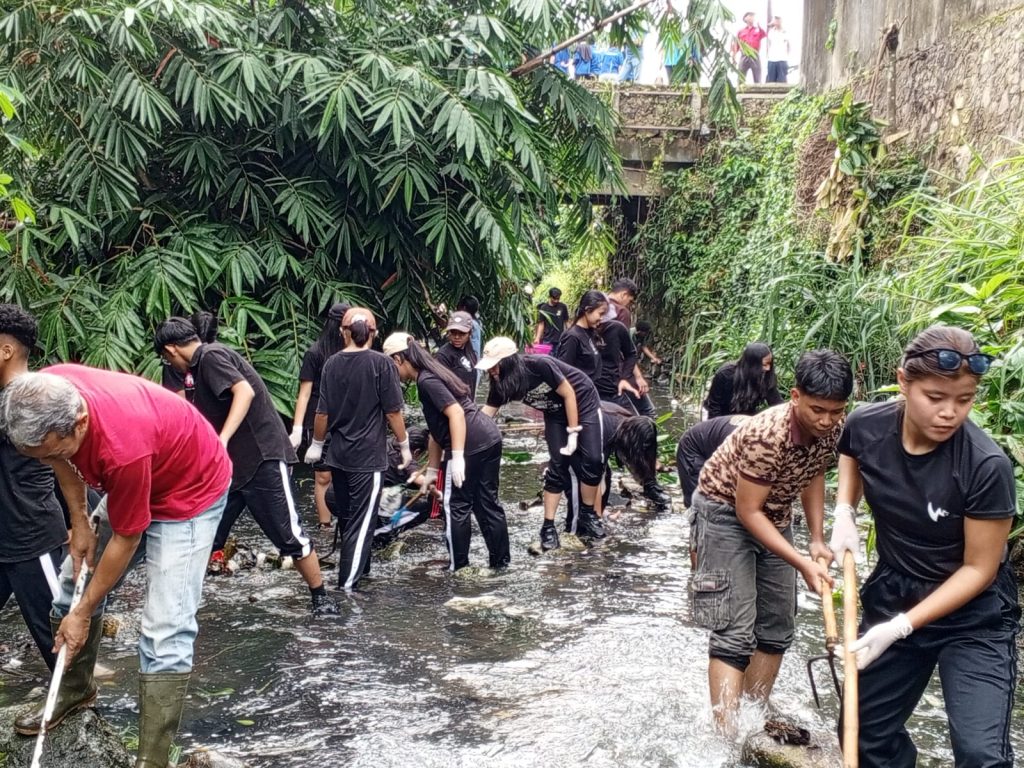
He invited the faithful to help clean the rivers in Tanjung Raya and Tanjung Gading Sub-Districts that are located within the pastoral reach of Tanjung Karang Cathedral Parish Church.
“With the bishop going down into the sea, the faithful feel motivated to become more actively involved, not merely present around the altar,” Sr. Vincentia explained.
Catholics’ exposure to clean waste in the river has also caught the attention of local government that scores of officials were also motivated to act, while also providing heavy machines.
This action shows that ecological spirituality is not merely discourse, but a shared movement that touches soil, water, and mud.
“Small steps, involving many people—I feel that it is there that each person learns… We, the Church, are called no longer to be spectators but movers, actively involved. Without that, the Church will lose its spirit if we do not have the courage to begin,” she claims.
“The Church must not merely become a moral observer, an observer of destruction, a social observer—bold in making normative appeals yet afraid of risk. No. The Church must take a stand, moving from being spectators to becoming prophetic actors, doers of the Words,” the nun reaffirms her personal faith.
Toward 5,000 mangroves
If all goes according to plan, the third phase will be held in July 2026 to coincide with World Mangrove Day, with a target of planting a total of 5,000 mangrove seedlings in the Pesawaran area.
A similar movement is also planned for the coastal area of Kalianda, South Lampung, in March 2026.
On the shores of Cukunyinyi, footprints in the mud may soon be washed away by the tide. Yet the thousands of mangroves planted that day are expected to grow into a natural coastal barrier—preventing erosion, nurturing marine life, and bearing witness that faith can take deep root when expressed through concrete action.