The Catholic Church in the Philippines has taken what Church leaders described as a “pilgrimage of conscience” — a moment of reckoning with past failures and a decisive step toward protecting minors and vulnerable persons.
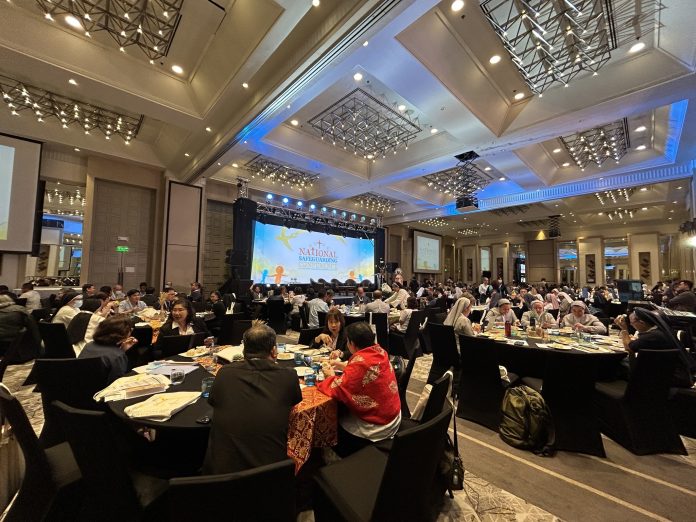
Held in Angeles City, Pampanga, the first National Conference on Safeguarding gathered more than 300 delegates, including bishops, clergy, religious leaders, and lay professionals from across the country and neighboring Southeast Asian nations.
With the theme “Our Mission of Protection: A Journey of Hope and Compassion,” the four-day conference was organized by the Episcopal Office for the Protection of Minors and Vulnerable Persons (PMVP) of the Catholic Bishops’ Conference of the Philippines (CBCP), in partnership with the Pontifical Commission for the Protection of Minors (PCPM), the Catholic Safeguarding Institute (CSI), and the Conference of Major Superiors of the Philippines (CMSP).
According to organizers, 76 percent of dioceses, 71 percent of apostolic vicariates, and half of the prelatures in the country were represented, alongside the Military Ordinariate.
‘Safeguarding isn’t just administrative’
The event opened with a Mass at the Holy Rosary Parish, presided over by Archbishop Florentino Lavarias of San Fernando, who urged Church leaders to see safeguarding not as compliance, but as a sacred calling.
“Safeguarding isn’t just administrative… It’s a sacred duty that reflects our vocation to walk together in synodality and compassion,” the prelate said.
He reminded participants that the mission of protection is grounded in the Gospel — a moral and theological imperative that reflects Pope Francis’s call for a “continuous and profound conversion” in the Church’s witness.
From obligation to evangelical mission
Bishop Luis Manuel Ali Herrera, secretary of the Pontifical Commission for the Protection of Minors, delivered a keynote address that challenged the Church to move beyond bureaucratic responses.
“Protection is not an administrative task,” he said. “It is a theological imperative and an evangelical mandate.”
He urged dioceses to adopt a victim-centered approach, integrate safeguarding into pastoral planning, and exercise decisive leadership rooted in transparency and accountability.
“Overcoming denialism and embracing transparency,” he said, “are signs of a Church that truly walks in the light.”
Global framework and accountability
In a video message, Archbishop Charles Jude Scicluna, Adjunct Secretary of the Dicastery for the Doctrine of the Faith, traced Pope Francis’s institutional reforms: the creation of the PCPM in 2014, the promulgation of Vos Estis Lux Mundi in 2019, and the 2021 revision of Book VI of the Code of Canon Law.
Scicluna stressed the Church’s duty to protect whistleblowers, respect the dignity of the accused, and ensure pastoral care for all involved. He cited Pope Leo XIV’s exhortation to bishops “to act decisively in cases of abuse and to respect existing legislation.”
Bishop Brendan Daly, Judicial Vicar of the Catholic Church in New Zealand, said integrating guardianship into governance and culture is essential.
“Transparency is not optional,” Daly said. “It is essential to rebuilding trust and credibility.”
Building a culture of safety
The conference also showcased collaborative models of safeguarding already in place in the Philippines. The Catholic Safeguarding Institute highlighted its programs in education, training, and research rooted in “personal conversion and fraternity.”
The Conference of Major Superiors of the Philippines presented a framework for prevention, investigation, and reparation, while diocesan and congregational initiatives — including the Cebu Independent Safeguarding Team and projects led by the Salvatorian Sisters — demonstrated local implementation.
Organizers emphasized that safeguarding must be embedded in formation programs so that “clergy, religious, and laity understand and live these values to defend human dignity.”
Listening and healing as renewal
Throughout the sessions, experts discussed Canon Law, digital safety, victim support, and civil law cooperation, underscoring the need for ongoing training, effective complaint mechanisms, and collaboration with civil authorities.
Speakers stressed that investigations must be impartial and survivor-centered — even in historical or anonymous cases — and that Church leaders must “embody integrity through action.”
The closing message called for a “culture of listening” that welcomes victims with compassion and respect for their privacy and dignity.
The conference ended with a renewed commitment to build a Church that protects, listens, and acts with courage and compassion — what participants described as both a moral duty and a moment of grace for the Philippine Church. – with reports from AsiaNews