Religious freedom in the Philippines faces growing pressure amid alleged human rights abuses linked to counterterrorism policies, according to the Religious Freedom in the World Report 2025 released by Aid to the Church in Need (ACN).
The biennial study by the pontifical foundation raised concern that state counterterrorism measures are being used to silence legitimate dissent and civic advocacy.
“Concerns have been raised about the way the government has used the controversial Anti-Terrorism Act to provide a cover for human rights abuses, including the targeting of activists, religious leaders, and indigenous communities seeking to protect their land from mining interests,” the report said.
While the law was intended to strengthen national security, the report said it has created “a climate of fear and repression” for some communities, particularly among those involved in land and environmental defense.
ACN also documented ongoing violence by extremist groups in the southern region of Mindanao. “Jihadist violence persisted in Mindanao, the southern Philippines island with a large Muslim population,” the report said.
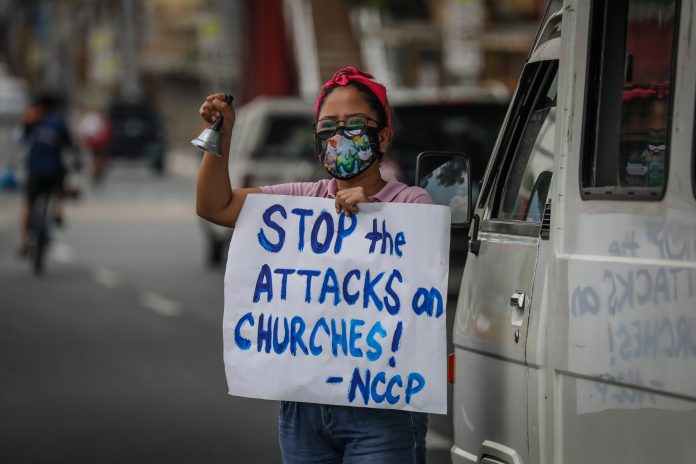
It cited several incidents between 2023 and 2024: “In December 2023, a bomb was detonated during a Catholic Mass at Mindanao State University, killing four; in May 2024, a grenade attack on a chapel in Cotabato City injured two. Armed clashes between Islamic militants and government forces in Maguindanao del Sur left 11 dead.”
These incidents, ACN said, “highlight the ongoing threat posed by jihadist actors in the Bangsamoro region.”
The Philippines was listed among 24 nations “under observation”, a category for countries “where newly emerging factors of concern have been observed, with the potential to cause the erosion of freedom of religion.”
Global findings: Freedom under siege
The Religious Freedom in the World Report 2025—covering the period from January 2023 to December 2024—warns that the right to believe and worship freely is deteriorating worldwide.
According to the foundation, “almost two-thirds of humanity—almost 5.4 billion people—live in countries where serious religious freedom violations take place.”
ACN identified 24 countries facing persecution and 38 suffering discrimination, representing what it described as “a broad spectrum of violations against religious freedom,” ranging from “killings, imprisonment, and the destruction or confiscation of places of worship” to “bureaucratic hurdles, censorship, bans on religious education, and various types of social discrimination.”
The foundation attributed these abuses to authoritarianism, religious extremism, and ethno-religious nationalism.
“Authoritarianism is the most frequent, affecting 24 countries… where state control curtails religious pluralism,” the report said, warning that discrimination often arises from “a mix of authoritarian governance and religious extremism.”
ACN also cautioned that “AI and digital tools are being weaponised to repress religious groups,” while wars in Myanmar, Gaza, Sudan, and Ukraine have worsened persecution and displacement.
Despite the rise in violence and restrictions, ACN emphasized that faith communities continue to embody hope and resilience.
“Despite persecution, religious communities continue to demonstrate remarkable resilience, actively engaging in peacebuilding and delivering essential humanitarian assistance.”
The foundation concluded with a renewed call for solidarity: “Religious freedom is not a privilege — it is a fundamental human right.”