Thailand’s Department of Religious Affairs (DRA) has launched an investigation into a Protestant church accused of performing a controversial “exorcism by fire” ritual, which claims that invoking the “fire of the Holy Spirit” can drive out demons or evil spirits.
The practice, widely circulated on television and social media last week, has drawn strong reactions from both state and church authorities.
According to the DRA, videos showed church leaders touching participants—believed to be possessed by demons—while repeatedly shouting “fire, fire.” Those undergoing the ritual were seen convulsing, screaming, crying, and even fainting.
Complaints also emerged that the church solicited donations, claiming that “God would bless donors” contributing toward the construction of a new church building. The church reportedly also offered free education to members’ children as an incentive to attract followers.
In response to public concern, the DRA requested the Catholic Bishops’ Conference of Thailand (CBCT) to verify the facts and provide an official statement on the matter.
In its formal reply dated October 7, the CBCT clarified that the Catholic Church does not perform “fire exorcism” or any ritual involving fire to expel spirits.
“The Church does practice exorcism, which is governed by the rules and regulations of the universal Church,” the CBCT stated. “It must be performed by a priest officially authorized by the local ordinary and with the utmost care and caution. Authenticity must be ensured to protect those seeking help from spiritual harm. Such a rite must never be publicized or performed in the sensational manner as reported by the media.”
The CBCT further warned that misuse of sacred rituals can endanger participants and distort the public’s understanding of Christian faith, stressing that “the practice of exorcism by fire is a distortion and misunderstanding of Christian beliefs.”
The DRA’s preliminary findings indicated that the church in question is a member of the Christian Fellowship of Thailand (CFT), an umbrella organization representing various Protestant groups in the country.
Rev. Thongchai Pradubchananurat, president of the Baptist Church Foundation, confirmed that the so-called fire exorcism “is not part of biblical teaching nor Christian tradition.”
“Such practices are inventions of the church or cult itself,” he said. “We have therefore suspended the church’s membership pending investigation of both doctrinal and financial issues. The results will be reported to the Christian Fellowship for further action, and all member churches are instructed to review their operations to prevent similar incidents.”
DRA Director-General Chaipol Suk-Iam said that while healing and exorcism exist within Christian traditions—including both Catholic and Protestant denominations—such rites are governed by clear scriptural interpretations and religious regulations. These, he said, must “not violate law, public order, good morals, or public safety.”
To help clarify public understanding, the Catholic Bishops’ Conference cited Church teaching that exorcism is not a spectacle and is performed only under strict ecclesiastical authority.
The Catechism of the Catholic Church (no. 1673) explains that exorcism is directed “at the expulsion of demons or the liberation from demonic possession through the spiritual authority which Jesus entrusted to his Church.” It is carried out by an authorized priest who prays and invokes God’s power—not by using physical elements such as fire, force, or sensational gestures.
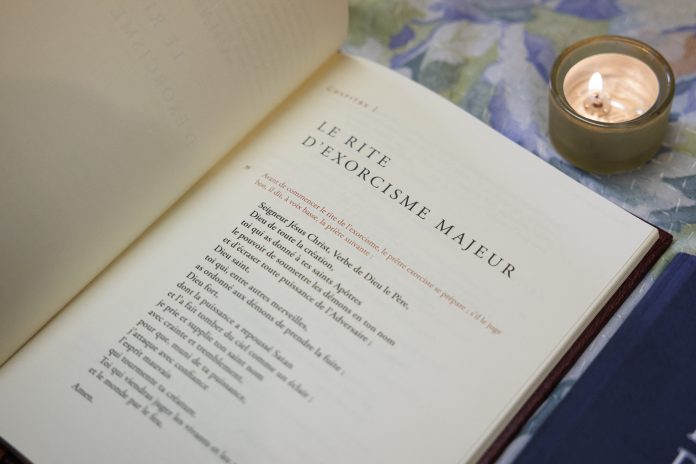
In modern practice, the Rite of Exorcism emphasizes pastoral care, discernment, and prayer, with the goal of healing and peace for the person afflicted. The Church warns against superstition or theatrical displays that can misrepresent the faith or harm vulnerable individuals.
The CBCT, in its final statement to the DRA, urged authorities and the public not to associate the “fire exorcism” ritual with Christianity, emphasizing that it is “a distortion of faith” that could harm both individuals and the image of the Christian community in Thailand.