Pope Leo XIV has called on the faithful to rediscover Christ in the faces of the poor, releasing his first apostolic exhortation Dilexi Te (“I Have Loved You”), a continuation of Pope Francis’ pastoral legacy on the Church’s care for the marginalized.
Dated October 4, the feast of St. Francis of Assisi, and officially released on October 9, the document expands on the themes Pope Francis had begun drafting before his death.
“I am happy to make this document my own — adding some reflections — and to issue it at the beginning of my own pontificate,” Pope Leo wrote. “I share the desire of my beloved predecessor that all Christians come to appreciate the close connection between Christ’s love and his summons to care for the poor.”
The pontiff said this path of compassion is essential to holiness, “for in this call to recognize him in the poor and the suffering, we see revealed the very heart of Christ, his deepest feelings and choices, which every saint seeks to imitate.”
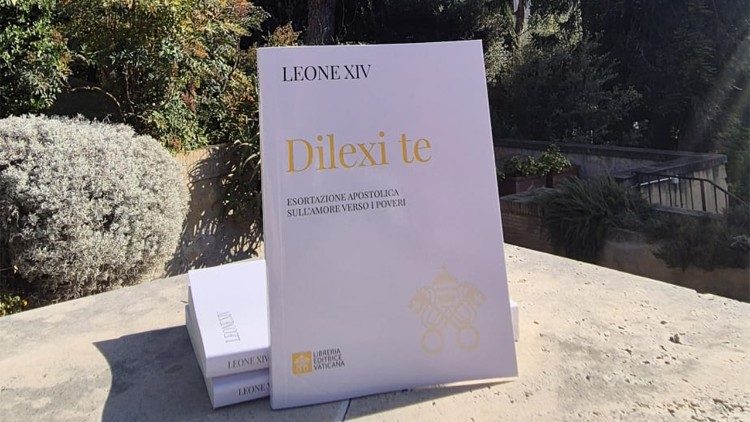
In Dilexi Te, Pope Leo XIV stresses that love for God and love for the poor cannot be separated. “Love for the Lord, then, is one with love for the poor,” he wrote, recalling Jesus’ words: “The poor you will always have with you” and “I am with you always.”
He said this unity “is not a matter of mere human kindness but a revelation,” explaining that “contact with those who are lowly and powerless is a fundamental way of encountering the Lord of history. In the poor, he continues to speak to us.”
The Pope draws deeply from Scripture, the life of St. Francis of Assisi, and the witness of the saints to show that God has a “preferential option for the poor.” He writes, “I am convinced that the preferential choice for the poor is a source of extraordinary renewal both for the Church and for society, if we can only set ourselves free of our self-centeredness and open our ears to their cry.”
Echoing his predecessor’s concern for migrants and the marginalized, Pope Leo cited Francis’ teaching that “our response to the challenges posed by contemporary migration can be summed up in four verbs: welcome, protect, promote and integrate.” The Church, he said, “like a mother, accompanies those who are walking. Where the world sees threats, she sees children; where walls are built, she builds bridges.”
The 90-paragraph exhortation also confronts modern forms of injustice — from widening inequality to human trafficking. The Pope warned that “millions of people — children, women and men of all ages — are deprived of their freedom and forced to live in conditions akin to slavery,” adding that the Church “becomes a paschal sign when she bends down to break the new chains that bind the poor.”
Throughout Dilexi Te, Pope Leo XIV presents care for the poor not as charity alone but as an encounter with Christ himself — a way of seeing the Gospel come alive in the wounded and forgotten.
“No sign of affection, even the smallest, will ever be forgotten,” he wrote. “Especially if it is shown to those who are suffering, lonely, or in need.”