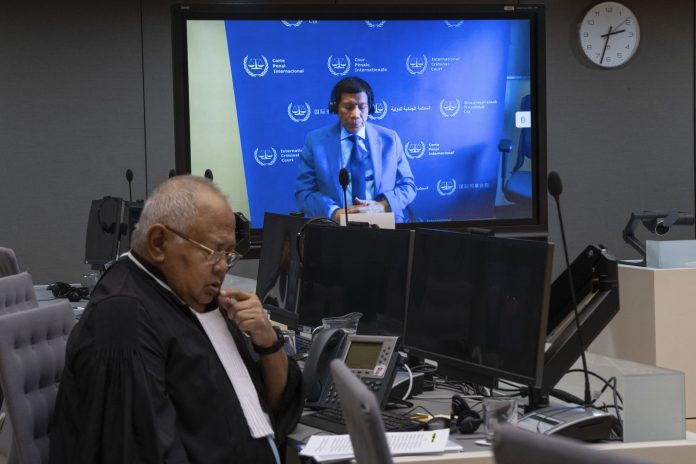
The senators who endorsed house arrest pleaded for compassion for Duterte on humanitarian grounds — for reasons of old age, medical attention, family, etc.
“Kapag tinakpan natin ang pangalan o mukha niya at ganoon ang sitwasyon, tutulong ba tayo o hindi?” Cayetano pleads his case.
My response to him: “Hindi pwedeng takpan ang pangalan o mukha dahil kakaiba ang kanyang ginawa. Ginawa ba natin ito sa mga mahihirap na kinulong sa Bilibid? Hindi! Ang iba sa kanila, namatay na lang doon.”
In classical Christian theology, compassion and forgiveness can only be granted to a penitent when he or she has fulfilled four steps: contrition (that s/he is sorry for the sins committed); confession (that s/he confesses personally the sin); penance (that s/he does retribution required of him/her); resolution (that s/he resolves or promises his/her best not to do the sin again).
Has Duterte done this? Did Duterte and his minions own up to his sins? Is he sorry for what he has done? Is he willing to restore the dignity of those he has violated?
Neither he nor his legal defense team did any of these. From the beginning of the process until today, no one has owned up to the charges. Much more, no one is sorry about what happened. All you get are denials and evasions.
True that in recent pronouncements of the popes, they said justice must be tempered by mercy. Because justice without mercy is cruelty.
But mercy without justice also leads to society’s dissolution. It destroys what we all believe in and fight for. “Justice is the primary way of charity,” Pope Benedict XVI wrote.
St. Vincent de Paul, the patron saint of mercy, said: “Practice justice first before charity.” Only when justice to the victims is done can mercy be deserved.
So, what is the purpose of this performative exercise by the Senate? Or his defense team?
Argumentum ad misericordiam.
This appeal to compassion is a logical fallacy that instrumentalizes mercy and sympathy in order to divert the discussion away from the real issue, in Duterte’s case, of justice and violation of human rights. At best, this is emotional manipulation for the general population, diverting them from the real issue; at worst, it is propaganda to DDS followers fanning hopes for the 2028 elections.
When the late Pope Francis was writing his last encyclical, Fratelli Tutti (2020), he knew for sure about the extrajudicial killings in the Philippines. I would like to think that he was thinking about us (and other countries ruled by oppressors) when he wrote the encyclical.
“How to love an oppressor,” he asks? His answer is very clear.
“True love for an oppressor means seeking ways to make him cease his oppression; it means stripping him of a power that he does not know how to use, and that diminishes his own humanity and that of others.
“Forgiveness does not entail allowing oppressors to keep trampling on their own dignity and that of others, or letting criminals continue their wrongdoing. Those who suffer injustice have to defend strenuously their own rights and those of their family, precisely because they must preserve the dignity they have received as a loving gift from God.
“If a criminal has harmed me or a loved one, no one can forbid me from demanding justice and ensuring that this person – or anyone else – will not harm me, or others, again. This is entirely just; forgiveness does not forbid it but actually demands it” (FT, 241).
Father Daniel Franklin Pilario, C.M., is the President of Adamson University in Manila. He is a theologian, professor, and pastor of an urban poor community on the outskirts of the Philippine capital. He is also Vincentian Chair for Social Justice at St. John’s University in New York.