
This year, as the global Church celebrates the Season of Creation, we also mark two important milestones: the 10th anniversary of Laudato Si’, the Catholic Church’s first encyclical that calls on all people of faith to care for creation, and the Paris Agreement, whose historic commitment is to limit global warming to 1.5°C by 2030. Together, they remind us of both the moral duty and the collective responsibility to act decisively against the climate crisis.
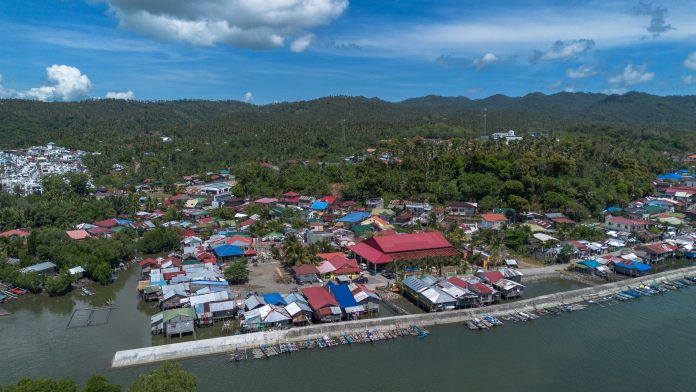
Here in Mindoro, these global calls meet our local reality. Despite being blessed with potential for alternative sources from abundant sunlight, strong winds, and powerful rivers, our island continues to suffer some of the worst power crises in the country. In Oriental Mindoro, families endure outages lasting up to 18 hours. In Occidental Mindoro, households pay electricity bills as high as ₱20 per kilowatt-hour, among the most expensive in Luzon.
An independent study conducted by the Center for Energy, Ecology, and Development (CEED), entitled Pandang Gitab ng Mindoro: A Scoping Paper of the Island’s Power Landscape, captures this paradox of abundance amid scarcity. The study shows that 73 percent of Mindoro’s installed capacity still comes from oil-based technologies, amounting to almost 127 megawatts (MW), leaving our island trapped in costly, unreliable, and dirty electricity. At the same time, it highlights a way forward. According to Climate Analytics, Mindoro has over 35,000 MW of solar and wind potential, compared to the island’s current peak demand of only about 120 MW, while the country currently needs only around 29,000 MW. Even now, the island’s cheapest electricity already comes from mini hydro at ₱5.64 per kilowatt-hour, compared to fossil-based diesel and bunker fuel that range from ₱13 to ₱23 per kilowatt-hour from recent and current Power Supply Agreements and emergency contracts in 2024–2025.
These findings are both alarming and hopeful. They tell us that the crisis we face is not inevitable but a product of choices made in favor of fossil dependence. But they also assure us that solutions are within reach if we choose a different path.
This is why, together with the Apostolic Vicariates of Calapan and San Jose, civil society, and people’s movements, we are preparing to launch the REnew Mindoro Campaign through a forum on October 3. The campaign seeks to unite the whole island in declaring Mindoro a Renewable Energy Island—envisioned to be the first in the country—and to finally put an end to the cycle of its energy scarcity and fossil dependence.
We believe this transition is not only possible—it is necessary and timely. Laudato Si’ calls us to hear both the cry of the earth and the cry of the poor. The Paris Agreement challenges us to keep warming below 1.5°C. In this Season of Creation, the call becomes even more urgent: we cannot delay action while communities remain in darkness, burdened by costly power prices, and battered by climate change.
Already, signs of hope are visible. Small solar systems are powering Mangyan communities, long neglected by the grid. Parishes and parochial schools have already installed and are planning to expand rooftop solarization as part of the 10 Million Solar Rooftops Campaign. If scaled up, the vision of solarizing buildings, public and private, can deliver sufficient clean energy capacity—enough to prove that an island can light its future through renewable energy.
The REnew Mindoro Forum will be a moment of discernment and commitment, bringing together Church, state, and civil society to take concrete steps. It will not simply be an event but a spark that can ignite lasting change for our people.
Mindoro is at a crossroads. We can continue down the path of fossil dependence, or we can choose to lead in building a future that is clean, affordable, and life-giving. In this Season of Creation, let us not only listen to the cries but also look to the guide already before us, and to the immense possibilities now within reach. All it takes is a spark—a dagitab—to light the way toward a future that brings hope to our island and to generations yet to come.
Fr. Edwin “Edu” Gariguez was the former executive secretary of Caritas Philippines. In 2012, he was awarded the Goldman Environmental Prize for leading a grassroots movement against an illegal nickel mine to protect Mindoro Island’s biodiversity and its indigenous people. He is currently the social action director of the Apostolic Vicariate of Calapan.