A Catholic diocese in the Philippines has denounced the revival of a controversial coal power project in Quezon province, warning that its approval defies the spirit of the Church’s Jubilee Year and endangers communities already devastated by climate disasters.
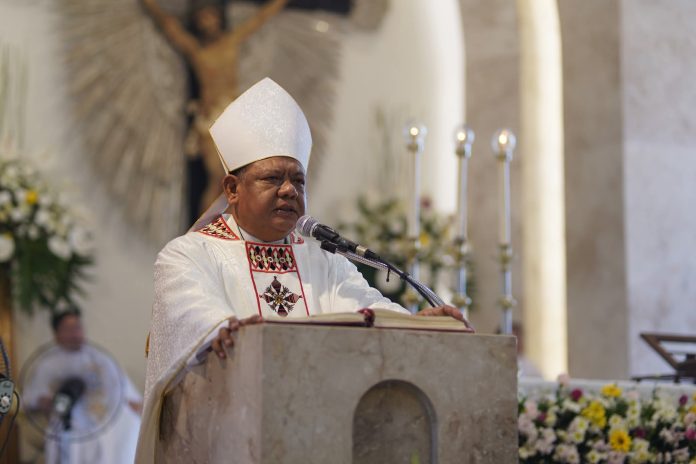
Bishop Mel Rey Uy of Lucena, in his homily during the town fiesta Mass at Our Lady of the Angels Parish in Atimonan on Saturday, criticized the renewed push for the 1,200-megawatt coal-fired power plant spearheaded by Meralco PowerGen.
“Let us join the rest of the world in seeking freedom—a true Jubilee for all. That includes our environment. Let us set it free,” Uy said. “Here in Atimonan, our environment was taken from us without warning. And now, they want to bring the coal plant back.”
The bishop also cautioned local communities against accepting donations or sponsorships from corporations behind fossil fuel projects. “Some of these corporations try to lure us with donations,” he said. “But we must not fall into that trap, because it compromises our stand.”
His remarks followed the decision of Energy Secretary Sharon Garin in July to approve Meralco PowerGen’s Atimonan One Energy (A1E) coal project, reversing a prior review of the plant’s exemption from the Philippine government’s coal moratorium.
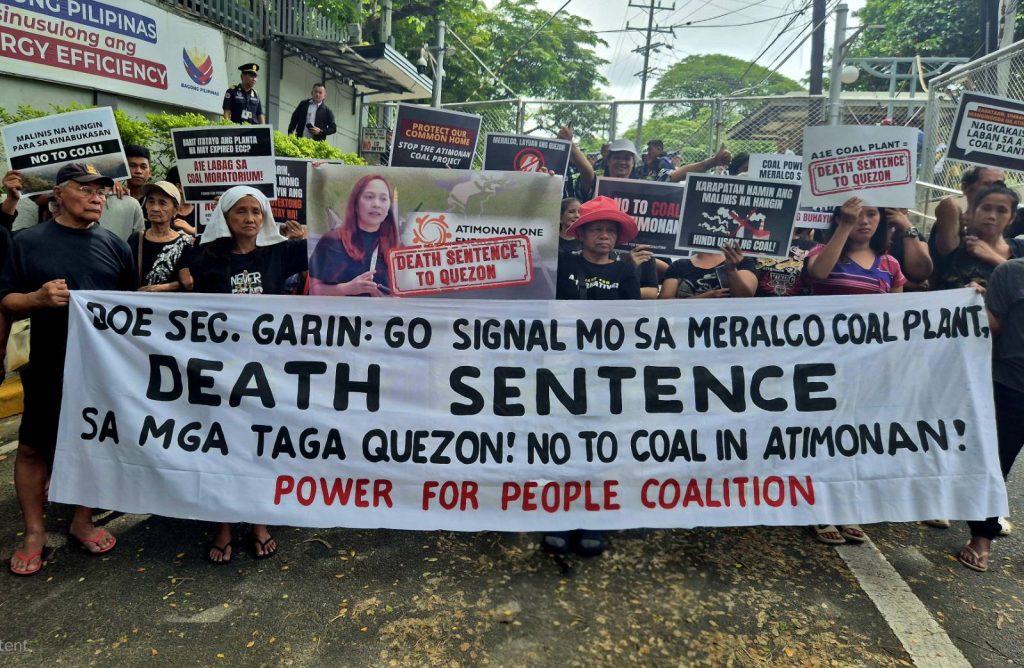
Two days earlier, residents of Quezon and environmental advocates staged a protest outside the Department of Energy office in Taguig City, calling the project a “death sentence” for communities already battered by powerful storms.
“For ten years, we have been fighting to stop this facility,” said Fr. Warren Puno, convenor of Quezon for Environment (QUEEN) and regional coordinator of the South Luzon Eco-Convergence Hub of Caritas Philippines.
“The affected communities are united in their stand: no matter how many times the Atimonan coal plant is approved, we will block it because it is nothing but poison to our air, water, and climate,” the rpiest added.
Quezon province has been on the frontlines of climate disasters. In May 2024, Typhoon Aghon unleashed record floods that displaced thousands and destroyed crops. Five months later, Typhoon Kristine submerged entire towns, forcing local governments to declare a state of calamity.
Environmental groups have also raised health concerns. A 2024 study by the Center for Energy, Ecology, and Development (CEED) found that Atimonan and nearby Pagbilao, along with Maasim in Sarangani province, exceeded national and international air quality standards.
Fisherfolk leaders warned the project would further erode their livelihoods. “We have already suffered from policies that oppress small fisherfolk,” said Ramon Grimaldo, a veteran fisherfolk leader in Atimonan. He called on authorities to protect local waters “from this dirty plant,” adding, “It will never be right to poison our seas for electricity that we will never benefit from.”
QUEEN vowed to continue its resistance and urged local officials to prioritize clean and renewable energy development.
“The Church has always stood with us—not just to defend those at the margins, but also to oppose projects that harm the poor while enriching a few,” Fr. Puno said.