
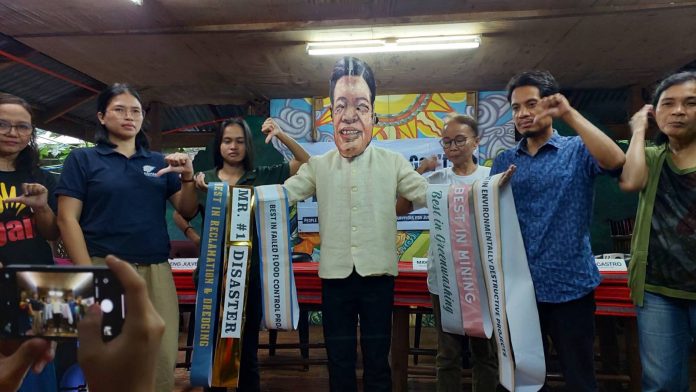
Environmental groups and disaster survivors have branded President Ferdinand Marcos Jr. as the country’s “No. 1 disaster” amid massive flooding in Metro Manila and parts of Luzon, accusing his administration of worsening the climate crisis.
In a press briefing led by Kalikasan People’s Network for the Environment (Kalikasan PNE), groups said the government’s failed climate response has been exposed by the recent storms.
Spokesperson Jonila Castro said the floods show the “incompetence” of the Marcos administration, which continues to push destructive projects that intensify climate impacts.
Reclamation, deforestation, and debt-driven infrastructure were cited as key contributors to flooding. Ronnel Arambulo, vice chairperson of the National Federation of Small Fisherfolk Organizations in the Philippines (PAMALAKAYA), said reclamation disrupts natural water flow, damages coastal ecosystems, and displaces fishing communities.
Advocates of Science and Technology for the People (AGHAM) criticized the government for investing in projects like the Manila Bay Dolomite Beach, calling them distractions that fail to address the root causes of flooding. Billions, they said, are being spent on infrastructure that only treats the symptoms.
The Global Alliance for Incinerator Alternatives (GAIA) also raised concerns over waste-to-energy incinerators promoted under Marcos Jr., warning that these projects deepen national debt and fail to solve waste problems, all while polluting communities.
People Surge – National Alliance of Disaster Survivors said many communities remain without housing or jobs long after disasters hit. The group accused the government of neglect and of blaming poor communities for systemic failures.
Protect Sierra Madre for the People added that mega-dams in Rizal and Quezon provinces, which threaten watersheds and displace Indigenous Dumagat-Remontado communities, are not real solutions to flooding and only increase ecological risks.
Meanwhile, Greenpeace Philippines called on Marcos to act on the International Court of Justice’s (ICJ) new advisory opinion, which clarified states’ legal obligations to address climate change.
Greenpeace Senior Campaigner Virginia Benosa-Llorin said the ruling marks “a new era of climate accountability” and urged the president to hold major polluters legally accountable.
The ICJ declared that fossil fuel subsidies and expansion may breach international law and affirmed the right to a clean, healthy, and sustainable environment.
The Center for Energy, Ecology, and Development (CEED) also welcomed the ruling. Executive Director Gerry Arances said it sets a clear legal foundation for phasing out coal and ending the expansion of the gas industry, warning that continued fossil fuel reliance risks violating international law.
Both Greenpeace and CEED urged Marcos to support the Climate Accountability Bill and pursue reparations from fossil fuel companies.
Over 2.7 million people have been affected by the recent storms. Damage to infrastructure has exceeded ₱3.7 billion.